


Travel light in Europe!
Find affordable luggage storage near you
Whether you’re a commuter or navigating the local transport for the first time on holiday, there are some conditions no one wants to endure – like overcrowding, noise, and dirt. But another nasty surprise you don’t want to find after a busy day making your way about town is a blow to your bank balance.
To find out which public transport systems are the most and least expensive in Europe, this new study analysed the price of bus, tram, metro, and train tickets in 50 of the most populated European cities. The study considered both the cost of single tickets and 24-hr tickets, including the cost of covering transport for a two-day getaway for two people.
Key Findings:
- Aarhus, Denmark, has the most expensive public transport in Europe (a single ticket, taking an average from all transport types, costs €6.20).
- Zurich, Switzerland, and Munich, Germany have the 2nd and 3rd most expensive single fare tickets (costing an average of €4.90 and €4.10, respectively).
- Vilnius, Lithuania, has the cheapest public transport in Europe (taking an average from all transport types, a single ticket costs just €0.70).
- Istanbul, Turkey, and Krakow, Poland came joint 2nd for cheapest transport (with an average single ticket costing €0.90).
- Stockholm, Sweden, has the most expensive 24-hour tickets (costing an average of €16.50), followed by Copenhagen, Denmark (€13.40) and Paris, France (€12.10).
- Lisbon, Portugal, has the most affordable 24-hour tickets (costing an average of €2.00), followed by Krakow, Poland (€2.80), and Nice, France (€3.40).
- Weekend getaway: The average cost of transport for two people for 48 hours comes to €29.20 across all cities analysed. But this ranged widely between €66 (Stockholm, Sweden) and €8 (Lisbon, Portugal).
The cities with the most expensive public transport systems
To work out which cities have the most expensive public transport systems, the study considered the price of a single ticket for one adult. Where specific zones were necessary to specify in order to gain a ticket price, we analysed the zones covering the smallest central zone available in the city (for example, “Zone 1” in London, or “AB” in Berlin).
The study considered the prices of travelling via bus, metro, train, and tram. In some cities, not all transport types were available, so an average was taken from the prices that were available.
The cities with the most expensive single fares
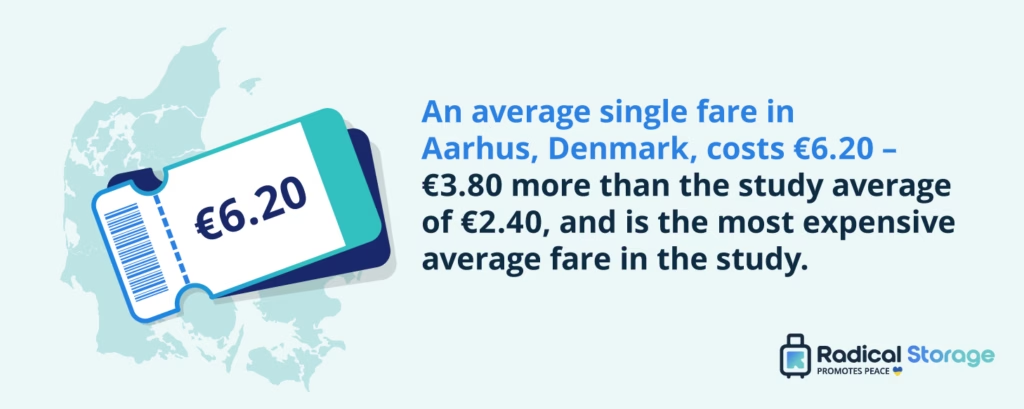
Considering the prices of bus, tram, metro, and train tickets and averaging the cost, Aarhus in Denmark (Denmark’s second largest city) is the most expensive city in the study. The average cost of a single ticket here is €6.20 – €3.80 more than the study average of €2.40.
Following Aarhus, the second most expensive city in the study was Zurich, in Switzerland, where the single ride ticket averages at €4.90. Munich in Germany completes the top three, where the average single ride ticket costs €4.10. For travelers visiting during major festivals like Oktoberfest in Munich, these transport costs can feel even higher due to the increased demand. making reliable bag storage in Munich a practical solution for those wanting to explore the city more comfortably. Munich isn’t the only expensive public transport system in the country; in fact, half of the top 10 most expensive single ride tickets in the study were in cities in Germany.
| The 10 most expensive cities for a single ticket | |||
| Rank | City | Country | Single ride |
| 1 | Aarhus | Denmark | €6.20 |
| 2 | Zurich | Switzerland | €4.90 |
| 3 | Munich | Germany | €4.10 |
| =4 | Hamburg | Germany | €3.90 |
| =4 | Stockholm | Sweden | €3.90 |
| =6 | Frankfurt | Germany | €3.80 |
| =6 | Berlin | Germany | €3.80 |
| =6 | Oslo | Norway | €3.80 |
| 9 | Nuremberg | Germany | €3.60 |
| 10 | Amsterdam | Netherlands | €3.40 |
The cities with the most expensive 24-hour tickets
24-hour tickets allow you to travel as much as you like in one day at a fixed price, although these ticket types may come with some restrictions, like being valid in certain areas or zones of the city. Considering the prices of bus, tram, metro, and train tickets and averaging the cost, Stockholm in Sweden is the most expensive city in the study for these types of tickets. Travelers planning to move around the capital often rely on services such as secure places to leave bags in Stockholm while they explore. The average cost of a 24-hour ticket here is €16.50 – €9.20 more than the study average of €7.30.

After Stockholm, Copenhagen, Denmark, has the second most expensive 24-hour ticket. Here, the 24-hour ticket averages at €13.40, and many visitors choose options such as convenient bag storage in Copenhagen to make getting around easier. Paris, France, takes third place as the average 24-hour travel ticket costs €12.00, with travelers often using services like secure places to store luggage in Paris while they explore the city.
| The 10 most expensive cities for a 24-hour ticket | |||
| Rank | City | Country | 24-hour |
| 1 | Stockholm | Sweden | €16.50 |
| 2 | Copenhagen | Denmark | €13.40 |
| 3 | Paris | France | €12.00 |
| 4 | Barcelona | Spain | €11.60 |
| 5 | Oslo | Norway | €11.30 |
| 6 | Geneva | Switzerland | €10.70 |
| =7 | London | United Kingdom | €10.60 |
| =7 | Berlin | Germany | €10.60 |
| 9 | Nuremberg | Germany | €10.30 |
| 10 | Helsinki | Finland | €10.00 |
The cost of public transport for a 48-hour trip for two people
If you’re taking a short, two-day city trip and want to explore the city without limitations, it may make most sense to purchase a couple of 24-hour tickets. Day tickets typically provide travellers with unlimited travel for a day, and often across several (or all available) modes of transport. This provides travellers with more flexibility than standard tickets, especially if they specify start and end points on a journey. It also means travellers don’t need to worry (like in London) about peak and off-peak prices (or other variable prices across the day).
The average cost of four 24-hour tickets for two people comes to €29.20 across all cities analysed. But this ranged widely between the cities, with some costing as much as €66, and some as little as €8.
Stockholm, Sweden, has the most expensive 24-hour tickets, costing an average of €16.50, €12.60 more than the single ticket price of €3.90. For those on a two-day trip with a partner or friend (purchasing four 24-hour tickets), this amounts to €66 for both people. This means that unless you are taking more than four journeys per day, you’re better off purchasing a single travel ticket.
Copenhagen, Denmark, follows with a 24-hour ticket costing a steep €13.40, €10.20 more than the €3.20 single ride fee. Again, meaning that unless you plan to travel four times, it’s worth buying the single ticket. For context, this would total €53.60 for two travellers on a 48-hour mini break.
24-hour tickets in Paris, France, have an average cost of €12.00, €9.75 more than the €2.25 single ticket fee. As in the previous two cases, this is only worth it once you’ve used the day ticket to ride more than four times. Again, for two people on a two-day trip, this amounts to a cost of €41.00 to cover public transport – €11.80 more than the €29.20 average.
If these are the most expensive cities for 48 hours’ worth of transport, where is the most affordable? A 24-hour ticket when travelling around Lisbon, Portugal, costs just 10 cents more than a single ticket (€2.00 compared to €1.90). For two people enjoying a 48-hour mini break, this equates to just €8.00 to cover all public transportation costs.
Kraków, Poland, has the second cheapest 24-hour tickets (€2.80), meaning that two people can cover a weekend’s worth of travel on just €11.20. Next up is Nice, France, where a 24-hour ticket costs €1.57 more than a single ticket (€3.40 compared to a single ticket €1.83). This is the equivalent of just €13.60 for two people on a 48-hour getaway.
The most expensive public transport per type
In big cities, there are often many choices of how to get around: you might take a tram, bus, metro, or train. Not all cities have all types of transport, but comparing the ones that do, which cities have the most expensive fares per transport type?
The most expensive metro systems
Not all of the 50 cities in the study had metro systems, but of the 31 that did, the average price was €2.60. Munich, Germany, had the most expensive metro system, with a single ticket costing €4.10. Stockholm, Sweden, followed with a ticket price of €3.90, joint with Hamburg, Germany, with a single fare also costing €3.90 on its metro. Travelers moving around the city often choose services such as secure bag storage in Hamburg to make public transport easier to navigate.

The most expensive bus systems
Buses are the most common type of public transport in the European Union, and one thing all cities in the study have in common is a bus system. [1] The average price of a single bus ticket in the study was €2.40, but which city has the most expensive bus fares?
Again, a single bus ticket in Aarhus in Denmark, costs €6.20 – which is a figure you will see frequently in the study, as the city has the same prices across all its public transport systems (bus, tram, and trains). Zurich, Switzerland, follows with a ticket price of €4.90 (again, the set price for buses, trams, and trains), and not far behind that is Munich, Germany, with a ticket price of €4.10 (also the single fare price for its bus, tram, metro, and train systems).
The most expensive train systems
Unlike metros, trains serve much longer distances, not just stops within the city but to destinations further afield too. Again, the study considered the smallest central zone available in the city for a train journey (for example, “Zone 1” in London, or “AB” in Berlin). The average price of a single train ticket in the study was €2.60.
The city with the most expensive train system was, again, Aarhus in Denmark, where a single ticket costs €6.20, more than double the study average. Zurich, Switzerland, follows with a ticket price of €4.90, and not far behind that is London, United Kingdom, with a price of €4.28 (£3.72) for the overground. Visitors moving through the capital often use convenient luggage storage in London to travel more comfortably.
The most expensive tram systems
Trams run on rails on city streets and typically run on electricity. The average price of a single tram ticket in the study was €2.30.
The city with the most expensive tram system was Aarhus in Denmark, where a single ticket costs €6.20. Zurich, Switzerland, follows with a ticket price of €4.90, and not far behind that is Munich, Germany, with a price of €4.10 for its tram system.
The cities with the least expensive public transport systems
But more positively, which cities are the most affordable to get around in? Considering the average cost of a single ticket across all transport systems, 27 cities had a single ride fare that came under the €2.40 average, and 24 cities had a day-rate fare that cost less than the average of €7.30. But which were they?
The cities with the least expensive public transport systems: single ride tickets
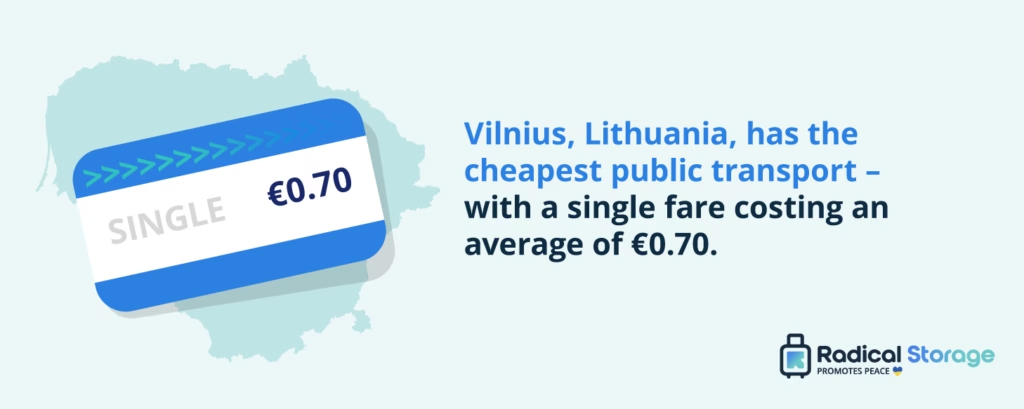
Finding the average cost of a bus, tram, metro, and train ticket in each city, the study found that Vilnius, Lithuania, had the cheapest public transport ticket, costing just €0.70. This was followed jointly by Istanbul, Turkey (€0.90) and Krakow, Poland (€0.90), where travelers can also benefit from convenient bag storage in Istanbul to make getting around the city even easier.
| The 10 cheapest cities for a single ticket | |||
| Rank | City | Country | Single ride |
| 1 | Vilnius | Lithuania | €0.70 |
| =2 | Istanbul | Turkey | €0.90 |
| =2 | Krakow | Poland | €0.90 |
| 4 | Split | Croatia | €1.00 |
| 5 | Budapest | Hungary | €1.10 |
| =6 | Prague | Czech Republic | €1.20 |
| =6 | Gdansk | Poland | €1.20 |
| =8 | Porto | Portugal | €1.40 |
| =8 | Athens | Greece | €1.40 |
| 10 | Granada | Spain | €1.50 |
The cities with the least expensive public transport systems: 24-hour tickets
The average cost for a 24-hour ticket in the study was €7.30, but there were 24 cities where this cost less (out of the 43 cities where 24-hour tickets were available).
The most affordable city for 24-hour tickets was Lisbon, Portugal, where an average ticket (considering all the different transport costs) is just €2.00, and many visitors make use practical luggage storage in Lisbon while exploring. The next best options are Krakow, Poland (€2.80) and Nice, France (€3.40), where travelers often rely on solutions like easy places to store bags in Nice during their trip.

| The 10 cheapest cities for a 24-hour ticket | |||
| Rank | City | Country | 24-hour ticket |
| 1 | Lisbon | Portugal | €2.00 |
| 2 | Krakow | Poland | €2.80 |
| 3 | Nice | France | €3.40 |
| =4 | Split | Croatia | €4.00 |
| =4 | Valencia | Spain | €4.00 |
| =6 | Athens | Greece | €4.50 |
| =6 | Granada | Spain | €4.50 |
| =8 | Salzburg | Austria | €4.80 |
| =8 | Prague | Czech Republic | €4.80 |
| =8 | Seville | Spain | €4.80 |
The least expensive public transport per type
Again, considering the transport types, the study has shown which cities had the most affordable fares when taking the metro, bus, tram, or train.
The least expensive metro systems
Out of the 31 cities with a metro system, the average price was €2.60. But a ticket in Istanbul, Turkey, will cost almost a third of this, at just €0.60. Budapest, Hungary, followed with a ticket price of €1.10, where many travelers take advantage of convenient luggage storage in Budapest while sightseeing, and Prague, Czech Republic, came a close third with €1.20, with visitors often choosing reliable places to leave bags in Prague during their visit.

The least expensive bus systems
The average price of a single bus ticket in the study was €2.40, but Istanbul again had the cheapest single fare for a bus ride at just €0.60 (the same fare cost for its bus, metro, and tram).
Vilnius, Lithuania, wasn’t far behind with an average single fare of €0.70 (it’s bus and tram fare), and Krakow, Poland, followed with a ticket price of €0.90 (again, the same price for its bus and tram).
The least expensive train systems
The average price of a single train ticket in the study was €2.60, and out of the 35 cities which did have a train system operating through the city, 13 of them had tickets that beat this price.
The city with the most expensive train system was, again, Krakow in Poland, where a single ticket on their trainline costs €0.90, almost one third of the average price. Budapest, Hungary, follows with a ticket price of €1.10, and not far behind that is Prague, Czech Republic, with a single fare price of €1.20 for a train journey.
The least expensive tram systems
Finally, which city had the least expensive tram system? Beating the average tram price of €2.30 by €1.70 was Istanbul, Turkey, with a tram ticket costing just €0.60. Because bus and tram prices in many cities were the same, Vilnius placed second in this category with an average single fare of €0.70, and then Krakow, Poland, followed with a ticket price of €0.90.
Methodology
All the data was collected in June 2025, and is correct as of June 2025. A list of the 50 most populous European cities was taken from World Atlas. Russia and Ukraine were discounted due to the full-scale invasion of Ukraine. [2]
Where available, the single fare and 24-hour valid fares for the bus, tram, train, and metro systems were taken from the official transportation websites for each city. However, not all cities had all types of transportation types and not all cities provided a 24-hour fare. In these cases, averages were calculated from the available fares (for example, the average price of a bus and tram ticket, rather than the average price of a bus, tram, and metro ticket). Where specific zones were necessary to specify, the zones cover the smallest central zone available in the city (for example, “Zone 1” in London, or “AB” in Berlin).
Sources
[1] Fact sheet: buses – ACEA – European Automobile Manufacturers’ Association
[2] World Atlas
