

Europe is the world’s most visited region, welcoming more than 809 million international tourists in 2025 and accounting for more than half of all international arrivals globally. [1] From the sun-soaked coastlines of the Mediterranean to the historic city centres of Western Europe, the continent draws visitors from every corner of the world, generating billions in economic activity and supporting millions of jobs.
This guide brings together the latest European tourism statistics, covering international arrivals, regional and country breakdowns, tourism revenues, economic impact, and how both visitors and Europeans themselves travel across the continent.
Key statistics
- Europe received 809.6 million international tourist arrivals in 2025, more than double the number recorded during the pandemic low of 246.4 million in 2020.
- Southern and Mediterranean Europe is the continent’s most visited sub-region, attracting 344.1 million arrivals in 2025, accounting for more than four in ten of all European visits.
- France is Europe’s most visited country, welcoming 100 million international tourists, the only European destination to surpass the 100-million mark.
- EU tourism direct GDP reached $1,110 billion in 2023, 12% above pre-pandemic levels, confirming the sector has not just recovered but grown.
- Spain recorded more overnight tourist stays than any other European country in 2024, with 505 million nights spent, ahead of Italy (466 million) and France (458 million).
- Nearly two-thirds of EU residents aged 15 and over took at least one tourism trip in the most recent reporting year, generating 1.19 billion trips in total.
How many tourists visit Europe each year?
Europe received an estimated 809.6 million international tourist arrivals in 2025, according to the World Tourism Organization (UN Tourism) Barometer. This was an increase of 4.9% from 772.1 million arrivals in 2024 and 8.5% higher than the 746 million visitors recorded in 2019, before the COVID-19 pandemic disrupted international travel.
Arrivals fell to 246.4 million in 2020, a decline of around 67% as many countries imposed travel restrictions. Arrivals recovered steadily through 2021 and 2022, more than doubling from 309.7 million in 2021 to 625 million in 2022.
In 2025, tourist numbers continued to rise year on year from 2020, eventually reaching the latest estimates (809.6 million). [1]
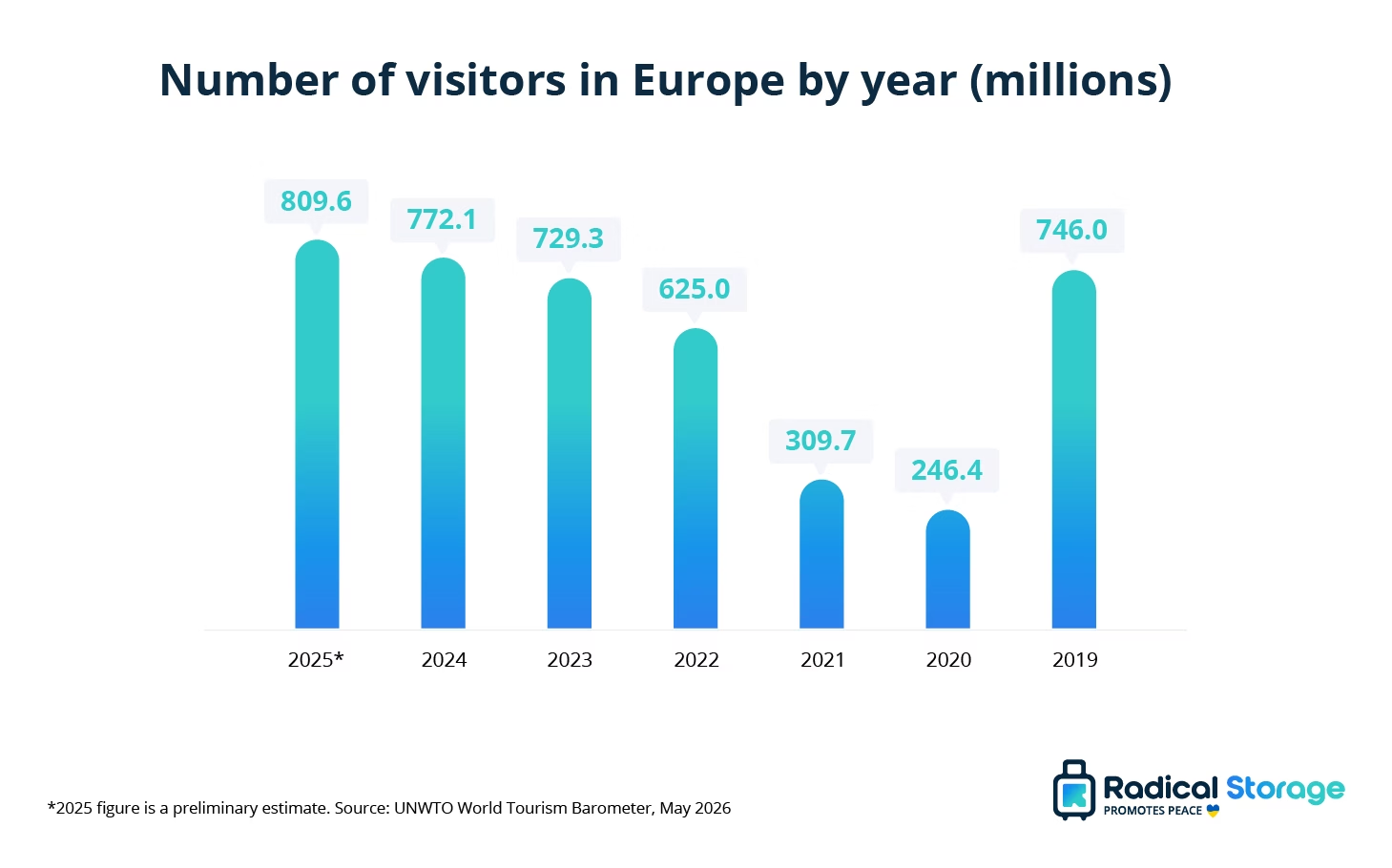
Data note: *2025 figure is a preliminary estimate. Source: United Nations World Tourism Organization (UNWTO) Barometer, May 2026
Source: [1]
Which parts of Europe attract the most visitors?
Europe’s 809.6 million visitors were not distributed evenly across the continent, with Southern and Mediterranean Europe attracting the largest share of visitors in 2025 (344.1 million), followed by Western Europe with 227.4 million. [1]
The three most-visited European cities in 2024 were Paris, France (Western Europe), Rome, Italy (Southern Europe) and London, England (Northern Europe). Showing a mixture of cities across each European sub-region. With as many as 87.7 million foreign tourists visiting these cities alone. The popularity of these regions is not limited to major cities. They are also home to many of Europe’s best-known beach, island, resort and cruise destinations.
In 2025, Southern and Mediterranean Europe accounted for 42.5% of all international arrivals to Europe, while Western Europe attracted 28.1%. Together, these two regions welcomed 70.6% of all international visitors to Europe. By comparison, Central and Eastern Europe received 152.4 million arrivals (18.8%), while Northern Europe welcomed 85.6 million visitors (10.6%). [1]
| Rank | European Region | International Arrivals (Millions) | Share of European Arrivals |
| 1 | Southern & Mediterranean Europe | 344.1 | 42.5% |
| 2 | Western Europe | 227.4 | 28.1% |
| 3 | Central & Eastern Europe | 152.4 | 18.8% |
| 4 | Northern Europe | 85.6 | 10.6% |
Source: [1]
Which European countries receive the most visitors?
France, Spain and Italy are Europe’s most visited countries, welcoming a combined 242.3 million international visitors in the latest recorded data in 2024. All three rank among the world’s most popular tourism destinations and attract visitors through a mix of cultural attractions, historic landmarks, major cities, coastlines and holiday resorts.
That year, France welcomed 100 million international visitors, making it Europe’s most visited country and the only destination to surpass the 100-million mark. Spain ranked second with 85.1 million arrivals, while Italy welcomed 57.2 million visitors and Turkey 55 million.
The gap between the top four destinations and the rest of Europe is considerable. France attracted 62 million more visitors than the United Kingdom, while Spain also welcomed more than twice as many visitors as the UK.
Southern European destinations feature heavily throughout the ranking, with Spain, Italy, Greece and Portugal collectively attracting 202.3 million international visitors. Together, these four countries accounted for around 49.4% of all visitors across the eight most visited European destinations. [2]
| Rank | Country | International visitors (millions) |
| 1 | France | 100.0 |
| 2 | Spain | 85.1 |
| 3 | Italy | 57.2 |
| 4 | Turkey | 55.0 |
| 5 | United Kingdom | 38.0 |
| 6 | Germany | 36.4 |
| 7 | Greece | 33.0 |
| 8 | Austria | 32.0 |
| 9 | Portugal | 27.0 |
| 10 | Croatia | 20.0 |
Source: [2]
Europe’s share of global tourism
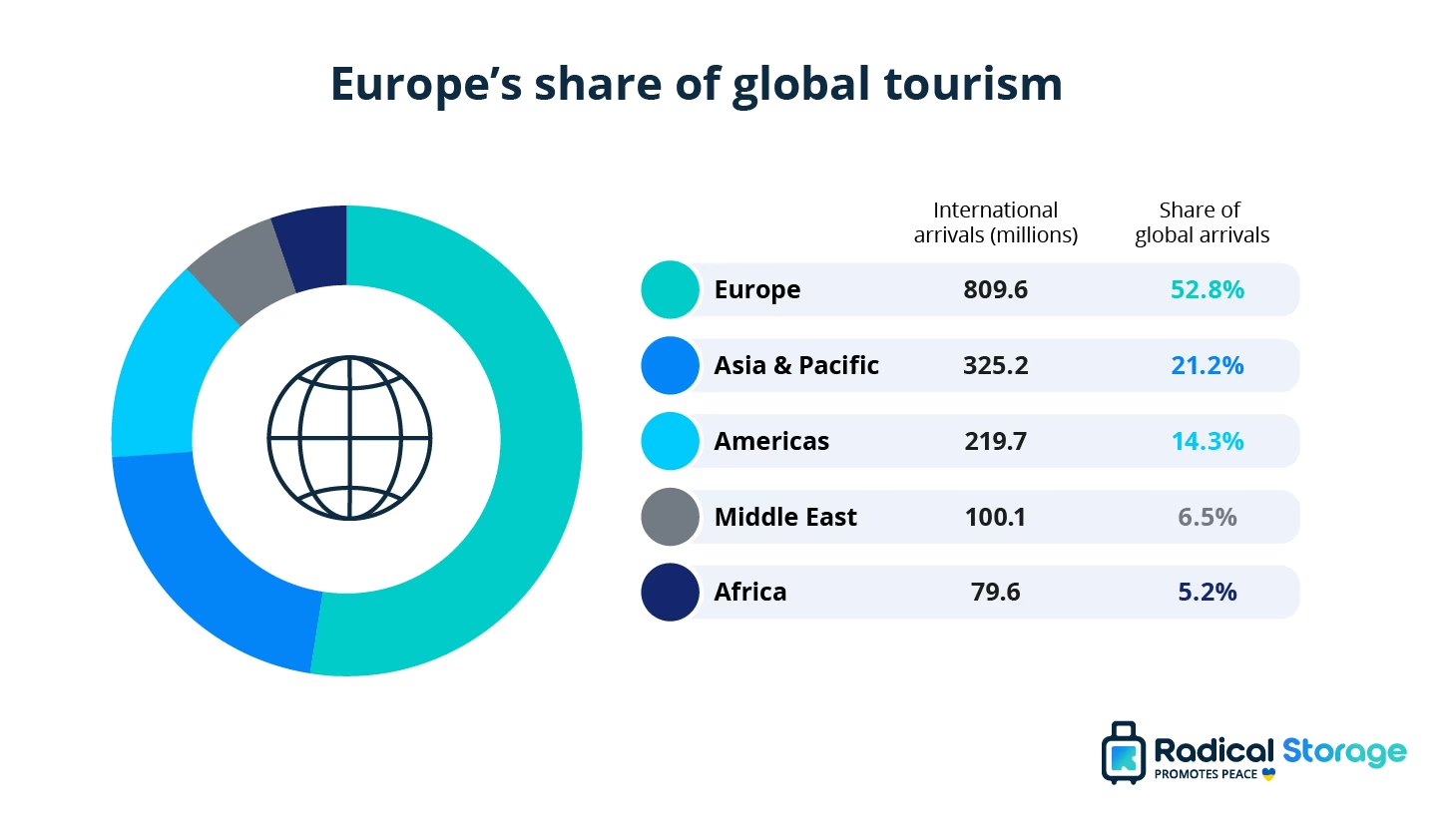
Europe received 809.6 million international arrivals in 2025, accounting for 52.8% of all international arrivals worldwide. More than one in every two international trips taken globally was to a European destination.
The continent attracted significantly more visitors than any other part of the world. Asia and the Pacific welcomed 325.2 million international arrivals, less than half of Europe’s total, while the Americas received 219.7 million, followed by the Middle East (100.1 million) and Africa (79.6 million). Europe welcomed more international visitors than these four areas combined.
Source: [1]
Europe tourism revenues
European tourism revenues have followed a dramatic arc over the past five years, shaped almost entirely by the pandemic and its aftermath.
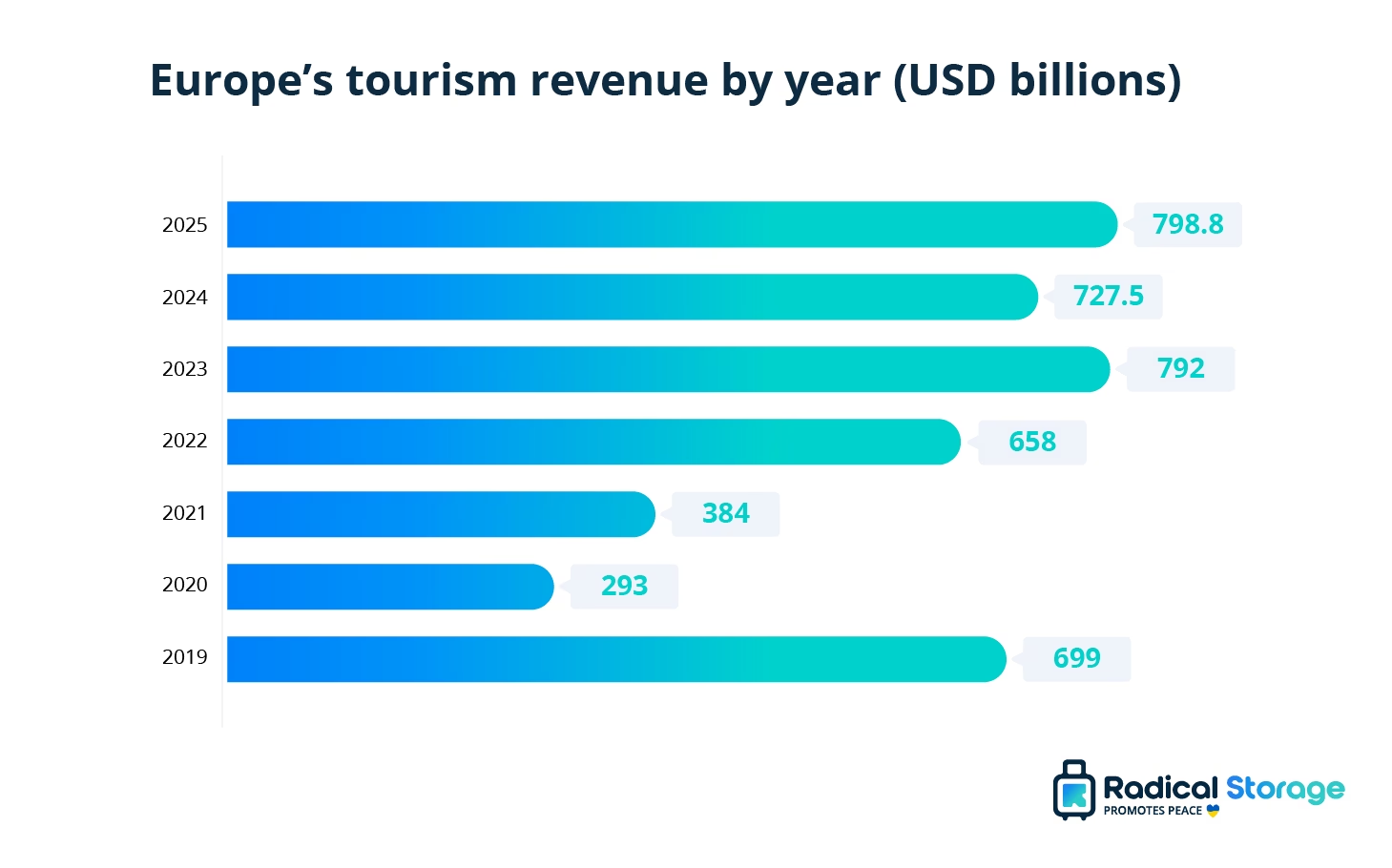
The sector bottomed out in 2020 at $293 billion, less than half of the $699 billion recorded in 2019, as border closures and travel restrictions brought international tourism to a near-standstill. A partial recovery in 2021 ($384 billion) gave way to stronger momentum in 2022 ($658 billion) as restrictions were lifted across the continent.
By 2023, revenues had effectively returned to pre-pandemic levels at $792 billion, closing the gap on 2019 almost entirely. A slight dip in 2024 ($727.5 billion) proved temporary, with revenues rebounding to a new peak of $798.8 billion in 2025, surpassing pre-pandemic highs for the first time and confirming that European tourism has not just recovered but expanded. [3]
Source: [3]
The economic impact of European tourism
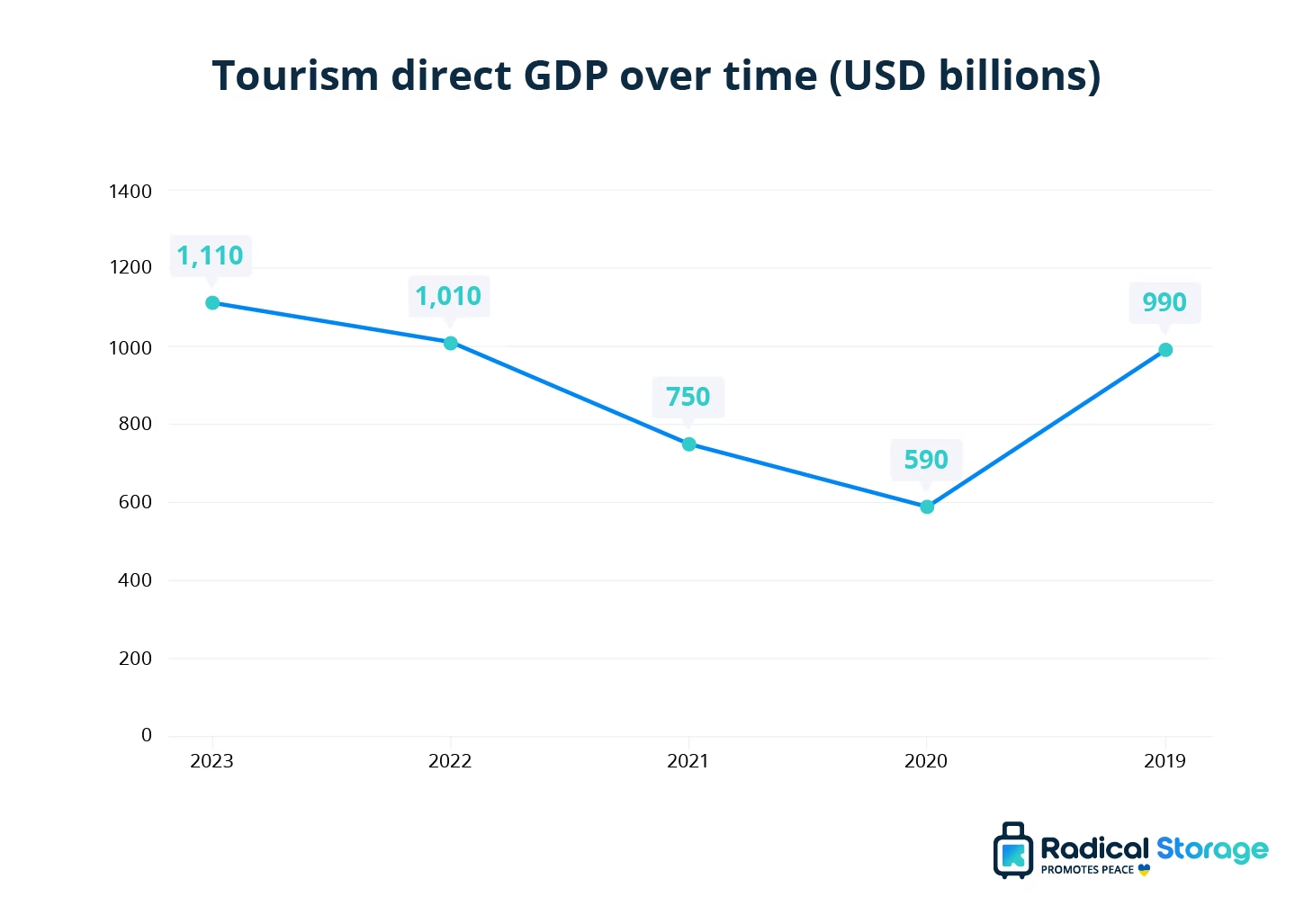
Tourism direct GDP measures the total economic output generated by industries that serve visitors directly, including accommodation, transport, attractions, and travel services. It captures spending by both domestic and international tourists and reflects the value the tourism sector adds to the wider European economy.
EU tourism’s direct GDP stood at $990 billion in 2019 before collapsing to $590 billion in 2020, a 40% fall driven by the near-total shutdown of international travel during the pandemic. Recovery was steady but uneven: GDP climbed to $750 billion in 2021 and crossed back above pre-pandemic levels in 2022 at $1,010 billion.
By 2023, the sector had grown to $1,110 billion, 12% above the 2019 baseline, confirming that European tourism had not simply recovered but expanded. The scale of the rebound is striking: the EU’s tourism economy added $520 billion in GDP in just three years (from 2020 to 2023), recovering losses that at their worst point had wiped out more than a third of the sector’s value. [3]
Source: [3]
How many nights do tourists spend in Europe?
Across the EU, tourists spent 3.08 billion nights at accommodation establishments in 2025, a record high and a 2.2% increase from the previous year. From city breaks in Paris and Rome to coastal retreats in Croatia and the Greek islands, European tourism is not just about arrivals. It is about extended stays that drive sustained economic activity across the continent. [4]
Spain tops Europe for overnight tourist stays
Spain leads Europe comfortably for overnight stays in the latest data from 2024, recording 505 million tourist nights, ahead of Italy (466 million) and France (458 million). Germany (440 million) rounds out the top four, with these four countries alone accounting for more than half of all nights spent across all European countries. [5]
| Rank | Country | Nights Spent (millions) |
| 1 | Spain | 505.2 |
| 2 | Italy | 466.2 |
| 3 | France | 457.6 |
| 4 | Germany | 439.6 |
| 5 | Turkey | 216.0 |
| 6 | Greece | 152.9 |
| 7 | Netherlands | 145.2 |
| 8 | Austria | 131.2 |
| 9 | Poland | 97.6 |
| 10 | Croatia | 93.6 |
Source: [5]
Hotels are the most popular, but alternatives are growing
Hotels remain the dominant choice for tourists visiting the EU, accounting for around 71% of all accommodation arrivals. Of the 154 million arrivals recorded across EU member states, 109 million stayed in hotels or similar establishments.
Non-hotel accommodation, covering holiday rentals, short-stay apartments, Airbnb stays and similar options, accounted for the remaining 45 million arrivals. This segment has grown significantly in recent years, driven by the rise of platforms offering alternatives to traditional hotels, particularly among longer-staying and family travellers.
Within the non-hotel category, holiday and short-stay accommodation dominates, recording around 41 million arrivals across the EU. Spain is the standout market, with nearly 5 million foreign arrivals in short-stay accommodation alone, reflecting the popularity of villa and apartment rentals along its coastlines and islands.
Camping remains a smaller but meaningful segment, recording just under 4 million arrivals across the EU. France and Spain lead this category, consistent with their strong outdoor tourism traditions and extensive campsite infrastructure. For most other EU member states, camping represents a marginal share of total stays. [5]
How Europeans travel
We’ve looked at how people spend their time in Europe but how do Europeans spend their holidays?
Europeans themselves are prolific travellers, with nearly two thirds (65.4%) of EU residents aged 15 and over taking at least one trip in the most recent reporting year, generating 1.19 billion trips in total. [6]
Short trips outnumber long holidays
Short trips of one to three nights account for the majority of European travel, with 671 million short trips taken compared to 521 million longer stays of four nights or more. This reflects the growing popularity of city breaks and weekend travel, particularly given Europe’s well-connected transport infrastructure. [6]
Most Europeans holiday at home
Domestic travel dominates across EU countries, accounting for 71.3% of all trips when combining short and long domestic stays. France (85.1%) and Germany (58.8%) show particularly strong domestic travel preferences, while smaller countries lean more heavily on foreign destinations. Belgium stands out, with over 76% of all trips taken abroad, and Luxembourg even more so at over 95%. [6]
Europeans who travel the most
The Netherlands (83.6%), Luxembourg (83.1%) and Finland (83%) have the highest share of residents who travel. At the other end of the scale, Bulgaria (32.5%) and Romania (27.7%) have the lowest participation rates. [6]
Sources
- UN Tourism. World Tourism Barometer, May 2026. https://pre-webunwto.s3.amazonaws.com/s3fs-public/2026-06/World_Tourism%20Barometer_May26_excerpt.pdf
- UN Tourism. UN Tourism Dashboard. https://www.untourism.int/tourism-data/un-tourism-tourism-dashboard
- UN World Tourism Organization (UNWTO). International Tourism Highlights, 2024 Edition. https://www.e-unwto.org/doi/epdf/10.18111/9789284425808
- Eurostat. “Tourism in the EU: Record Number of Tourism Nights in 2025.” https://ec.europa.eu/eurostat/web/products-eurostat-news/w/ddn-20260116-1
- Eurostat. Nights Spent at Tourist Accommodation Establishments (dataset: TOUR_OCC_NIM). https://ec.europa.eu/eurostat/databrowser/view/tour_occ_nim
- Eurostat. “Tourism Statistics.” https://ec.europa.eu/eurostat/statistics-explained/index.php?title=Tourism_statistics
