
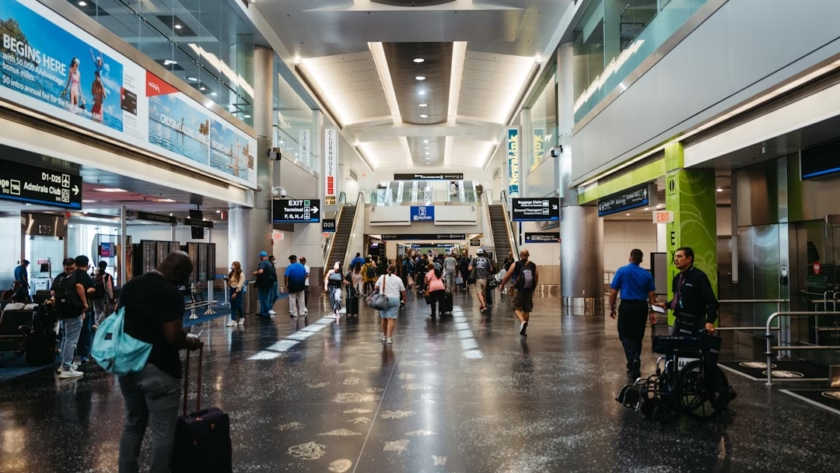
Searching for airport luggage storage usually means one of three things: you have a long layover and want to see the city, you’ve checked out of your hotel hours before an evening flight, or you’ve landed early and can’t get into your accommodation yet. Whichever it is, the answer is rarely inside the terminal — and this guide explains why, what your actual options are, and what you should expect to pay.
Do Airports Have Luggage Lockers?
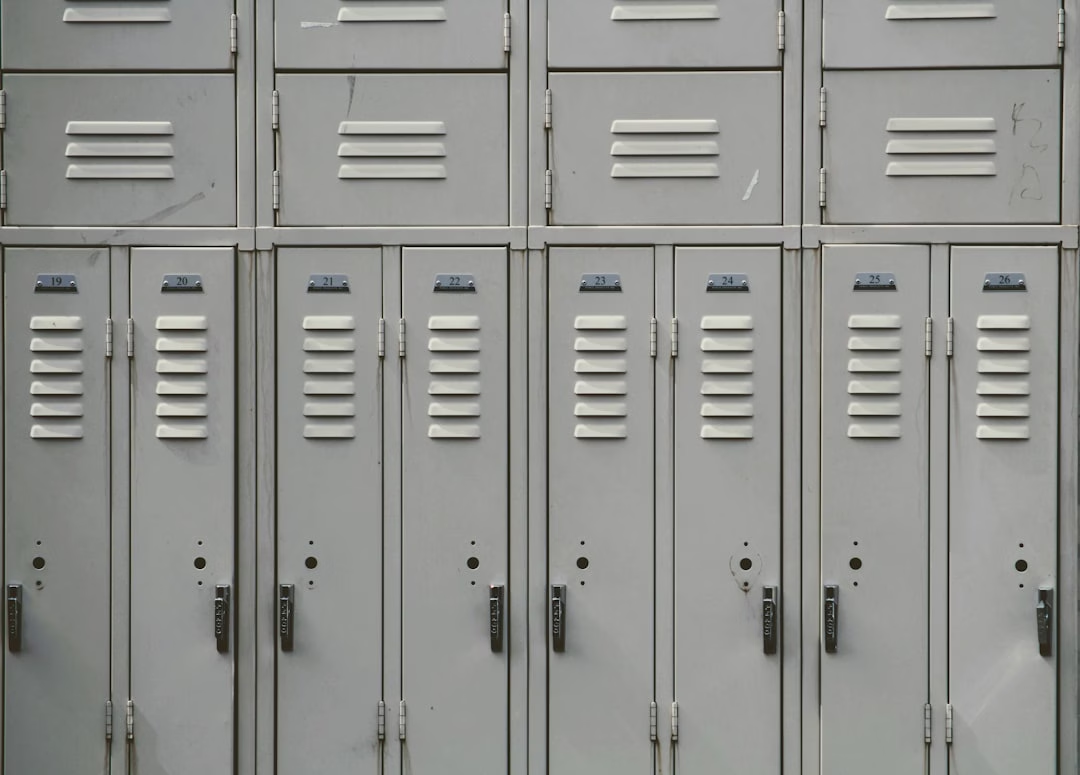
In the United States, almost never. Coin-operated luggage lockers were removed from most US airports after 11 September 2001 and were never reinstated — unattended bags in public areas were judged a security risk, and the concern wasn’t hypothetical: a bomb left in public storage lockers at LaGuardia had caused significant damage years earlier.
A handful of US airports still run a staffed baggage desk, usually operated by a third party rather than the airport itself. These are worth knowing about, but they come with three consistent drawbacks:
- They’re expensive — typically $10–20 per bag per day, sometimes charged per 24-hour block with no part-day rate.
- They keep terminal hours — often closing before the last departures, which is precisely when a late flyer needs them.
- They’re inside security-controlled zones — so you may need to re-clear security, and you’re tied to the terminal rather than free to leave.
Outside the US the picture is better. Many major Asian and European hubs — Tokyo, Hong Kong, Istanbul, Lisbon, Athens — still operate left luggage counters or lockers. Even then, prices are usually well above what you’d pay just outside the airport.
The Better Option: Storage Near the Airport
If your reason for storing bags is that you want to do something with the free time, storing them at the terminal is the wrong move — it anchors you to the airport. Storing them in the city, or at a transit point between the airport and the centre, is almost always cheaper and more useful.
Radical Storage works with verified local businesses — cafés, shops, hotels — near airports and along the transit lines that serve them. Rates start from $3.90 per bag per day with no size or weight limits, every bag is covered by a guarantee, and booking takes about two minutes. Many locations keep far longer hours than the terminal desks, and some are open 24 hours.
Airport Luggage Storage Costs Compared
| Option | Typical cost | Hours | Size limits |
|---|---|---|---|
| Airport locker (where available) | $8–15 per day | Terminal hours | Fixed by locker size |
| Staffed airport baggage desk | $10–20 per bag/day | Terminal hours | Usually weight-capped |
| Hotel bell desk (guests only) | Free–$5, tip expected | Reception hours | Discretionary |
| Radical Storage partner | From $3.90 per bag/day | Often extended or 24h | None |
One thing worth factoring in for 2026: after every major US carrier raised checked bag fees in April, more travellers are flying carry-on only. That makes a cheap place to park a bag for a few hours more useful than ever — you can read the current numbers in our Delta, American and United baggage guides.
Luggage Storage at Major Airports
Find storage near the airport you’re flying through:
- Miami (MIA) — luggage storage near Miami International Airport, plus points at the cruise port and Miami Central Station.
- Seattle (SEA) — 24-hour storage near Sea-Tac, on the Link light rail line into downtown.
- New York (JFK, LGA, EWR) — storage across New York, including Penn Station and Grand Central for onward travel.
- Los Angeles (LAX) — storage across Los Angeles, handy for a beach stop before a red-eye.
- Mexico City (MEX) — 24-hour storage by the Terminal 1 metro station.
- Anywhere else — browse all destinations across 2,300+ cities worldwide.
How to Use a Long Layover Properly
A rough rule: you need about six hours between flights before leaving the airport makes sense. Budget an hour to clear arrivals, an hour each way for transit, and an hour back through security — that leaves a couple of hours of actual city time from a six-hour gap.
- Check your visa status first. Leaving the airport means formally entering the country — some passports need a transit visa even for a few hours.
- Book storage before you land, especially in peak season, so you’re not searching on airport wifi with bags in hand.
- Store near transit, not near the terminal. A drop-off point on the line into the city saves a detour in both directions.
- Keep essentials with you — passport, medication, chargers, and anything you’d hate to be separated from.
- Set an alarm for your return. Build in a buffer for the collection stop; storage points close, and city transit runs late.
Already know where you’re connecting? We have detailed layover guides for LAX, Miami, Denver, Amsterdam Schiphol, Istanbul and Keflavik.
Frequently Asked Questions
Most US airports removed luggage lockers after 9/11 and never reinstated them. A few airports have a staffed baggage desk run by a third party, typically $10-20 per bag per day and open only during terminal hours. Many airports in Asia and Europe still offer lockers or left luggage counters.
Airport baggage desks typically charge $10-20 per bag per day. Storage with a Radical Storage partner near the airport starts from $3.90 per bag per day, with no size or weight limits and a guarantee included on every bag.
Only if that airport has a staffed baggage desk, and only during its opening hours. If you plan to leave the terminal and see the city, storing bags at a location in town or on the transit line is usually cheaper and more convenient.
Around six hours as a minimum. Allow an hour for arrivals, an hour each way for transit and an hour to clear security on return, which leaves roughly two hours in the city. Check whether your passport requires a transit visa before planning to leave.
With a verified service, yes. Radical Storage partners are vetted local businesses, bags are tagged on drop-off, and every item is covered by a guarantee against loss, theft or damage. Support is available 24/7.
Yes. Most hotels hold bags for guests on checkout day, but only during reception hours and usually only for that day. A nearby storage point is the better option if you need longer, have oversized items, or have already left the hotel.
