
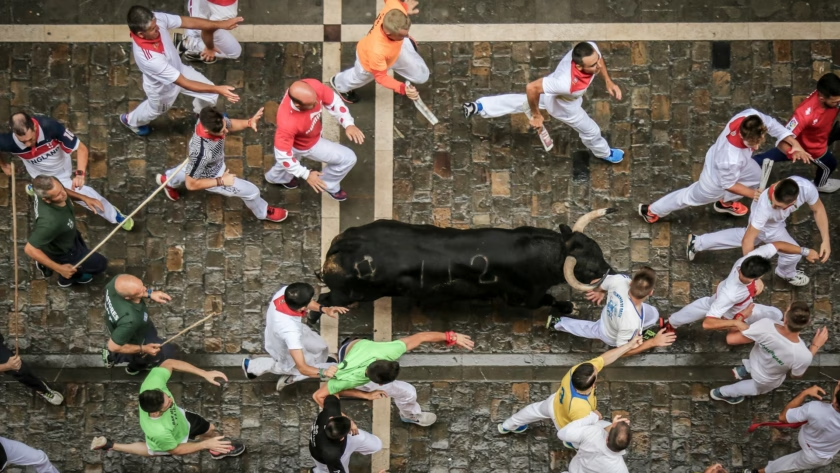
The Running of the Bulls 2026 takes place every morning from Tuesday 7 July to Tuesday 14 July 2026, as part of the San Fermín Festival in Pamplona, Spain. The festival itself opens on Monday 6 July at noon and closes at midnight on 14 July. Each morning at precisely 8:00am, six fighting bulls charge 848.6 metres through the narrow cobblestone streets of Pamplona’s old town to the Plaza de Toros — with thousands of runners attempting to stay just ahead of them.
Whether you plan to run, watch from a balcony, soak up the festival atmosphere, or simply want to know when and how everything works, this guide covers every detail — the Pamplona route, Plaza del Ayuntamiento, bull run safety, bag policy, running of the bulls 2026 tickets, and where to store your luggage in Pamplona before or after the fiesta.
San Fermín 2026: Key Dates and Festival Overview
The San Fermín Festival follows the same fixed calendar every year. The Running of the Bulls 2026 dates are as follows:
| Date | Event |
|---|---|
| Sunday 5 July | Recommended arrival day to secure accommodation and experience the opening ceremony the next day |
| Monday 6 July, 12:00pm | Chupinazo — the opening rocket launch from the Plaza Consistorial (City Hall), officially starting the fiesta |
| Tuesday 7 July, 8:00am | First bull run of the festival, starting at Calle de Santo Domingo |
| 7–14 July, 8:00am daily | Daily bull runs (encierros) |
| 6–14 July, 6:30pm daily | Evening bullfights at the Plaza de Toros (8:00pm on 5 July) |
| Tuesday 14 July, midnight | Pobre de Mí closing ceremony at Plaza del Ayuntamiento — the candlelit farewell to San Fermín |
Over a million visitors are expected in Pamplona during the festival, swelling the city’s usual population of roughly 200,000 to extraordinary levels. Accommodation fills up months in advance, and prices typically rise 300–500% compared to normal rates.
What Is the Chupinazo?
The festival begins not with a bull run, but with a rocket. Each year on 6 July, the mayor of Pamplona launches the Chupinazo — a rocket fired from the balcony of the Town Hall at Plaza Consistorial — to signal the official start of San Fermín. The square below is packed with tens of thousands of people, most dressed in white with red scarves and berets, and the moment the rocket goes up, the crowd erupts. It is one of the most electrifying moments in European festival culture. There is no bull run on opening day.
What Is the Pobre de Mí?
At midnight on 14 July, the festival ends with the Pobre de Mí ceremony at Plaza del Ayuntamiento. Participants gather with candles and sing a mournful song lamenting the end of the fiesta — “Poor me, poor me, how sad it is that San Fermín is over.” It is deeply emotional for those who have spent the full week in Pamplona, and a fittingly dramatic close to one of the world’s most intense celebrations.
The Pamplona Running of the Bulls 2026: Section by Section Route
The encierro covers 848.6 metres through the heart of Pamplona’s Casco Viejo (old town), beginning at the corrals on Calle de Santo Domingo and ending inside the Plaza de Toros. The route passes through several distinct sections, each with its own character and level of danger.
Section 1: Calle de Santo Domingo
The run begins at the bottom of the Cuesta de Santo Domingo, a sloping street hemmed in between ancient stone walls. This first stretch runs approximately 280 metres uphill to the Town Hall. It is widely considered the most dangerous section of the entire route. The bulls burst from their holding pens at full speed and cover the ground extremely quickly, leaving runners with almost no time to react. There is no protective fence along the upper part of this section before the Town Hall square, meaning there is nowhere to duck out of the way. Beginners are strongly advised against starting here.
Just before 8:00am, runners gather on this slope and chant three times to a small image of San Fermín built into the wall, asking for his protection. It is a moment of ritual calm before the rockets fire.
Section 2: Plaza del Ayuntamiento and Calle Mercaderes
The route widens slightly as it crosses Plaza del Ayuntamiento — also known as Plaza Consistorial — and continues into Calle Mercaderes. This second section is approximately 100 metres long and around 9 metres wide. The bulls begin to slow slightly here, but the crowds can create dangerous bottlenecks. This stretch does offer the longest section of protective fence on the route, giving runners an option to exit relatively quickly if needed.
At the end of Calle Mercaderes, the route makes a sharp right turn — known as La Curva or Dead Man’s Corner — into Calle Estafeta. This corner is one of the most notorious points on the entire run. Bulls are carried by their own momentum on the bend and frequently slide towards the outer fence, crushing anything or anyone in their path. Runners are advised to take this corner on the inside.
Section 3: Calle Estafeta
Calle Estafeta is the longest straight section of the route. By this point the bulls have been running for some time and tend to slow slightly compared to the ferocious pace of Santo Domingo, which means runners have a better chance of staying close to — and in front of — the herd. This is the section most favoured by experienced runners who want to run directly ahead of the bulls rather than alongside them. The street is narrow, with wooden fencing lining both sides.
Section 4: Telefónica and the Callejón
After Estafeta, the route narrows further past the Telefónica building and into the callejón — a downhill corridor leading directly into the bullring. This bottleneck is considered extremely dangerous. Tired and sometimes disoriented bulls can separate from the herd here, and the funnel shape creates a crush of runners that regularly results in pile-ups. A separated bull — a suelto — is the most unpredictable and dangerous situation in any run.
Section 5: Plaza de Toros
The run concludes inside the Plaza de Toros, Pamplona’s bullring and the second-largest in Spain, with a capacity of over 20,000. Runners who enter the ring are directed to run behind the inner fence to clear the arena for the bulls and the herders (dobladores) who guide them into the corrals. After all the bulls are secured, a final rocket signals the end of the run.
The entire encierro typically lasts between two and four minutes from start to finish, though runs can be significantly longer if a bull separates from the herd.
Running of the Bulls 2026 Tickets
Is the Bull Run Free?
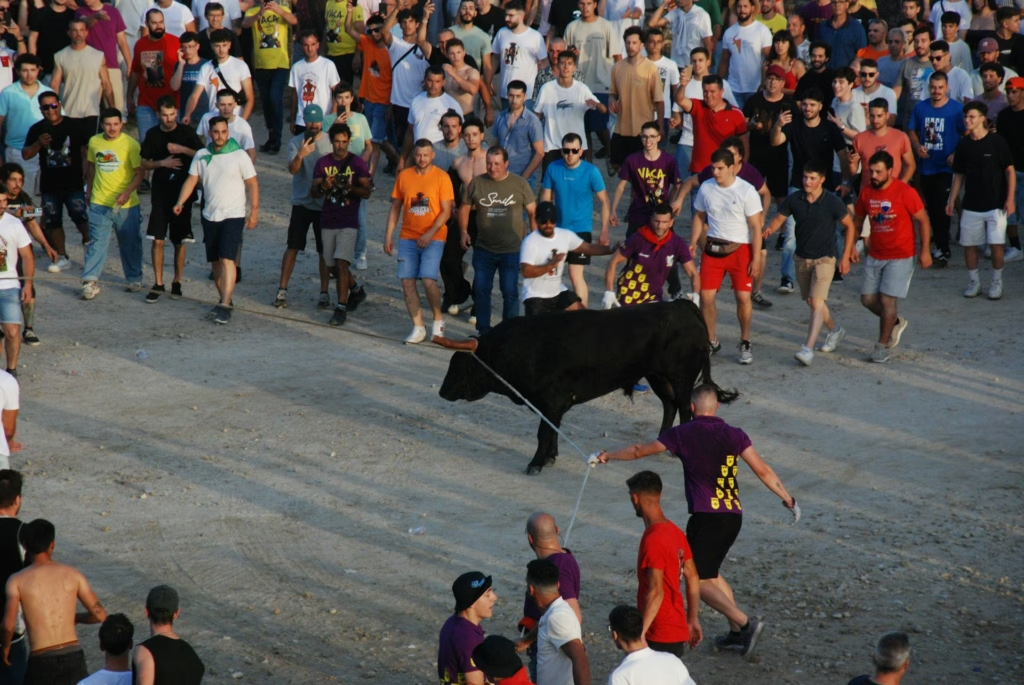
For the Running of the Bulls 2026, participating in the bull run itself is entirely free. There is no ticket required to run. However, you must present yourself at the designated starting areas by 7:30am (7:15am on 7 July and on Saturdays and Sundays), and access to the route is closed after that time.
Watching from a Balcony
Renting a private balcony along the route is the best and safest way to watch the encierro. Balcony rentals are available through specialist companies and typically include a prime view overlooking the route, plus a guide to explain what you are seeing. These spots sell out months in advance, so booking early is essential. Prices vary significantly by location and operator.
Bullfight Tickets
Every day of the festival at 6:30pm (8:00pm on 5 July), the bulls that ran in the morning return to the Plaza de Toros for the evening bullfight, known as the corrida. The Feria del Toro is one of the most prestigious bullfighting events in the world, featuring the finest matadors from across Spain.
Securing bullfight tickets as a visitor is genuinely difficult. Around 90% of tickets are held by Pamplona residents on annual subscriptions — a point of deep local pride. Tickets are available from around €53 through official channels such as TaquillaOficial.com, but demand vastly exceeds supply for the most popular days. July 6, 7, and 8 are the hardest to source. Less than 10% of tickets reach public sale, and authorised secondary market packages are the most reliable route for visitors. Be cautious of street touts, as counterfeit tickets have been reported during the fiesta.
| Seating Section | Description | Price Range |
|---|---|---|
| Barrera | Front row, closest to the ring | Highest |
| Contrabarrera | Second row | High |
| Tendido | Mid-level seating, lower deck | Mid-range |
| Grada | Elevated seating with a general view | Mid-range |
| Andanada | Upper sections, most affordable | From €53 |
| Sol (sun side) | Exposed to direct sun — louder, more festive atmosphere | Lower |
| Sombra (shade side) | Shaded — calmer, more traditional attendance | Higher |
Bull Run Viewing from the Bullring
Watching the encierro from inside the Plaza de Toros is a separate ticketed experience. Each morning, the bullring opens to spectators who want to see the bulls and runners arrive through the callejón. This is a cheaper and more accessible option than renting a balcony on the route itself, and the atmosphere inside the ring — with live music, entertainment from heifer runs, and the roar of the crowd — is exceptional.
Bull Run Safety: What You Must Know
The encierro causes between 50 and 100 injuries annually, and there have been 16 recorded fatalities since 1910. This is a genuinely dangerous event, not a tourist show with a safety net. Every person who runs does so at their own risk. Understanding the rules and the route is not optional preparation — it is the minimum baseline.
Official Rules Published by Pamplona City Hall
The following rules are published by the Ayuntamiento de Pamplona for the Running of the Bulls 2026 and are strictly enforced each morning along the route:
| Rule | Detail |
|---|---|
| Age | Under-18s are absolutely prohibited from running |
| Access time | Runners must be in position by 7:30am (7:15am on 7 July and weekends) |
| Sobriety | Running while drunk or under the influence of drugs is prohibited and enforced |
| Objects | No backpacks, cameras, mobile phones, or anything that could hinder your run or that of others |
| Clothing | Appropriate clothing and footwear are required |
| Behaviour | Do not provoke, attract, touch, or incite the bulls at any point |
| Positioning | Do not hide in corners, doorways, or blind spots before the run starts |
| Running | Run in a straight line; do not stop or cross the path of the bulls |
| Exit | Know your planned exit point and use it — do not stop suddenly or block other runners |
| Bullring | On entering the ring, move behind the inner fence immediately to clear space |
Violations of these rules can result in ejection from the route, fines, or arrest, depending on severity.
What to Wear
The traditional festival dress — white trousers, white shirt, red sash around the waist, and red neckerchief — is not simply aesthetic. It is practical: white makes you visible to both the bulls and other runners. For the run itself, wear comfortable, close-fitting shoes with good grip on cobblestones. Avoid loose scarves, jewellery, belts, or any item that could be caught on a horn. Do not carry a bag of any kind.
If You Fall
If you fall during the run, cover your head with your arms, stay as flat to the ground as possible, and do not attempt to get up until the herd has passed and the danger has cleared. Trying to stand mid-run puts you and others in greater danger.
Separated Bulls
A bull that separates from the herd — a suelto — is the most dangerous scenario in any encierro. A lone bull is disoriented, unpredictable, and can turn and charge in any direction. If you see a separated bull, do not try to be heroic. Leave the route immediately.
Walk the Route First
Experienced runners consistently advise walking the full route the day before you run. Knowing where the fences are, where the corners are, and where your planned exit point is could make the difference between a controlled run and a serious injury.
San Fermín Bag Policy: What You Can and Cannot Carry
During the Bull Run
This is non-negotiable. Pamplona City Hall officially requires that runners participate free of any objects that could hinder their run or that of others. This means no backpacks, no cameras, no mobile phones, and no GoPros. If you are caught with any of these on the route, you can be removed by police. This rule exists not just for your own safety but for everyone around you — a falling runner with a hard camera or a backpack can cause serious injury to the people behind them.
At the Festival Generally
The San Fermín Festival takes place across the entire old town of Pamplona, and outside of the run itself there are no formal bag size restrictions for spectators moving through the city. However, during the encierro viewing period, large bags are impractical given the crowds, and you should expect security checks at certain controlled areas. If you have rented a balcony, confirm the individual operator’s policy on what you may bring.
Key items to have on you during the festival: cash (many small vendors and bars do not accept cards during the fiesta), a poncho or lightweight rain layer, a water bottle, and identification.
Luggage Storage in Pamplona During San Fermín
Radical Storage offers secure luggage storage across Pamplona through a network of verified local partner businesses — shops, cafes, and local stores — where you can drop off your bags and collect them at your convenience. Prices start from €5 per bag per day, with no size restrictions and no hidden costs. All storage locations are verified and your bags are covered. Booking takes a few minutes online and gives you instant confirmation of your drop-off point.
During San Fermín, getting to your accommodation the day you arrive and on the morning you leave is already a logistical challenge. Radical Storage removes the luggage problem from that equation, letting you explore the festival, watch the encierro, and move freely through the city without dragging bags through crowds.
Pamplona Bus Station Lockers
The main bus station on Calle Yanguas y Miranda has self-service lockers (look for signs marked “Consigna”). It is located approximately 12–15 minutes on foot from Plaza del Castillo and the old town. Operating hours in previous years ran from 5:30am to 10:00pm, though these should be confirmed closer to the festival dates. Lockers fill up quickly during San Fermín, so do not rely on availability if you plan to arrive on the busiest days (6, 7, or 8 July).
Hotel or Hostel Storage
Most hotels and hostels in Pamplona will store luggage for guests who arrive before check-in time or need to check out before their departure. Given the extreme demand on accommodation during the festival, confirm this in advance with your accommodation provider — do not assume it will be available on the day.
Getting to Pamplona for the Running of the Bulls
Pamplona is the capital of the Navarre region in northern Spain, approximately one hour by road from San Sebastián and around three to four hours from Madrid by coach.
| Route | Method | Approx. Journey Time |
|---|---|---|
| Madrid → Pamplona | Bus (ALSA) | ~5 hours |
| Madrid → Pamplona | Train (Renfe) | ~3.5–4 hours |
| Barcelona → Pamplona | Bus or train | ~3.5–4 hours |
| San Sebastián → Pamplona | Bus | ~1 hour |
| Bilbao → Pamplona | Bus | ~1.5 hours |
| Zaragoza → Pamplona | Bus or train | ~2 hours |
Pamplona’s bus station is the most central point for most visitors arriving for the Running of the Bulls 2026. The city does not have a major international airport — the nearest major hubs are Bilbao, Zaragoza, and Madrid Barajas, all with onward connections to Pamplona by land.
Book transport and accommodation as far in advance as possible. The city sells out completely during San Fermín, and prices increase dramatically the closer you get to the festival dates.
San Fermín 2026 Beyond the Bull Run
The Running of the Bulls is the event that brings most visitors to Pamplona, but the San Fermín Festival contains over 400 scheduled events across nine days. If you are in the city for the week, there is something happening almost every hour. Key events include:
Giants and Big Heads Parade (Gigantes y Cabezudos): Large papier-mâché figures representing kings, queens, and historical characters parade through the streets accompanied by traditional Navarran music. This is a family-focused event and one of the most visually spectacular of the festival.
Txupinazo Balcony Events: On the opening day of 6 July, the balconies around Plaza Consistorial are among the most sought-after spots in all of Pamplona. If you want to watch the opening ceremony from above the crowds, book a balcony rental specifically for the Chupinazo well in advance.
Evening Bullfights (Corridas): The Feria del Toro runs every evening at 6:30pm from 6 to 14 July. Each corrida features three matadors and six bulls, and lasts approximately two and a half hours.
Riau-Riau and Procession of San Fermín: On 7 July at 10:00am, the official procession of the statue of San Fermín moves through the old town from the Church of San Lorenzo to the Church of San Cernin, accompanied by the town corporation and traditional music. It is one of the most solemn moments of the festival.
Fireworks and Music: Each evening during the festival features concerts, traditional dances, folk music from different villages of Navarre, and fireworks displays.
Penas: The local social clubs of Pamplona — the Peñas — are at the heart of the festival’s street culture. They fill the streets with music, marching, and general revelry throughout the day and deep into the night.
Practical Tips for First-Time Visitors to Pamplona
Accommodation: Book as early as possible — ideally six to twelve months before the festival for any reasonable selection. Prices triple or more during San Fermín. If you cannot find accommodation in Pamplona itself, nearby towns such as Logroño, Zaragoza, and Vitoria-Gasteiz are within commuting distance.
Budget: A week in Pamplona during San Fermín costs between roughly €400 and €800 per person for budget to mid-range visitors, covering accommodation, food, drinks, and entertainment but not flights. This estimate rises significantly for those booking balcony spaces, bullfight tickets, or guided packages.
Weather: July in Pamplona is warm and occasionally very hot, with temperatures reaching 25–30°C. Bring light clothing, sun protection, and prepare for the fact that the festival never really stops — the streets are active around the clock.
Language: Pamplona is bilingual in Spanish and Basque (Euskara). Spanish is universally understood, but learning a few words of greeting in Basque is appreciated by locals. English is spoken in many tourist-facing businesses but should not be assumed everywhere.
Safety beyond the run: With over a million visitors and a festival that runs 24 hours a day, be aware of your belongings at all times. Pickpocketing is a known issue during San Fermín. Use a money belt or keep valuables secure, particularly in the densest crowds.
Frequently Asked Questions About Running of the Bulls 2026
The bull runs take place every morning from Tuesday 7 July to Tuesday 14 July 2026, at 8:00am sharp. The broader San Fermín Festival runs from noon on 6 July to midnight on 14 July.
The encierro runs through the old town of Pamplona, Navarre, Spain — from the corrals on Calle de Santo Domingo through Plaza del Ayuntamiento, Calle Mercaderes, and Calle Estafeta to the Plaza de Toros. The total distance is 848.6 metres.
Yes. Participating in the bull run is free. There is no registration or ticket required to run. You must arrive at the designated starting position by 7:30am.
Typically between two and four minutes from the moment the first rocket fires to the moment the bulls are secured in the bullring. Runs involving separated bulls can last longer.
Bullfight tickets are available from around €53 through TaquillaOficial.com, though most good seats are held by annual subscribers. Authorised packages through specialist companies are the most reliable option for visitors. Book well in advance.
Final Thoughts
The Running of the Bulls 2026 promises an unforgettable week of deep-rooted tradition, intense adrenaline, and unmatched Basque hospitality. Whether you plan to test your nerve on the cobblestones of Santo Domingo or safely take in the sea of white and red from a rented balcony, navigating San Fermín successfully requires careful preparation. By tracking the official schedule, respecting the strict safety mandates, and securing your oversized luggage before heading into the crowded historic center, you can fully immerse yourself in Pamplona’s legendary fiesta.