

Planning a trip to the City of Light and wondering is Paris expensive? The short answer: yes, Paris is moderately expensive by European standards, but it delivers exceptional value when you know where to look. In 2026, a typical tourist spends between €95–265 per day, depending on travel style: budget travelers managing on €95–120, mid-range visitors spending around €150–220, and luxury travelers exceeding €350 daily. Accommodation is the biggest variable; decent central hotels now average €150–200 per night, while the metro remains one of the city’s best deals at €2.55 per ride.
Paris is roughly 25–30% cheaper than London overall and more affordable than Zurich or Copenhagen, but pricier than Rome, Barcelona, or Lisbon. With the right approach, eating where locals eat, using the Navigo pass, and visiting museums on free days, you can experience world-class architecture, museums, and food without a world-class budget. This guide breaks down every major cost category and gives you the money-saving tips that most Paris guides skip over.
Paris Cost Overview: How Expensive Is Paris in 2026?
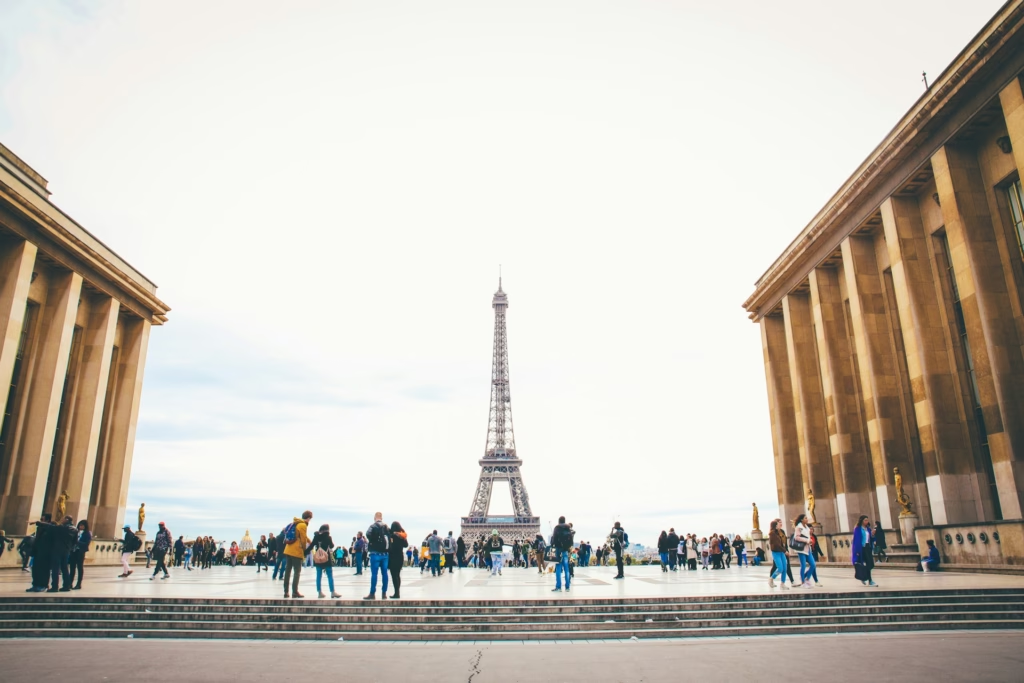
When asking how expensive is Paris, the global context matters. Paris ranks among Europe’s pricier capitals in 2026, with a cost of living index of roughly 70 compared to New York’s 100, meaning it’s more affordable than you might expect from its global reputation. The city is significantly cheaper than London across almost every spending category, yet more expensive than most Southern and Eastern European cities. Below is a full breakdown of what you’ll actually spend.
Let’s break down the typical costs you’ll encounter in Paris in 2026:
Accommodation Costs in Paris
Accommodation is typically the largest expense for visitors to Paris. Prices vary significantly by arrondissement, season, and star rating. Finding a decent central room under €200 per night has become harder in 2026, but outer arrondissements with good metro links offer much better value.
| Accommodation Type | Price Range (per night) |
|---|---|
| Hostel dorm bed | €28–45 |
| Budget hotels (1–2 star) | €85–130 |
| Mid-range hotels (3-star) | €130–220 |
| Luxury hotels (4–5 star) | €250–800+ |
| Apartments / Airbnb | €90–250 |
Hotel prices in Paris average around €165 per night for a mid-range property in 2026, with prices spiking dramatically during peak season (June–August), Paris Fashion Week (late February and late September), and other major events. For better accommodation value, consider staying in the 11th, 12th, 13th, or 15th arrondissements rather than the 1st, 6th, or 8th — you save 25–40% and still get excellent metro connections. For longer stays, consider apartments in residential districts like Butte-aux-Cailles (13th) or Denfert-Rochereau (14th) where short-term rental prices are more reasonable and you get genuinely local surroundings.
Is it expensive to live in Paris? Monthly rent for locals runs €900–1,300 for a one-bedroom in outer arrondissements and €1,600–2,600 in central areas. While high, Paris remains about 27% cheaper than London for both residents and visitors — and considerably cheaper than Zurich or Oslo. Don’t forget the Taxe de Séjour (tourist tax): €0.65 to €14.95 per adult per night depending on hotel category, which adds up over a multi-night stay.
Food and Drink Costs in Paris
Is Paris expensive for food? It depends entirely on how you eat. Tourist-facing restaurants near the Eiffel Tower, Champs-Élysées, or Notre Dame charge 30–50% more than equivalent places two streets away. The prix fixe (formule or menu du jour) remains Paris’s best-value institution.
| Food & Drink | Price Range |
|---|---|
| Espresso / coffee (at bar, standing) | €2–2.50 |
| Coffee (seated at table or terrace) | €3.50–5 |
| Croissant / pastry (boulangerie) | €1.30–2.80 |
| Breakfast at café | €5–12 |
| Prix fixe lunch menu (2–3 courses) | €15–26 |
| Dinner at mid-range bistro | €28–48 per person |
| High-end / gastronomic restaurant | €65–160+ per person |
| Street food (crêpes, falafel, sandwich) | €5–10 |
| Glass of wine | €4–9 |
| Beer (pint) | €6–9.50 |
| Bottle of water (restaurant) | €1.50–3.50 |
| Supermarket meal ingredients | €12–22 per day |
The prix fixe lunch is the single best-value meal in Paris: €15–26 for two or three courses at restaurants that charge €40–60 per person at dinner. Street food is also excellent value — a fresh crêpe from a proper street stand costs €3–5, falafel in the Marais around €6–8, and sandwiches from a boulangerie €5–7. Supermarkets (Carrefour, Monoprix, Franprix) are well stocked for breakfast provisions and picnic supplies; a bottle of decent French wine costs €5–10 there versus €25–40 in a restaurant.
Always ask for “une carafe d’eau” (tap water) at restaurants — it’s free by law and safe to drink. Sitting at a terrace rather than the bar can add €1–2 per drink, which compounds over a trip.
Public Transportation Costs in Paris
Is Paris an expensive city to visit for getting around? No — the metro is genuinely good value and one of Europe’s most comprehensive urban transport networks. January 2026 brought a 2.3% fare increase, but prices remain reasonable.
| Transportation | Price |
|---|---|
| Single metro/RER/train ticket | €2.55 |
| Single bus/tram ticket | €2.05 |
| Navigo Jour (1-day unlimited, all zones) | €12.30 |
| Navigo Semaine (weekly pass, Mon–Sun) | €30.75 |
| Navigo Mensuel (monthly, all zones) | €90.80 |
| Paris Visite 1 day (incl. airports) | €30.60 |
| Paris Visite 5 days (incl. airports) | €78.00 |
| Airport ticket (RER B to CDG or Metro 14 to Orly) | €14.00 |
| Taxi from CDG to city centre | €55 (Left Bank) / €52 (Right Bank) fixed |
| Taxi from Orly to city centre | €35 (Right Bank) / €37 (Left Bank) fixed |
| Taxi start fare (weekday) | €3.00 |
| Vélib’ bike-share (30-min sessions unlimited) | €5/day or €15/week |
A major 2026 update: paper magnetic tickets have been phased out. By June 2026, they will be invalid across the entire rail network (metro, RER, trains). You must now use a Navigo Easy card (€2 for the card itself), the Île-de-France Mobilités app, or contactless bank card tap-in on metro gates. The Navigo Easy card can be topped up at any metro station machine.
For tourists, the Navigo Semaine (weekly pass, €30.75, valid Monday to Sunday) is outstanding value if you arrive on a Monday and plan to use public transport daily — it covers metro, RER, buses, trams, and suburban trains across all zones, including Versailles and the airports. The Paris Visite pass is useful if you need airport access built in and want the convenience of a single pass for a short stay.
Is Uber expensive in Paris? Uber and other rideshare services operate across Paris and typically run 10–20% more than taxis. A typical 15-minute city-centre Uber ride costs around €15–22. Both are significantly more expensive than public transport for most journeys.
Attraction and Entertainment Costs in Paris
Is Paris expensive for tourists wanting cultural experiences? Headline attraction prices have increased in 2026, with the Louvre now operating two-tier pricing: €22 for EEA residents and €32 for non-EEA visitors. Despite this, Paris also offers an extraordinary range of free attractions.
| Attractions & Activities | Price |
|---|---|
| Eiffel Tower (stairs to 2nd floor, adult) | €14.80 |
| Eiffel Tower (summit by lift, adult) | €36.70 |
| Louvre Museum (EEA residents) | €22 |
| Louvre Museum (non-EEA visitors) | €32 |
| Musée d’Orsay | €16 |
| Arc de Triomphe | €16 |
| Notre-Dame towers (reopened) | €5 |
| Sainte-Chapelle | €22–23 |
| Palace of Versailles | €20–35 (low to high season) |
| Seine River cruise | €15–27 |
| Moulin Rouge show | €92–225 |
| Paris Museum Pass (2 days) | €55 |
| Paris Museum Pass (4 days) | €70 |
| Paris Museum Pass (6 days) | €85 |
| Disneyland Paris (1-day, 1-park) | €65–105 (dynamic pricing) |
Prices may vary. Always verify on official websites before booking. Non-EEA two-tier pricing applies to many national monuments from January 2026.
How expensive is Disneyland Paris? In 2026, dynamic pricing continues to apply, with tickets varying based on crowd forecasts. Low-season weekday tickets start around €65 for adults, rising to €105 during peak periods. For families, a day at Disneyland Paris remains a significant expense but is somewhat cheaper than comparable U.S. Disney parks.
The Paris Museum Pass (€55 for 2 days, €70 for 4 days, €85 for 6 days in 2026) covers free entry to over 50 museums and monuments, including the Louvre, Musée d’Orsay, Versailles, Arc de Triomphe, and Sainte-Chapelle. Given that individual non-EEA Louvre admission alone is €32, the 2-day pass can pay for itself after just two stops. Many museums also require advance reservations even for pass holders — book time slots online before you arrive.
Many museums and national monuments offer free entry on the first Sunday of each month — a genuine money-saver, though expect large crowds. Paris is also home to exceptional free attractions: Musée Carnavalet (Paris history), Petit Palais, most churches (except towers and crypts), public parks, and historic neighbourhoods like the Marais, Montmartre, and Canal Saint-Martin.
Is Paris More Expensive Than London? City Comparison
A common question travelers ask is “is Paris more expensive than London?” The data consistently shows that London is significantly pricier across almost every category:
| Expense Category | Paris | London | Difference |
|---|---|---|---|
| Overall cost of living | Baseline | +25–30% | London is 25–30% more expensive |
| Accommodation (mid-range avg/night) | €160–165 | €190–210 | London is ~25–30% more expensive |
| Restaurant meals (mid-range) | €28–48 per person | €38–65 per person | London is ~30–40% more expensive |
| Metro single ticket | €2.55 | €3.20–3.80 (Tube) | London is ~25–50% more expensive |
| Groceries (per week) | €75–95 | €95–130 | London is ~25–35% more expensive |
| Coffee (espresso, bar) | €2–2.50 | €3–4 | London is ~40–60% more expensive |
| Beer (pint) | €6–9.50 | €7–11 | London is ~15–25% more expensive |
As the data shows, is London more expensive than Paris? Consistently, yes. London ranks as one of Europe’s most expensive cities, while Paris offers better value across almost every spending category. The only areas where Paris costs can match or exceed London are certain luxury goods and high-end hotel suites. This cost differential makes Paris a more budget-friendly option for visitors wanting a world-class European capital experience.
Is Paris Expensive to Visit? Tourist Budget Breakdown
Is Paris expensive to visit for the average tourist? Here’s what you might realistically spend on a budget, mid-range, and luxury day in Paris in 2026:
Budget Traveler (€95–120/day)
- Hostel dorm or budget hotel: €30–45
- Breakfast from boulangerie: €4–6
- Prix fixe lunch menu: €15–20
- Simple dinner or picnic from market: €10–18
- Metro (Navigo Easy, ~2 rides): €5.10
- One free or budget attraction: €0–16
- Miscellaneous: €7–10
Mid-Range Traveler (€150–220/day)
- Mid-range hotel or Airbnb: €130–165
- Breakfast at café: €8–12
- Prix fixe lunch: €20–26
- Dinner at mid-range bistro: €32–45
- Metro (Navigo Jour or 3 rides): €7.65–12.30
- One or two paid attractions: €16–36
- Miscellaneous: €15–20
Luxury Traveler (€350+/day)
- Luxury hotel: €280–500+
- Hotel breakfast or upscale café: €18–28
- Lunch at nice restaurant: €40–60
- Dinner at fine dining / gastronomic: €90–200+
- Taxis / Uber: €35–60
- Multiple premium attractions / experiences: €50–120+
- Shopping and miscellaneous: €60–250+
Paris Trip Cost: How Much for a Weekend or 5 Days?
Planning a Paris weekend getaway or a longer stay? Here’s what you might spend for different trip durations:
Paris for the Weekend (3 days)
| Expense Category | Budget (3 days) | Mid-range (3 days) | Luxury (3 days) |
|---|---|---|---|
| Accommodation | €90–135 | €390–495 | €840–1,500+ |
| Food & Drink | €90–132 | €180–249 | €420–840+ |
| Transportation | €15–25 | €23–37 | €105–180 |
| Attractions | €15–48 | €48–98 | €120–360 |
| Miscellaneous | €21–36 | €45–66 | €150–600 |
| Total | €231–376 | €686–945 | €1,635–3,480+ |
5 Days in Paris
| Expense Category | Budget (5 days) | Mid-range (5 days) | Luxury (5 days) |
|---|---|---|---|
| Accommodation | €150–225 | €650–825 | €1,400–2,500+ |
| Food & Drink | €150–220 | €300–415 | €700–1,400+ |
| Transportation | €26–41 | €38–62 | €175–300 |
| Attractions | €25–80 | €80–160 | €210–530 |
| Miscellaneous | €35–55 | €78–110 | €260–1,100 |
| Total | €386–621 | €1,146–1,572 | €2,745–5,830+ |
These figures show that for a Paris weekend, budget travelers should plan for €230–380, mid-range visitors for €690–950, and luxury travelers for €1,600+. For a 5-day trip, budget travelers need approximately €390–620, mid-range visitors €1,150–1,570, and luxury travelers €2,750+. All figures exclude flights and pre-trip spending.
Cheap Things to Do in Paris: Budget-Friendly Activities
Looking for cheap things to do in Paris? Some of the city’s best experiences cost nothing at all:
- Free museum days – Many national museums, including the Louvre, Musée d’Orsay, and Versailles (gardens only), offer free admission on the first Sunday of each month. Musée Carnavalet (Paris history) and Petit Palais are always free.
- Paris Greeters – A free service connecting visitors with local volunteers for personalised neighbourhood walking tours. Book in advance at greeters.paris.
- Self-guided walking tours – The Paris Convention and Visitors Bureau offers free downloadable themed walking itineraries for different neighbourhoods.
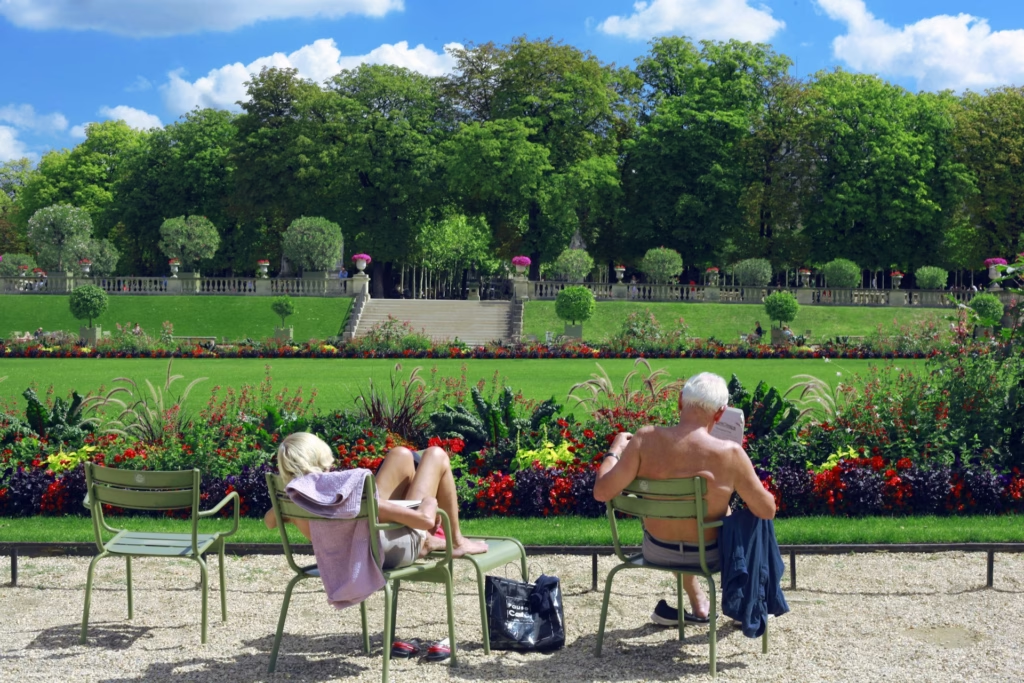
- Luxembourg Gardens – One of Paris’s most beautiful parks, free to enter. Perfect for picnics and people-watching.
- Canal Saint-Martin – Join locals for an evening picnic along this popular waterway in the 10th arrondissement. Bring wine from a supermarket.
- Free music at churches – Many Parisian churches host free organ recitals and choir performances, particularly on Sundays and during summer festivals.
- Marché d’Aligre – An authentic market in the 12th arrondissement with affordable produce and a genuine local atmosphere, far from tourist pricing.
- Belleville Park – Climb to the top for one of the best free panoramic views of Paris, rivalling paid observation decks.
- Free art galleries in the Marais – The Marais district is full of small contemporary art galleries that cost nothing to browse.
- Père Lachaise Cemetery – The final resting place of Oscar Wilde, Jim Morrison, and Édith Piaf. Entry is free, maps available at the gate.
Paris on a Budget: Money-Saving Tips
Paris on a budget is entirely possible with the right approach. Here are the most effective strategies by category:
Accommodation Savings
- Stay in the 11th, 12th, 13th, 15th, or 19th arrondissements — well-connected by metro with hotel rates 25–40% lower than central areas.
- Visit January–March (excluding Valentine’s Day) for the lowest hotel rates — up to 40–50% below peak summer pricing.
- Avoid Paris Fashion Week (late February and late September) and major events when rates double.
- Consider apartments for stays of 3+ days — a studio with a kitchen saves €15–25 daily on meals.
- Look for hotels that include breakfast, saving €8–15 per person daily.
Food and Drink Savings
- Use the prix fixe (formule) for lunch: two or three courses for €15–26 at restaurants that charge double at dinner.
- Shop at neighbourhood markets: Marché Bastille, Marché d’Aligre, and Marché des Enfants Rouges offer excellent value produce and prepared food.
- Ask for “une carafe d’eau” — tap water at restaurants is free by law and perfectly safe to drink.
- Drink coffee standing at the bar (€2–2.50) rather than seated (€3.50–5). Never order coffee near the Eiffel Tower.
- Look for happy hour deals in bars around Canal Saint-Martin and Oberkampf (typically 5–8pm).
- Boulangeries often reduce prices on remaining items in the late afternoon — good timing for budget pastries.
Transportation Savings
- Buy a Navigo Easy card (€2 one-time) and load metro tickets (€2.55 each) or the Navigo Jour (€12.30) to avoid single-journey queuing.
- Buy the weekly Navigo Semaine pass (€30.75) if arriving on a Monday and staying at least 5 days — it covers all zones including Versailles and both airports.
- Note: paper magnetic tickets are fully phased out by June 2026. Switch to the Navigo Easy card or the Île-de-France Mobilités app before you arrive.
- Use Vélib’ bike-sharing for short trips (€5/day or €15/week) — central Paris is flat and very cyclable.
- Walk between nearby attractions — central Paris is more compact than most visitors expect, and many major sights are under 20 minutes’ walk from each other.
Attraction Savings
- Visit museums on free days (first Sunday of the month for most national museums).
- Buy the Paris Museum Pass (€55 for 2 days) if visiting multiple paid attractions — given the €32 non-EEA Louvre price alone, it pays for itself quickly.
- Book Eiffel Tower tickets online well in advance — same-day availability is rare in summer and prices are the same online as on-site.
- Visit the Louvre on Wednesday or Friday evenings (open until 9:45pm) when crowds are smaller.
- Book luggage storage in Paris with Radical Storage to explore the city hands-free on arrival and departure days.
PRO TIP: Book luggage storage in Paris with Radical Storage and enjoy museums and attractions hands-free.
Cheapest Time to Go to Paris: Seasonal Guide
The cheapest time to go to Paris varies significantly by season. Here’s the full picture for 2026:
| Season | Price Level | Weather | Crowds | Notes |
|---|---|---|---|---|
| January–February | Lowest | Cold, 3–8°C | Lowest | Post-holiday sales (soldes). Best hotel deals. |
| March–April | Moderate | Cool, occasional rain | Moderate | Prices rise during Easter. Spring blooms. |
| May | Moderate–High | Mild, pleasant | Moderate–High | French Open (late May) pushes west Paris prices up. |
| June | High | Warm, 20–24°C | High | Long daylight hours. Peak begins. |
| July–August | Highest | Hot, 25–30°C | Highest | Many locals leave. Tourists fill the city. |
| September | High | Warm, pleasant | High | Fashion Week (late Sept.) doubles hotel prices. |
| October | Moderate | Cool, some rain | Moderate | Fall colours in parks. Good value from mid-Oct. |
| November | Low | Cold, rainy | Low | Pre-holiday quiet. One of the cheapest months. |
| December | Moderate–High | Cold, occasional frost | High | Christmas markets, lights, and festive tourists. |
For the best combination of reasonable prices and decent weather, visit in late October–early November or mid-January–mid-February. The absolute cheapest period is late January through February, when hotel rates can be 40–50% below peak-season prices. Paris’s world-class museums, covered passages (galéries), and cosy bistros make it perfectly enjoyable even in cold weather.
Is Paris an Expensive City to Visit? The Verdict
So, is Paris an expensive city to visit? The honest answer is: moderately, and thoughtfully manageable. Paris is not cheap — it’s pricier than Rome, Lisbon, or Prague, and accommodation in particular has become more expensive in 2026. But it remains substantially more affordable than London, Zurich, or Scandinavian capitals, and it delivers extraordinary value across food, culture, and public transport when you approach it smartly.
Budget travelers can enjoy Paris for around €95–120 per day; mid-range visitors should budget approximately €150–220 daily; and luxury travelers can expect to spend €350 or more. What makes Paris special is what that money buys you: world-class museums (many of which go free on the first Sunday of each month), iconic architecture you can admire for nothing from the street, some of the best food in the world at every price point, and a metro system that covers the entire city for €2.55 a ride.
By following the tips in this guide — choosing your arrondissement wisely, eating lunch on the prix fixe, using the Navigo pass, timing museum visits on free days — you can experience the best of Paris without the worst of its costs. Whether you’re drawn to the Louvre, a moonlit Eiffel Tower, or a glass of wine on a canal terrace, Paris offers a European experience that justifies its moderate expense every time.
