
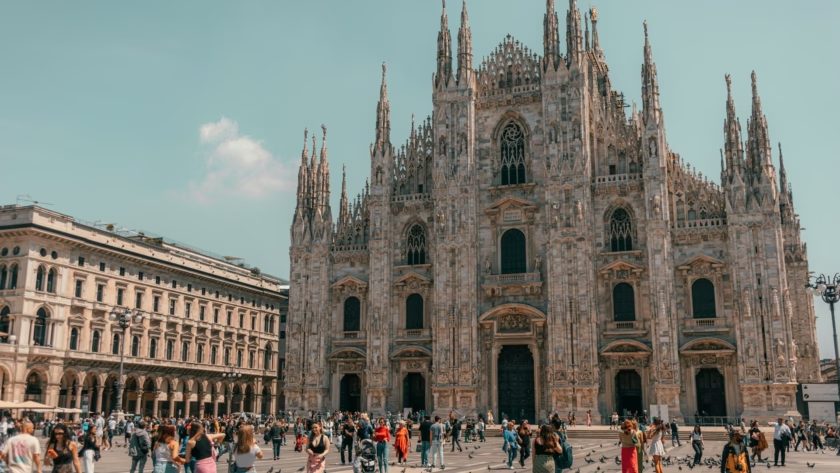
Is Milan expensive to visit? The short answer is yes, Milan is Italy’s most expensive city, and one of the pricier destinations in Western Europe. As the country’s financial capital and the global headquarters of fashion houses like Prada, Versace, and Armani, high prices are part of Milan’s DNA. But expensive is relative, and with the right approach, you can experience this world-class city without a ruinous budget.
In 2026, a typical visitor to Milan can expect to spend between €70–350+ per day depending on travel style. Budget travellers can manage on around €70–80 daily; mid-range visitors should plan for €150; luxury travellers will easily exceed €350. Accommodation takes the biggest share of the budget, with mid-range hotels running €90–200 per night. Public transport remains good value at €2.20 per ride or €7.60 for a full-day pass. This guide breaks down every major cost category, with practical money-saving tips that most Milan travel guides overlook.
Why is Milan So Expensive?
Many visitors wonder why is Milan so expensive compared to Rome, Florence, or Naples. Several reinforcing factors are responsible. Milan is Italy’s undisputed business hub — it generates roughly 10% of Italy’s entire GDP — and the constant flow of corporate travellers, executives, and international expats drives baseline prices upward across all sectors. Accommodation in particular is shaped more by business demand than tourist demand, which means prices stay elevated year-round rather than only in summer.
Milan’s identity as a global fashion capital adds another layer. The Quadrilatero della Moda — the luxury shopping district bounded by Via Montenapoleone, Via della Spiga, and Via Manzoni — is one of the most expensive retail zones on earth. That luxury aura filters out into surrounding restaurants, hotels, and bars. Even a coffee in the wrong café can cost three times what it should.
Milan is approximately 20–25% more expensive than Rome for accommodation and dining, and around 15–20% pricier than Florence for comparable experiences. Is Milan an expensive city by European standards too? Yes — it ranks alongside Paris and Barcelona rather than budget-friendly Rome or Lisbon, though it remains notably cheaper than London or Zurich.
Is Milan Expensive for Tourists? Accommodation Costs in Milan
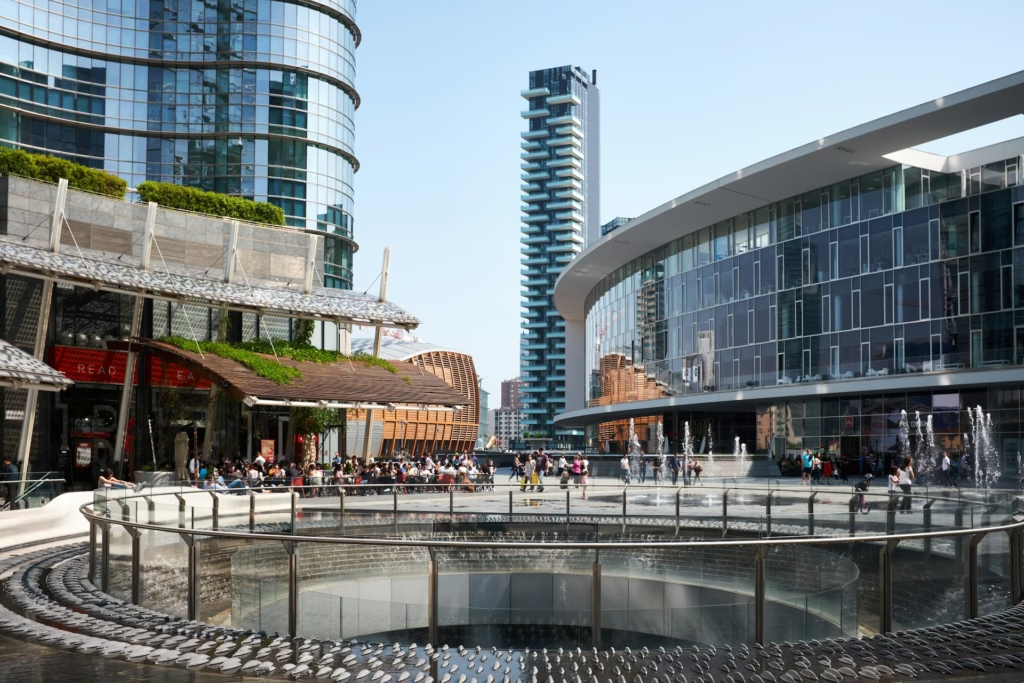
Accommodation is typically the largest expense when visiting Milan. Prices vary significantly by neighbourhood, star rating, and season — and spike sharply during Milan Fashion Week (February/March and September/October) and the Salone del Mobile furniture fair (April), when rates for remaining rooms can double or triple.
| Accommodation Type | Price Range (per night) | Location | Best For |
|---|---|---|---|
| Luxury hotels (5-star) | €250–550+ | Brera, Fashion District, Duomo | Luxury & business travellers |
| Boutique hotels | €160–300 | Brera, Navigli | Couples, style-conscious stays |
| Mid-range hotels (4-star) | €120–200 | City centre, Porta Nuova | Comfort-seeking travellers |
| Mid-range hotels (3-star) | €90–155 | Various neighbourhoods | Value-focused travellers |
| Budget hotels | €55–90 | Città Studi, Lambrate, Stazione | Budget travellers, longer stays |
| Hostels (private room) | €75–95 | Various neighbourhoods | Solo travellers |
| Hostels (dorm bed) | €32–45 | Various neighbourhoods | Backpackers, students |
| Airbnb / apartment | €90–180 | Various neighbourhoods | Families, longer stays |
Prices reflect 2026 averages and can rise 30–50% or more during Fashion Weeks and Salone del Mobile.
Money-Saving Tips for Accommodation
Book well in advance: Milan’s accommodation fills quickly, especially during events. Booking 3-6 months ahead can save 15-25% on room rates.
Consider location carefully: Staying just outside the city center near a metro station can reduce accommodation costs by 30-40% while still providing convenient access to attractions.
Visit during the off-season: Hotel rates in January (except during fashion events) and August (when locals leave the city) can be 20-30% lower than peak season.
Consider luggage storage solutions: If you have an awkward schedule with early arrivals or late departures, services like Radical Storage offer affordable luggage storage throughout Milan, allowing you to maximize your sightseeing time without paying for extra hotel nights.
Is Milan Expensive to Eat? Food and Dining Costs in Milan
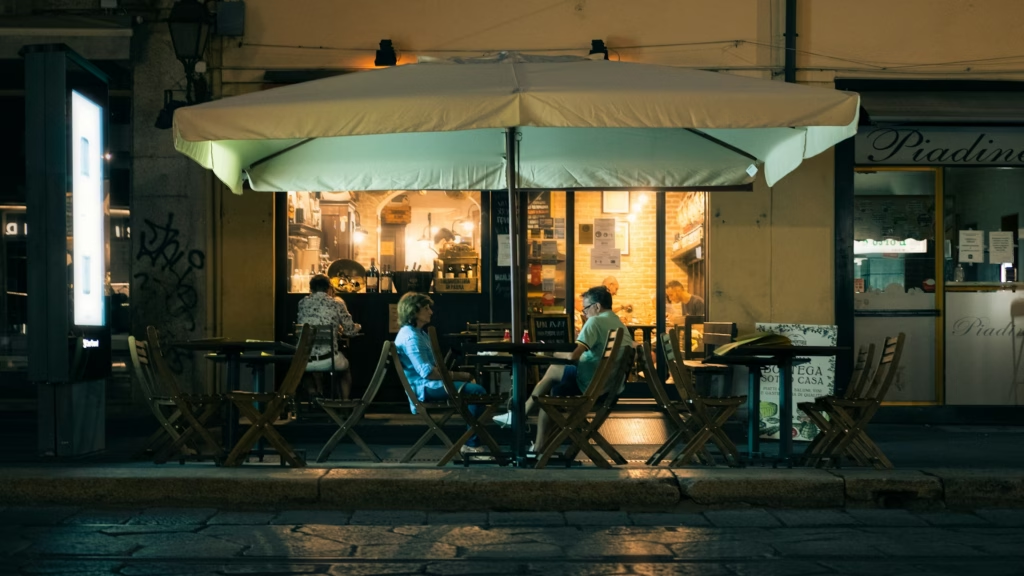
Is Milan expensive to eat and drink? It depends entirely on where and how you eat. Milan has a reputation for high restaurant prices, and tourist-area establishments near the Duomo and Galleria Vittorio Emanuele II do charge 40–60% more than neighbourhood spots for essentially the same food. Step ten minutes away from the main piazzas and the picture changes considerably.
| Dining Category | Price Range | Example Establishments | What to Expect |
|---|---|---|---|
| Fine Dining | €85–160+ per person | Cracco, Seta, Il Luogo di Aimo e Nadia | Multi-course meals, premium ingredients, exceptional service |
| Upscale Restaurants | €50–85 per person | Langosteria, Trippa, Contraste | High-quality dishes, refined atmosphere, good wine selection |
| Mid-Range Restaurants | €30–50 per person | Trattoria Milanese, Osteria del Binari | Traditional Milanese cuisine, casual atmosphere |
| Casual Dining | €20–32 per person | Pizzerias, contemporary casual eateries | Good quality food, informal setting |
| Budget Restaurants | €12–20 per person | Ethnic eateries, fast-casual spots | Filling meals, simple settings |
| Street Food | €3–10 per item | Food trucks, bakeries, markets | Pizza al taglio, panini, arancini |
| Aperitivo | €8–15 | Bars in Navigli, Porta Romana | One drink with access to food buffet |
| Coffee at Bar (standing) | €1-1.50 | Any local café | Espresso, cappuccino (morning only) |
Prices reflect 2026 averages. Most restaurants also charge a “coperto” (cover charge) of €2-5 per person.
Money-Saving Tips for Food in Milan
Embrace the aperitivo: For €10-14, you can enjoy a drink and access to buffets that range from basic snacks to elaborate spreads including pasta, risotto, and meat dishes.
Lunch specials: Many restaurants offer “business lunch” menus on weekdays, with two or three courses at significantly reduced prices (€10-20).
Stay away from tourist areas: Restaurants near major attractions like the Duomo charge premium prices. Walking just 10-15 minutes away can reduce dining costs by 20-30%.
Coffee culture: Standing at the bar for your coffee rather than sitting at a table can save 50-100% on the price; an espresso at the bar costs €1-1.50 versus €3-5 seated.
Is it Expensive in Milan to Move Around? Transportation Costs in Milan
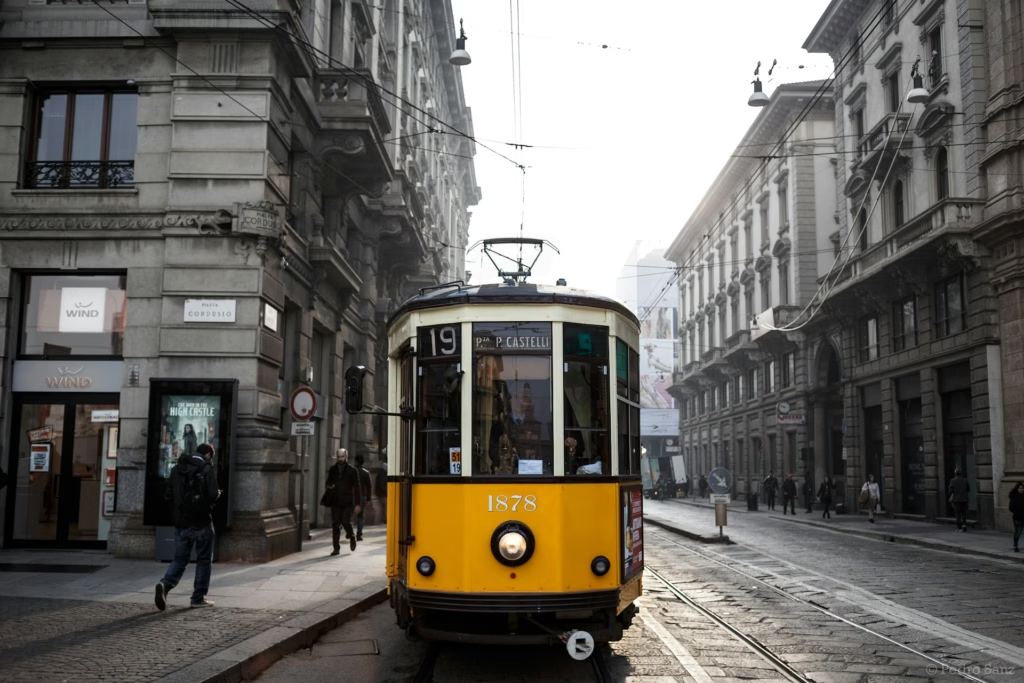
Milan’s public transport system, run by ATM (Azienda Trasporti Milanesi), is one of Italy’s best and is genuinely affordable. Five metro lines, over 80 bus routes, and the iconic historic tram network cover the entire city efficiently. As of 2026, ATM has moved to a largely paperless system using the rechargeable RicaricaMi smart card, contactless bank cards, or the ATM Milano app, all of which work seamlessly at metro gates and on trams and buses.
| Transportation Type | Cost | Notes |
|---|---|---|
| Public Transportation | ||
| Single urban ticket (90 min) | €2.20 | Valid for metro, bus, and tram transfers |
| 24-hour ticket | €7.60 | Unlimited travel for 24 hours |
| 3-day tourist ticket | €15.50 | Unlimited travel for 72 hours |
| Weekly pass (settimanale) | €19.50 | Best value for stays of 4+ days |
| Airport Transfers | ||
| Malpensa Express train | €13 one-way | Milano Centrale to Malpensa Airport (50 min) |
| Airport shuttle bus | €8-10 one-way | To/from Malpensa or Bergamo airports (60 min) |
| Metro to Linate Airport | €2.20 | Standard metro ticket on M4 line |
| Taxi from Malpensa | €95 fixed rate | To city center |
| Taxi from Linate | €55 fixed rate | To city center |
| Taxis and Ride Services | ||
| Taxi starting fare (weekday) | €3.90 | €6.50 at night and on Sundays |
| Typical city center taxi ride | €10-18 | For 3-5 km journeys |
Prices reflect 2026 rates. Advance booking for high-speed trains can reduce costs by 50-70%.
The 72-hour pass (€15.50) is almost always the best option for tourists visiting for 3 days, covering unlimited metro, tram, and bus travel. For a weekend city break, the 24-hour pass (€7.60) used twice beats buying individual tickets if you take more than three rides per day. Both are also now valid via contactless bank card tap-in/tap-out at metro gates.
Note that airport buses (Malpensa Express, Bergamo shuttle) are NOT part of the standard ATM network and require separate tickets. The new M4 Blue Line now connects Linate Airport directly to the city centre on a standard €2.20 metro ticket, one of the best recent improvements for budget travellers.
Money-Saving Tips for Transportation in Milan
Purchase multi-day passes: If you’ll be using public transportation frequently, the 24-hour or 3-day passes offer substantial savings over individual tickets.
Consider the Milano Card: This city pass includes unlimited public transportation and discounted or free entry to many attractions. The 24-hour card costs €13, while the 72-hour card is €23, potentially offering significant savings for active sightseers.
Walk the center: Milan’s historic center is compact enough that many major sights can be visited on foot, eliminating the need for public transportation during parts of your stay.
Attractions and Shopping Costs
How expensive is Milan for sightseeing? Headline attractions carry moderate-to-high entry prices, but the city also offers a surprising number of free and low-cost experiences. The state museums offer free entry on the first Sunday of each month, which includes the Pinacoteca di Brera and Pinacoteca Ambrosiana.
| Attraction | Standard Adult Price | What to See |
|---|---|---|
| Milan Cathedral (Duomo) | ||
| Cathedral only | €5 | Interior of the Gothic cathedral |
| Cathedral + Rooftop (stairs) | €14-15 | Cathedral interior and rooftop views |
| Complete ticket (all areas) | €20 | Cathedral, rooftop, museum, archaeological area |
| The Last Supper | €15 + €2 reservation | Leonardo da Vinci’s masterpiece (15-minute timed entry) |
| Sforza Castle Museums | €10 (combined) | Multiple museums including Michelangelo’s Rondanini Pietà |
| Pinacoteca di Brera | €15 | Italian masterpieces including works by Caravaggio, Raphael |
| Teatro alla Scala Museum | €10 | Opera house museum and theater view (when available) |
| Galleria Vittorio Emanuele II | Free | Historic shopping arcade (exterior and interior) |
| San Maurizio al Monastero Maggiore | Free | “Sistine Chapel of Milan” with stunning frescoes |
| Parco Sempione | Free | Large urban park behind Sforza Castle |
Prices reflect 2026 rates. Many museums offer free entry on the first Sunday of each month.
The Last Supper is Milan’s hardest ticket in 2026. Only 40 visitors are admitted every 15 minutes, and new batches of dates go on sale just three months in advance and typically sell out within hours. Book via the official Cenacolo Vinciano website the moment your travel dates are confirmed, or use a licensed tour partner (GetYourGuide, Tiqets, Viator), which maintains a separate ticket allocation. Children under 18 enter for free but still require a reservation.
Shopping Costs and Milan Prices
Is Milan expensive for shopping? It entirely depends on which Milan you’re shopping in. The Quadrilatero della Moda, Via Montenapoleone, Via della Spiga, Via Manzoni, is among the most expensive retail districts in the world. Designer handbags start around €1,200–2,500; shoes from €500; ready-to-wear from €700 upward for basic pieces. These are aspirational prices for most visitors, but browsing costs nothing.
For accessible shopping, La Rinascente department store beside the Duomo offers a wide range of fashion and beauty at more moderate prices (quality clothing from €60–150). The Navigli district, Brera’s independent boutiques, and Corso Buenos Aires (Milan’s longest shopping street) all offer more affordable retail without the luxury-district premium.
Budget-conscious shoppers should target Milan’s two government-regulated sale periods: winter saldi (early January to mid-March) and summer saldi (early July to early September). Discounts at even high-end stores can reach 50–70%. Non-EU visitors can also reclaim the 22% VAT on purchases over €154.94 made in a single store in a single day — worth doing for any significant purchase.
Money-Saving Tips for Attractions and Shopping
Purchase combination tickets: Many attractions offer discounted combined tickets, such as the Duomo Pass which includes all cathedral attractions.
Research free days: Besides the state museums’ free Sundays, many sites have specific evenings with reduced or free entry.
Time your shopping: Milan has two major sale periods (saldi) regulated by the government—winter (early January to early March) and summer (early July to early September). Discounts during these periods can reach 70% even at high-end stores.
Claim your tax refund: Non-EU residents can reclaim the 22% VAT on purchases over €154.94 made in a single store in a single day.
Sample Daily Budget for Milan
Understanding how costs add up on a daily basis can help you plan your Milan trip more effectively. Is Milan expensive to visit? Depending on your travel style, preferences, and priorities, your daily expenses in Milan can vary dramatically. Is Milan expensive to visit across different budget levels? Here’s a realistic 2026 breakdown:
| Expense Category | Luxury Budget | Mid-Range Budget | Budget Traveler | Backpacker |
|---|---|---|---|---|
| Accommodation | €260–550+ | €90–200 | €35–90 | €22–45 (dorm) |
| Breakfast | Hotel included | €5–10 | €3–5 (bar) | €2–3 (bakery) |
| Lunch | €35–55 | €15–25 | €8–14 | €5–8 |
| Dinner | €85–160 | €30–50 | €10–18 (aperitivo) | €6–12 |
| Transport | €30–50 (taxis) | €7.60–15 (pass) | €4–7 (pass) | €0–4 (walk/pass) |
| Attractions | €30–100 | €15–30 | €10–20 | €0–10 (free sites) |
| Daily Total | €440–915+ | €162–330 | €70–154 | €35–82 |
Prices reflect 2026 rates. Costs may vary significantly based on season, events, and personal preferences.
Top Money-Saving Tips for Milan
Beyond the category-specific tips mentioned above, here are some general strategies to make your Milan visit more affordable:
Travel during off-peak periods: Visiting during January-February or July-August can reduce overall costs by 20-40%. Avoid Fashion Weeks (typically February/March and September/October) and the Salone del Mobile (April) when prices skyrocket.
Book transportation strategically: For flights, Tuesday and Wednesday departures often offer the best value. If arriving at Malpensa Airport, book the Malpensa Express train online in advance for a small discount.
Use the official Milano Tourism Website: This resource lists current exhibitions, special events, and occasionally offers promotional codes for attractions.
Consider luggage storage solutions: If your accommodation check-in/out times don’t align with your travel schedule, services like Radical Storage offer affordable luggage storage throughout Milan (approximately €5 per bag per day).
Take advantage of free walking tours: Several companies offer “free” walking tours of Milan (tip-based), providing excellent orientation and local insights.
Is Milan Expensive? Our Verdict
Is Milan expensive? Yes – it is Italy’s most expensive city and holds its own against cities like Paris and Barcelona for overall cost. Accommodation and dining near the city centre carry premium prices, Fashion Week periods are genuinely punishing on budgets, and the fashion district exists in a completely different financial universe. These are facts.
But is Milan cheap? Not exactly, though it is more manageable than its reputation suggests, especially with strategic timing and neighbourhood choices. Budget travellers can genuinely experience Milan on €70–100 per day. Mid-range visitors spending €150–200 per day will live very comfortably, with good hotels, proper restaurant meals, major attractions, and transport all covered. And the city’s free experiences, from San Maurizio al Monastero to Galleria Vittorio Emanuele II to the aperitivo culture, are among the best in Europe.
The cost of living in Milan for residents reinforces why tourist prices sit where they do: a single person living comfortably needs €2,000–2,500 per month net, with city-centre rents alone running €1,200–1,800 for a one-bedroom apartment. Those baseline costs flow through into every restaurant menu and hotel room rate. Understanding that context helps explain why Milan is so expensive, and why knowing where to eat, drink, stay, and explore makes such a meaningful difference to your experience.
For travelers planning a visit to Milan, consider using Radical Storage for convenient and affordable luggage storage throughout the city. This service allows you to maximize your sightseeing time on arrival and departure days without the burden of carrying your bags.
Milan Cost FAQs
Yes, Milan is Italy’s most expensive city. Budget travellers can manage on €70–80/day, mid-range visitors should plan for around €150/day, and luxury travellers can exceed €350/day.
Yes, Milan is roughly 20–25% more expensive than Rome for accommodation and dining, and 15–20% pricier than Florence, though it remains cheaper than London or Zurich.
Milan is Italy’s business and fashion capital, generating about 10% of the country’s GDP. Constant corporate travel demand and the luxury Quadrilatero della Moda shopping district push prices up across hotels, dining, and retail.
A single ATM ticket costs €2.20 and covers 90 minutes of metro, tram, and bus travel. A 24-hour pass is €7.60, and a 3-day tourist ticket is €15.50.
Prices spike during Milan Fashion Week (February/March and September/October) and the Salone del Mobile furniture fair in April, when hotel rates can double or triple.
Radical Storage offers affordable luggage storage throughout Milan for around €5 per bag per day, ideal for early arrivals or late departures.
