
New York City, the Big Apple, has long been romanticized as the ultimate urban destination. Its iconic skyline, world-famous museums, and bustling streets have drawn millions of visitors each year. But in recent years, a growing chorus of travelers has been asking: is New York overrated? No, New York itself isn’t overrated, but certain aspects of the typical tourist experience often are. The key is managing expectations and experiencing New York like a local rather than rushing through tourist hotspots.
In this guide, we’ll explore both sides of New York—the overrated tourist traps and the genuinely magical experiences that make the city special. We’ll share local insights, practical tips, and honest assessments to help you decide if New York deserves a spot on your travel bucket list. Whether you’re planning your first visit or reconsidering a return trip, this honest perspective will help you navigate the Big Apple with realistic expectations.
Key Findings: Is New York Overrated?
- Expectation management is crucial.
- Major tourist attractions often disappoint due to overwhelming crowds and high prices.
- Hidden neighborhoods offer authentic experiences.
- Timing significantly impacts the experience.
- Costs vary dramatically based on choices.
- Public transportation is efficient and affordable.
- Luggage constraints limit exploration.
- Digital tools enhance the visitor experience.
- Recent improvements address common complaints.
The New York Expectation vs. Reality

New York has been immortalized in countless films, books, and songs as a city of dreams, ambition, and endless possibilities. From “Breakfast at Tiffany’s” to “Sex and the City,” popular culture has painted the American metropolis as a glamorous wonderland where dreams come true on every corner and every street houses an exciting adventure waiting to happen.
This idealized version of New York has created what some psychologists now recognize as a phenomenon similar to “Paris Syndrome.” First identified among Japanese tourists visiting Paris, this condition occurs when romanticized expectations clash dramatically with the reality encountered. While not officially named, “New York Syndrome” affects many first-time visitors whose mental image of gleaming skyscrapers and movie-perfect moments collides with the gritty reality of a working city.
The reality of New York includes aspects that glossy travel brochures rarely mention. The city manages approximately 12,000 tons of residential and commercial waste daily—an enormous logistical challenge. According to recent surveys, the cleanliness of public spaces ranks as a significant concern for New Yorkers themselves, with many citing it as a major quality of life issue.
Visitors often report disappointment with:
- Overwhelming crowds at major attractions where personal space becomes a luxury
- Encounters with seemingly abrupt or dismissive locals
- Visible homelessness and inequality in certain areas
- Persistent scammers targeting tourists in popular areas
- Expensive accommodations that often offer less space and fewer amenities than expected
Yet these realities aren’t unique to New York—they’re common in major metropolitan cities worldwide. The difference lies in the exceptionally high expectations many travelers bring to New York, making the contrast between fantasy and reality particularly jarring.
Why Some Travelers Think New York is Overrated
The perception that New York is overrated stems from several legitimate concerns that travelers frequently encounter. Understanding these challenges can help set realistic expectations for your visit.
Overwhelming Crowds at Major Attractions
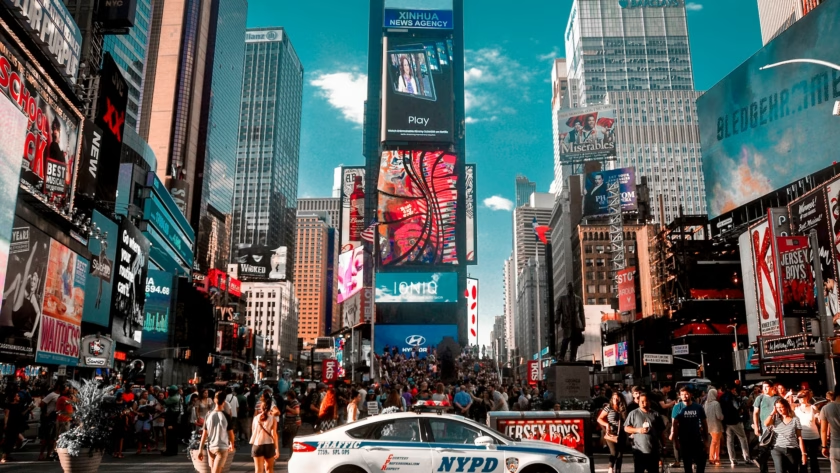
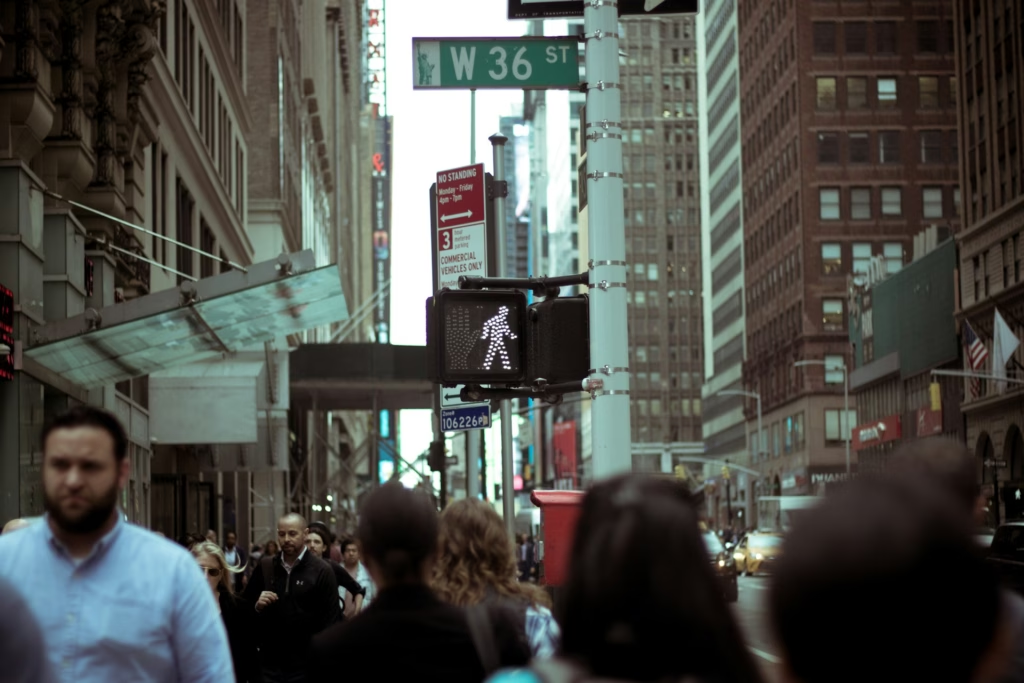
The Metropolitan Museum of Art alone welcomes over 7 million visitors annually, while the Empire State Building receives approximately 4 million. During peak season, waiting times for major attractions can stretch to several hours, significantly diminishing the experience. The famous Times Square experience often becomes a disappointing shuffle through dense crowds while being bombarded by bright advertisements and costumed characters soliciting tips.
Many visitors describe the Statue of Liberty experience as anticlimactic after the long lines and security procedures, with the actual time spent at the monument feeling rushed and overcrowded. Similarly, popular spots like the High Line can become so congested during summer weekends that the peaceful urban park experience is lost entirely.
Cleanliness Issues in Certain Areas
New York struggles with cleanliness in some neighborhoods more than others. Midtown Manhattan, despite being a major tourist hub, often faces criticism for overflowing trash cans and litter on busy streets. The subway system, while efficient, frequently disappoints visitors with its aging infrastructure and cleanliness issues.
The city’s sanitation department works tirelessly, collecting around 12,000 tons of waste daily, but the sheer volume of people and limited space for waste management creates ongoing challenges that are immediately noticeable to visitors accustomed to cleaner urban environments.
The Cost Factor
New York consistently ranks among America’s most expensive cities. A standard hotel room in a central Manhattan location can easily cost $300-400 per night, while a simple meal at a mid-range restaurant typically starts at $25-30 per person, not including drinks, tax, or tip. For budget-conscious travelers, these costs can quickly become prohibitive, especially when the experience doesn’t match the price tag.
Transportation, entertainment, and shopping all come with premium pricing. A Broadway show can cost upwards of $150 per ticket for decent seats, while museum admissions often range from $20-25 per person. These expenses add up quickly, leaving many visitors questioning whether the experience justifies the significant financial investment.
Language Barriers and Cultural Differences
The stereotype of rude New Yorkers persists partly due to cultural misunderstandings. What tourists might perceive as rudeness is often simply the city’s fast-paced, direct communication style. New Yorkers typically value efficiency and straightforwardness in interactions, which can come across as abrupt or dismissive to visitors from regions with more leisurely conversational styles.
Additionally, New York’s diverse population means visitors might encounter language barriers in certain neighborhoods or establishments, creating friction and misunderstandings that can color the overall experience negatively.
Tourist Scams
New York has its fair share of scams targeting visitors. Common schemes include unlicensed taxi drivers charging exorbitant rates, ticket resellers offering counterfeit or marked-up Broadway tickets, and various street performers or costumed characters who aggressively demand tips after photos or interactions.
The CD scam remains prevalent in areas like Times Square, where friendly-seeming individuals hand tourists a CD of their “music” and then demand payment. These encounters can leave a negative impression, especially for first-time visitors who feel taken advantage of in an unfamiliar environment.
The Hidden New York That’s Far From Overrated

Beyond the tourist hotspots and Instagram clichés lies a New York that few visitors discover—a city of hidden courtyards, local-filled cafés, and authentic neighborhoods where the true New York lifestyle thrives. This is the New York that keeps drawing people back, long after they’ve checked the Empire State Building off their bucket list.
Lesser-Known Neighborhoods Worth Exploring
While tourists flock to Times Square and Central Park, locals enjoy neighborhoods like Greenpoint, Brooklyn, with its Polish influences and waterfront views. The Lower East Side offers some of the city’s best dining without the tourist prices, while Astoria, Queens provides multicultural experiences and stunning Manhattan skyline views.
The colorful Meatpacking District has transformed from its industrial past into a hub of design and fashion, offering cobblestone streets and cutting-edge galleries without the crowds of more famous locations. Washington Heights in Upper Manhattan provides Dominican culture, the stunning Fort Tryon Park, and the often-overlooked treasure of The Cloisters museum.
These areas provide a glimpse into authentic New York life that feels worlds away from the overrated tourist centers.
Authentic Culinary Experiences
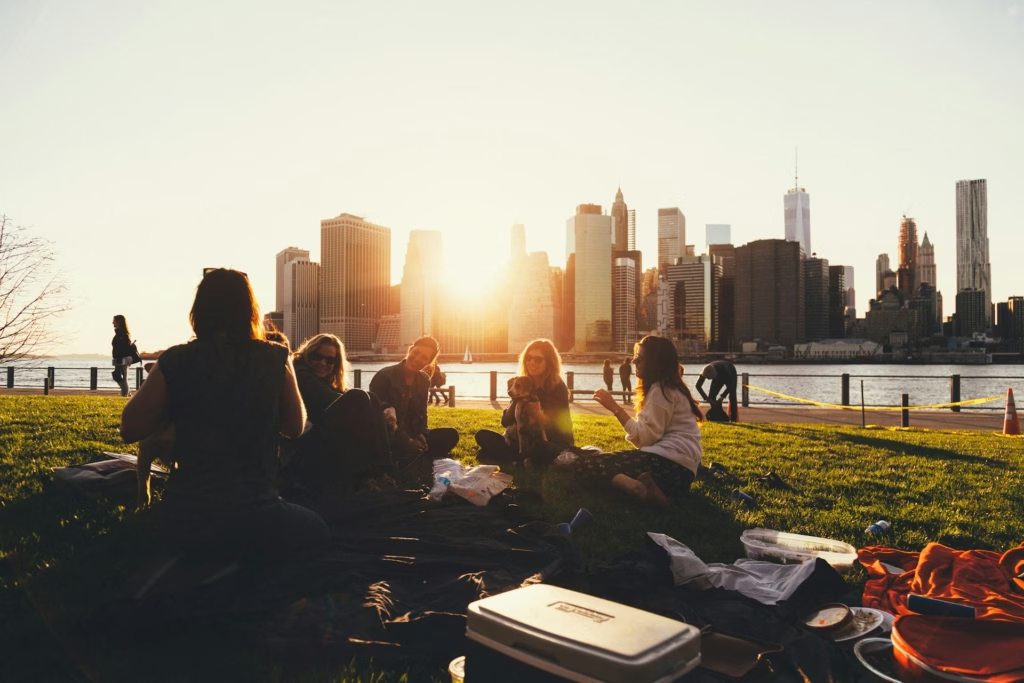
Skip the overpriced restaurants with tourist menus near major attractions. Instead, seek out neighborhood eateries where New Yorkers actually eat. Markets like Essex Market on the Lower East Side and Queens Night Market offer fresh produce, international cuisines, and local specialties at reasonable prices, perfect for assembling a picnic to enjoy in one of New York’s many parks.
For coffee lovers, New York’s independent coffee scene has exploded in recent years, with shops like Sey Coffee in Brooklyn, Café Grumpy, and Black Fox Coffee serving exceptional brews in relaxed settings far from the tourist trail.
The city’s food trucks and carts represent another layer of authentic New York dining. From the halal carts of Midtown to the taco trucks of Sunset Park, these mobile kitchens often serve the most authentic and affordable meals in the city.
Cultural Experiences Beyond the Major Museums
While the Metropolitan Museum of Art and MoMA deserve their reputations, smaller museums offer equally rewarding experiences without the crowds. The Tenement Museum provides an intimate look at immigrant life in 19th-century New York, while the Museum of the Moving Image in Queens celebrates film, television, and digital media with interactive exhibits.
Free events abound throughout New York, from summer concerts in parks to the annual Open House New York weekend, when normally private architectural gems open their doors to the public. These experiences often provide more authentic cultural immersion than checking off famous paintings in crowded galleries.
Community-based arts organizations like the Nuyorican Poets Cafe offer authentic cultural experiences where you’re more likely to mingle with locals than tourists. Similarly, smaller performance venues throughout Brooklyn and Queens showcase emerging talent in intimate settings at a fraction of Broadway prices.
How to Enjoy New York Like a Local (Not a Tourist)
The key to falling in love with New York lies in experiencing it as locals do, rather than rushing from one overcrowded attraction to another. With some insider knowledge and practical tips, you can discover the New York that residents cherish.
Timing is Everything
Visit New York during the shoulder seasons (April-May or September-October) to enjoy pleasant weather without peak summer crowds. If you must visit during the high season, explore major attractions early in the morning or during evening hours when available.
The city’s museums often have extended hours on certain days—the Metropolitan Museum of Art stays open until 9 PM on Fridays and Saturdays, while MoMA offers free admission on Friday evenings (for New York State residents), though this means larger crowds during these specific times.
Consider spending at least 5-7 days in New York rather than rushing through on a weekend. This allows time to wander without an agenda and discover the city’s hidden charms at a relaxed pace.
Transportation Tips
New York has an extensive public transportation system, with a single subway ride costing $2.90. Consider purchasing a 7-day unlimited MetroCard for $34 if you’ll be making multiple trips daily. The subway runs 24/7, though service is reduced late at night, and remains the fastest way to traverse the city despite its occasional quirks and delays.
Walking remains the best way to discover unexpected treasures, while the Citi Bike bike-sharing system offers an enjoyable alternative for covering more ground. For longer distances, especially between boroughs, the ferry system provides scenic transportation with spectacular views of the skyline.
Apps like Citymapper and Transit provide real-time public transportation information, helping you navigate the complex subway system like a pro.
Luggage Solutions for Flexible Exploration
One often overlooked aspect of enjoying New York is dealing with luggage constraints. Whether you’ve checked out of your accommodation but have hours before your flight, or you’ve arrived early and can’t check in yet, dragging suitcases around New York significantly diminishes the experience.
Radical Storage offers convenient luggage storage locations throughout New York City, allowing you to store your bags securely for just $4,50 per day per item, regardless of size or weight. With locations near major transit hubs and tourist areas, you can drop off your luggage and immediately begin exploring New York unencumbered—a simple solution that dramatically improves your experience of the city.
Language and Cultural Tips
While language barriers aren’t typically an issue in New York, understanding local etiquette goes a long way. New Yorkers generally appreciate directness and efficiency—long, meandering questions might be met with impatience in busy establishments. Keep interactions brief and to the point during rush hours or in busy venues.
New Yorkers walk quickly and stand to the right on escalators, allowing others to pass on the left. Following these unwritten rules helps you blend in and avoid frustrating locals.
Despite their reputation for brusqueness, most New Yorkers are actually quite helpful when asked specific questions. A direct “Excuse me, can you tell me how to get to the nearest subway station?” will usually elicit a helpful response.
Seasonal Guide to New York
New York transforms dramatically with the seasons, each offering distinct advantages and challenges for visitors. Understanding these seasonal variations helps you choose the perfect time for your visit based on your preferences.
Spring (March-May)
Spring brings New York to life with blooming gardens and comfortable temperatures. The city’s famous cherry blossoms peak in April, creating magical scenes in parks like Brooklyn Botanic Garden and Central Park. Museums and attractions are less crowded than in summer, though prices begin to rise as the high season approaches.
Spring also brings numerous cultural events, including the Tribeca Film Festival and outdoor art installations. The Easter Parade on Fifth Avenue offers a uniquely New York tradition of elaborate bonnets and festive atmosphere.
Rain is common in spring, so pack accordingly and have indoor alternatives planned for your itinerary.
Summer (June-August)
Summer offers the longest daylight hours and numerous outdoor events, including the free Shakespeare in the Park performances and outdoor concerts on pier parks along the Hudson River. However, this is also when New York experiences its highest tourist numbers, longest lines, and highest prices.
The city can become uncomfortably hot and humid in July and August, with temperatures regularly exceeding 90°F (32°C). The concrete jungle effect makes the city feel even warmer, though many attractions and public transportation are air-conditioned.
Many New Yorkers leave the city in August for their own vacations, resulting in some local businesses closing temporarily. The trade-off is slightly reduced crowds at some attractions.
Fall (September-November)
Early fall represents an ideal balance of pleasant weather, reduced crowds, and full operation of restaurants and shops as New Yorkers return from summer holidays. Cultural events abound, including the New York Film Festival and Open House New York weekend when many historic buildings and architectural gems open to the public.
The spectacular fall foliage in Central Park and Prospect Park peaks in late October to early November, offering stunning photo opportunities and pleasant walking conditions. Halloween in New York brings special events, including the famous Village Halloween Parade in Greenwich Village.
As November approaches, temperatures cool significantly, but Christmas decorations begin to appear, creating a festive atmosphere.
Winter (December-February)
Winter in New York offers a different kind of magic. Holiday decorations illuminate the city in December, with spectacular window displays at department stores like Macy’s and Saks Fifth Avenue. The Rockefeller Center Christmas Tree, ice skating rinks, and holiday markets create a festive atmosphere straight out of the movies.
January and February bring the lowest tourist numbers and hotel prices, making it an economical time to visit if you don’t mind the cold. Winter Restaurant Week offers prix-fixe menus at some of the city’s best restaurants at reduced prices.
Many attractions remain open year-round, and museums provide perfect shelter on chilly days. Winter also offers the best opportunity to experience New York like a local, as tourists are few and the city returns to its authentic rhythm.
Is New York Nice? Finding Beauty Beyond the Challenges
Is New York nice? Yes, despite its urban challenges, New York remains genuinely beautiful with its striking architectural diversity, meticulously maintained parks, and iconic landmarks. The city’s beauty often reveals itself in unexpected moments—a perfect bagel from a neighborhood deli, sunset light reflecting off the glass skyscrapers, or discovering a peaceful community garden tucked between buildings. These authentic experiences, rather than just Instagram-perfect views, showcase why New York continues to captivate visitors despite its imperfections.
What makes New York special isn’t just its famous skyline but the energy and diversity found in its neighborhoods. Each area has its own character, from the brownstone-lined streets of Brooklyn Heights to the vibrant murals of Bushwick. The city offers countless moments of unexpected beauty: stumbling upon a jazz quartet performing in Washington Square Park, watching fireflies in Central Park on a summer evening, or finding a rooftop bar with a breathtaking view that no guidebook mentioned.
New York’s waterfront areas have undergone remarkable transformations in recent decades. The promenades of Brooklyn Bridge Park offer spectacular Manhattan skyline views, while Governors Island provides a car-free oasis just a short ferry ride from Lower Manhattan. These spaces showcase the city’s commitment to creating beautiful public areas accessible to everyone.
New York Among Overrated Cities in America: A Broader Perspective
When travel bloggers discuss overrated cities in America, New York often appears alongside Los Angeles, Miami, and Las Vegas. These cities share common challenges: overwhelming tourism, high prices, and the gap between expectation and reality. However, context matters when considering whether New York truly deserves this label.
Unlike some overrated destinations that offer limited attractions beyond their famous landmarks, New York provides an extraordinary depth of experience. While America as a whole offers incredible diversity—from the natural wonders of national parks to the charm of small towns—New York specifically suffers from its own mythology.
The Empire State Building experience exemplifies this paradox. Standing in long lines to ascend this iconic structure often disappoints visitors, especially when contrasted with the pristine images seen on social media. Similarly, the perception of New York as an unsafe city stems partly from the contrast between its portrayal in movies and the urban realities of noise, crowds, and occasional disorder.
What separates New York from truly overrated destinations is its authenticity and depth. Cities that genuinely deserve the “overrated” label typically offer a thin veneer of attractions with little substance beneath. New York, for all its flaws, offers layer upon layer of experiences, communities, and cultural opportunities that reward repeated visits and deeper exploration.
The city’s neighborhoods each tell different stories—from the historic immigrant enclaves of the Lower East Side to the artistic legacy of Greenwich Village to the cultural diversity of Queens, often cited as the most ethnically diverse urban area in the world. This complexity means that even as certain aspects of New York might disappoint, others continually surprise and delight.
Rather than dismissing New York as simply overrated, savvy travelers recognize that the city requires a more nuanced approach—one that embraces both its flaws and its undeniable magic.
Recent Improvements and Developments
Following years of infrastructure investment, New York has benefited from significant improvements that enhance the visitor experience. The Hudson Yards development has transformed Manhattan’s west side with new public spaces, shopping, and cultural venues, including the controversial but Instagram-famous Vessel structure and the innovative arts center The Shed.
The Moynihan Train Hall opened in 2021, expanding Penn Station with a beautiful, light-filled space that contrasts sharply with the cramped, underground original. This $1.6 billion project converted the historic James A. Farley Post Office Building into a modern transportation hub worthy of the city.
The subway system, while still facing challenges, has seen improvements in reliability and technology. The gradual rollout of OMNY contactless payment makes navigating public transit easier for visitors, eliminating the need to purchase MetroCards.
The city has expanded its car-free zones and bicycle infrastructure, making it increasingly pleasant to explore on foot or by bike. Times Square’s pedestrian plazas, once a controversial change, are now firmly established as popular public spaces, while the ongoing expansion of protected bike lanes has made cycling a viable option in many parts of the city.
Brooklyn’s waterfront has undergone remarkable transformations, with former industrial areas like DUMBO and Williamsburg now featuring stunning parks with Manhattan skyline views. The Brooklyn Bridge Park development has created miles of recreational space along what was once inaccessible shoreline.
These improvements demonstrate New York’s ongoing evolution and commitment to enhancing public spaces, addressing some of the very issues that lead to the “overrated” perception.
Digital Tools Enhancing the Visitor Experience
A range of apps now help visitors navigate New York more efficiently. The NYC Subway app provides real-time public transportation information, while NYC Ferry offers schedules and routes for the increasingly popular ferry system that provides scenic transportation between boroughs.
For attractions, the NYC Parks app helps locate nearby green spaces and events, while museum-specific apps like that of the Metropolitan Museum of Art offer guided tours and exhibit information. The TKTS app shows available same-day Broadway tickets at discounted prices, helping visitors enjoy shows without paying full price.
For food lovers, applications like The Infatuation offer curated restaurant recommendations from local experts rather than tourist-focused listings. Similarly, Eventbrite and TimeOut New York provide up-to-date information on local events, many free or low-cost, that might not appear in traditional tourist guides.
Safety-focused apps like Citizen provide real-time alerts about incidents in specific neighborhoods, helping visitors make informed decisions about areas to explore. Meanwhile, weather apps with minute-by-minute forecasts help plan outdoor activities in a city known for rapidly changing conditions.
These digital tools help bridge the gap between tourist and local experiences, allowing visitors to navigate the city with greater confidence and discover authentic experiences that match their interests rather than following generic tourist itineraries.
The Verdict: Is New York Overrated?
After examining both the challenges and charms of New York, we can conclude that New York itself isn’t overrated—but certain aspects of the typical tourist experience may be. The New York of picture-perfect Instagram posts and romantic movies creates unrealistic expectations that reality cannot match.
However, the New York that locals experience daily—a complex, vibrant metropolis with extraordinary cultural wealth, distinct neighborhoods, and unparalleled culinary traditions—remains one of the world’s most rewarding destinations for travelers willing to look beyond the obvious attractions.
The key to enjoying New York lies in managing expectations, venturing beyond tourist hotspots, and allowing yourself time to experience the city’s rhythm rather than rushing through a checklist of famous sites. With this approach, New York reveals itself as neither overrated nor underrated, but simply extraordinary in its own complex way.
New York rewards those who approach it with curiosity rather than preconceptions. The city’s magic isn’t found in checking off bucket-list attractions but in the serendipitous moments that happen between them—discovering a hidden speakeasy, stumbling upon a street performance, or finding the perfect slice of pizza at an unassuming neighborhood joint.
For every disappointing tourist trap, there’s an authentic experience waiting just a few blocks away. For every overpriced attraction, there’s a free alternative that locals cherish. This duality is what makes New York simultaneously the most overhyped and underappreciated city in America—it all depends on how you choose to experience it.
FAQ: Common Questions About Visiting New York
Is New York really that dirty?
New York faces cleanliness challenges like any major city, collecting around 12,000 tons of trash daily. Tourist areas are generally well-maintained, but some neighborhoods (particularly in parts of Midtown and certain subway stations) struggle with cleanliness issues. Recent cleaning efforts, especially in high-traffic areas, have improved conditions. Most visitors find New York’s cleanliness comparable to other major global cities, though it doesn’t match the pristine standards of cities like Singapore or Tokyo.
Is New York too expensive to visit?
New York can be expensive compared to other American destinations, but costs vary dramatically based on your choices. While luxury hotels in Manhattan command premium prices ($300-400+ per night), budget accommodations in outer boroughs offer reasonable rates. Dining ranges from expensive Michelin-starred restaurants to affordable street food and self-catering options. Many of New York’s best experiences—like strolling Central Park, walking the Brooklyn Bridge, or visiting the New York Public Library—cost nothing at all.
What are the most overrated attractions in New York?
Several popular attractions consistently disappoint visitors relative to their hype:
- Times Square often feels more like an overwhelming outdoor shopping mall than a cultural landmark
- The Statue of Liberty involves long lines and security procedures for a relatively brief experience
- Empire State Building observation deck typically involves hours of waiting for a view similar to less crowded alternatives
- Little Italy has shrunk to just a few blocks and feels more like a tourist simulation than an authentic neighborhood
- Magnolia Bakery and other establishments made famous by TV shows often have long lines for ordinary food
Are New Yorkers really rude?
What outsiders perceive as rudeness is typically New York’s direct communication style and fast pace. New Yorkers value efficiency and straightforwardness, which can come across as abrupt to visitors from regions with more leisurely conversational styles. Despite their reputation, most New Yorkers willingly help lost tourists with specific questions—they just prefer those questions to be concise. The city’s diversity also means that standards of politeness vary widely across neighborhoods and communities.
Is New York safe for tourists?
New York is among America’s safest large cities, with crime rates significantly lower than their peaks in previous decades. Tourist areas are generally well-policed and safe at most hours. However, like any major city, visitors should maintain awareness of their surroundings, especially late at night or in unfamiliar neighborhoods. Petty theft and scams targeting tourists occur primarily in crowded areas, so standard travel precautions apply.
How many days do you need to see New York?
A minimum of 4-5 days allows visitors to experience major highlights, but 7-10 days provides a more relaxed pace and opportunity to explore beyond Manhattan. First-time visitors often underestimate travel times between attractions and the physical fatigue from navigating a dense urban environment. Longer stays allow for day trips to nearby destinations like the Hudson Valley or beaches on Long Island.
When is the best time to visit New York?
Early fall (September-October) offers the ideal combination of pleasant weather, normal business operations, and manageable crowd levels. Spring (April-May) provides similar advantages with the addition of blooming gardens. December offers holiday magic but with peak crowds and prices. January-February brings the lowest prices and crowds but requires preparation for potential cold and snow. Summer offers the most outdoor events but comes with humidity, peak tourist numbers, and the highest accommodation costs.
