
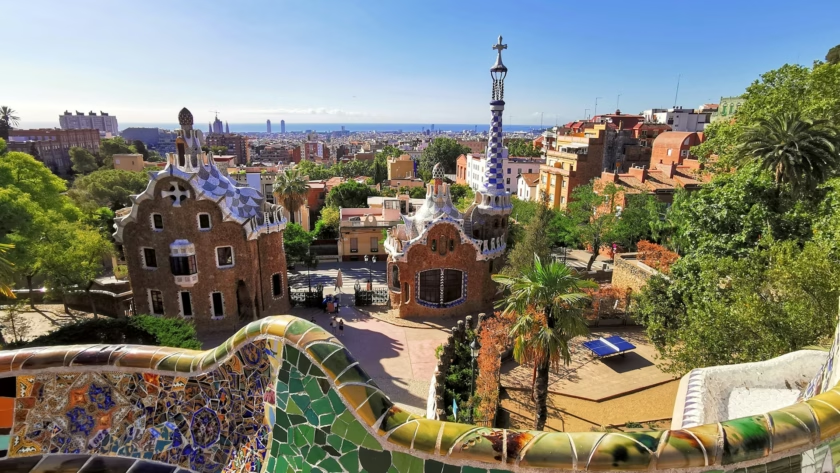
Planning a trip to Spain’s vibrant Catalan capital and wondering how expensive is Barcelona? The answer in 2026 is clear: Barcelona is moderately expensive by European standards, ranking as one of the priciest cities in Spain while still offering better value than Northern European capitals like London, Paris, or Amsterdam. A typical tourist can expect to spend between €80–220 per day, depending on travel style, budget travelers managing on around €80, mid-range visitors spending €150–180, and luxury travelers easily exceeding €350 daily.
What makes 2026 a particularly important year to understand Barcelona prices is the city’s sweeping new tourist tax, which doubled from April 1, 2026, one of the most significant cost increases for visitors in recent years. Despite that, with strategic planning and the insider tips in this guide, you can experience Barcelona’s architectural wonders, vibrant Mediterranean culture, and world-class food scene without emptying your wallet.
Barcelona Cost Overview: How Expensive Is Barcelona in 2026?
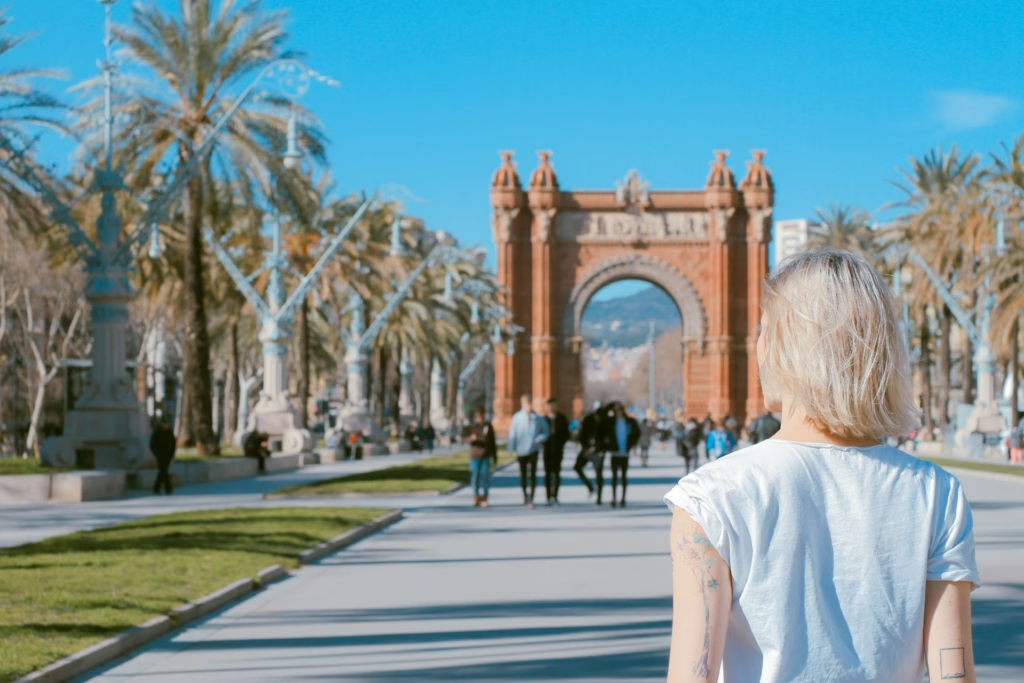
When asking how expensive is Barcelona, context matters. Barcelona’s cost of living index sits at roughly 52–55 on a scale where New York scores 100, placing it firmly in the middle range for Western European cities. It’s pricier than Madrid, Valencia, and Seville, but noticeably more affordable than Paris, London, Zurich, or Amsterdam. Barcelona is more expensive than 62% of cities globally, according to April 2026 Numbeo data.
Is Barcelona expensive for tourists? The honest answer is: it depends on your habits. The menu del día, free beaches, and excellent public transport make it possible to travel smart. But Gaudí’s masterpieces, booming hotel demand, and the city’s new tourist tax all push costs upward. Below is a full breakdown of what you’ll spend in each major category.
Accommodation Costs in Barcelona
Is Barcelona expensive to live or stay as a tourist? Accommodation is typically the biggest expense, and 2026 brings continued upward pressure from tourism demand and a shrinking short-term rental market. Barcelona is phasing out tourist apartment licences by 2028, tightening supply further.
| Accommodation Type | Price Range (Per Night) |
|---|---|
| Hostel dorm bed | €22–40 |
| Budget hotel / guesthouse | €55–95 |
| Mid-range hotel (3-star) | €95–190 |
| Luxury hotel (4–5-star) | €190–550+ |
| Apartment / short-term rental | €80–220 |
Hotel prices in Barcelona average around €110–130 per night in 2026, with rates spiking sharply during peak season (May–September) and major events like the Mobile World Congress or Primavera Sound. Booking 3–6 months ahead for summer is strongly advised.
Why is Barcelona so expensive for accommodation? The combination of 32+ million annual visitors, restrictions on new hotel developments, and the ongoing phase-out of tourist apartments has created a classic supply-demand squeeze. Staying in neighborhoods like Gràcia, Poble Sec, Sant Antoni, or Poblenou instead of the Gothic Quarter or El Born can cut accommodation costs by 20–40%.
2026 Update: Barcelona’s New Tourist Tax
From April 1, 2026, Catalonia’s regional parliament doubled its tourist accommodation tax, making Barcelona’s levy one of the highest in Europe. Here is what visitors now pay per person, per night:
| Accommodation Category | Tourist Tax (per person/night, from April 2026) |
|---|---|
| 5-star / luxury hotel | €12–15 |
| 4-star hotel | €10–12 |
| 3-star hotel / mid-range | €8–10 |
| Short-term holiday rental | €10–12.50 |
| Hostel / budget accommodation | €6–8 |
A couple staying 4 nights in a 4-star hotel could now pay an additional €80–100 in tourist tax alone. Always check whether the tax is included in your booking price or payable at check-in. Stays are generally capped at 7 nights for tax purposes. A quarter of the revenue is earmarked for Barcelona’s housing crisis, with the remainder going to the regional Tourism Promotion Fund.
Food and Drink Costs in Barcelona
Is Barcelona expensive to eat and drink? Not if you eat like a local. Food represents one of Barcelona’s best value propositions, especially at lunchtime when the menu del día (three-course set lunch with a drink) remains the best-kept secret in the city.
| Food & Drink | Price Range |
|---|---|
| Espresso / coffee | €1.25–2.50 (tourist areas up to €3.50) |
| Breakfast at café | €3–8 |
| Menu del día (3-course lunch) | €13–20 |
| Dinner at mid-range restaurant | €22–38 per person |
| High-end / fine dining | €45–120+ per person |
| Local beer (caña, ~250ml) | €2.50–4 |
| Glass of house wine | €3–6 |
| Bottle of water (supermarket) | €0.66–1.50 |
| Bottle of water (Las Ramblas) | Up to €3.00 |
| Supermarket meal ingredients | €8–15 per day |
| Tapas plate | €3–8 |
The menu del día is your best friend in Barcelona. For €13–20, you get a starter, main, dessert, bread, and a drink, a quality that would cost three times as much ordering à la carte in the evening. Markets like La Boqueria, Mercat de Santa Caterina, and Mercat de Sant Antoni offer affordable fresh food and prepared snacks for €3–8.
Supermarkets (Mercadona, Lidl, Consum, Aldi) are excellent for budget travelers. A bottle of decent Spanish wine costs €3–8 in a supermarket versus €18–30 in a restaurant. Standing at the bar for your morning coffee, rather than sitting at a table, often saves €0.50 or more due to terrace surcharges.
One hidden cost to know: many restaurants charge a ‘Pan y Servicio’ (bread and service) charge of €1.50–3 per person. You can politely decline this. It is legal but optional.
Public Transportation Costs in Barcelona
Is Barcelona an expensive city for getting around? No, public transport is efficient and reasonably priced, though fares rose by 3.5% in January 2026 following the expiry of deeper government subsidies from prior years.
| Transportation | 2026 Price |
|---|---|
| Single metro / bus ticket | €2.90 |
| T-Casual (10 journeys) | €13.00 |
| T-Usual (unlimited, 30 days) | €22.80 |
| Hola Barcelona Card (2 days) | €18.70 |
| Hola Barcelona Card (3 days) | €27.30 |
| Hola Barcelona Card (4 days) | €35.60 |
| Hola Barcelona Card (5 days) | €43.60 |
| Airport metro ticket (one way) | €5.90 |
| Airport metro ticket (return) | €11.80 |
| Airport bus (Aerobus) | €7.25 one-way |
| Taxi start fare | €2.50 approx. |
For most tourists, the T-Casual (€13 for 10 journeys) is the best value card. The Hola Barcelona Card makes sense if you plan to use public transport multiple times daily and want to include airport transfers, as single airport tickets cost €5.90 each way. Note that standard T-Casual cards are NOT valid for airport metro stations (L9 Sud line), you need a separate airport ticket or Hola BCN card.
Walking is entirely viable in central Barcelona; many major attractions are within a 30-minute walk of each other. The Gothic Quarter, El Born, La Barceloneta, and the Eixample grid are all very walkable. Bicing (the city’s bike-share scheme) is another affordable option for longer-stay visitors.
Attraction and Entertainment Costs in Barcelona
Is Barcelona expensive for tourists wanting to experience its cultural highlights? Gaudí’s masterpieces carry premium price tags, but the city also offers an impressive range of free and low-cost activities. 2026 is also the year Sagrada Família is expected to be fully completed, a milestone worth visiting.
| Attractions & Activities | |
|---|---|
| Sagrada Família (basic entry) | €26 |
| Sagrada Família (with tower access) | €36 |
| Park Güell (monumental zone) | €10 online / €13 on-site |
| Casa Batlló | €35–45 (with AR experience) |
| Casa Milà / La Pedrera | €28–34 (evening rooftop) |
| Picasso Museum | €14 (permanent) / €17 (with temp exhibitions) |
| Barcelona Cathedral | €9 (or free at specific hours) |
| Camp Nou Experience | €28–38 |
| Montjuïc Cable Car | €16 round trip |
| Flamenco show | €22–48 |
| Free walking tour (tip-based) | €0 entry + tip (€10–20 suggested) |
Barcelona’s headline attractions, particularly the Gaudí sites, are moderately expensive but world-class. Booking online in advance is essential for Sagrada Família, it sells out weeks ahead during peak season. Children under 11 enter Sagrada Família free with a paying adult.
Many museums offer free entry on Sunday afternoons or the first Sunday of each month, including the Picasso Museum, MNAC (National Art Museum of Catalonia), and the Barcelona History Museum. Barcelona’s beaches, parks (Ciutadella, Montjuïc), and historic neighborhoods are completely free to explore.
Is Barcelona Expensive Compared to Other European Cities?
To understand whether is Barcelona expensive to visit in a broader sense, it helps to benchmark it against comparable European destinations:
| City | Average Daily Cost (Mid-range) |
|---|---|
| Barcelona | €150–180 |
| Madrid | €140–165 |
| Lisbon | €130–155 |
| Prague | €110–135 |
| Rome | €165–190 |
| Berlin | €155–175 |
| Amsterdam | €200–230 |
| Paris | €220–260 |
| London | €230–280 |
As you can see when asking “is Barcelona expensive” compared to other major European cities, Barcelona falls in the middle range – more expensive than Eastern European capitals and slightly pricier than Madrid, but more affordable than Paris, London, or Amsterdam.
Why Is Barcelona So Expensive? Understanding the Costs
Several compounding factors drive Barcelona’s relatively high costs for tourists and residents alike in 2026:
- Tourism volume: Barcelona attracts over 32 million visitors annually, creating intense competition for accommodation, restaurant tables, and attraction tickets.
- Short-term rental phase-out: The city is eliminating tourist apartment licences by 2028, shrinking supply and pushing hotel prices higher.
- New tourist tax: The April 2026 doubling of the per-night tourist tax adds €8–15 per person per night to accommodation costs.
- Housing crisis spillover: Rents for locals now exceed €2,000/month for a small apartment in many central neighborhoods, and those costs filter into restaurant and service pricing.
- Overtourism management: Anti-tourist sentiment and protests in 2025 prompted new regulations that limit supply and increase operational costs for tourism businesses.
- Digital nomad and expat demand: Barcelona’s remote-work popularity has increased year-round demand, removing the traditional off-season price relief.
- Euro currency: Being in the Eurozone means prices are higher than in non-Euro European countries.
Despite these factors, Barcelona still offers exceptional value compared to Northern European capitals, delivering world-class architecture, Mediterranean beaches, and outstanding cuisine at prices that remain genuinely competitive.
Is Barcelona Expensive for Budget Travelers? Money-Saving Tips
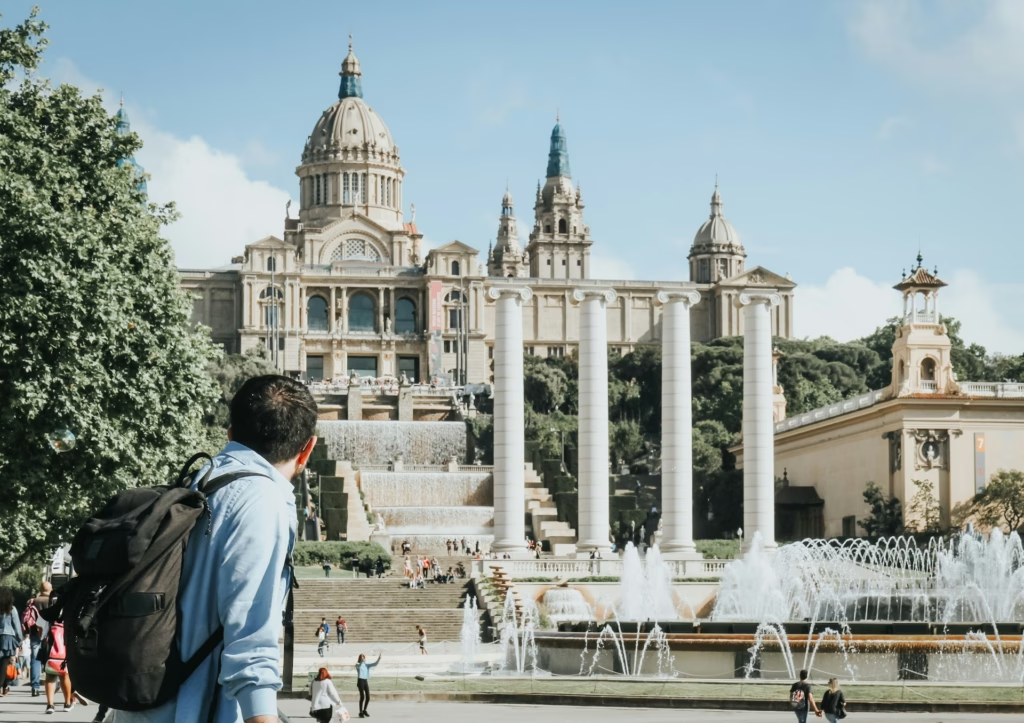
Is Barcelona cheap? Not by Eastern European standards, but it is absolutely manageable on a tight budget. Here’s how cost-conscious visitors can get the most from every euro.
Accommodation Savings
- Stay in Gràcia, Poble Sec, Sant Antoni, or Poblenou instead of the Gothic Quarter, typically 20–40% cheaper.
- Visit off-season: November through early March (excluding Christmas/New Year) offers the best hotel rates.
- Book 3–6 months ahead for summer to lock in better rates before peak-season surges.
- Consider mid-week stays, weekend rates in Barcelona often jump 15–25%.
- Factor in the new tourist tax from April 2026, which is now payable on top of your room rate.
Food and Drink Savings
- Embrace the menu del día for lunch: €13–20 for three courses and a drink is extraordinary value.
- Shop at Mercadona, Lidl, or Aldi for breakfast supplies, snacks, and supermarket wine (€3–8/bottle).
- Standing at the bar for coffee, sitting at a table, or on a terrace adds a surcharge.
- Decline the ‘Pan y Servicio’ charge at restaurants (€1.50–3 per person, entirely optional).
- Visit local markets like Mercat de Santa Caterina or Mercat de Sant Antoni for affordable prepared food.
- Barcelona tap water is safe to drink, bring a reusable bottle and skip the €1.50–3 tourist-area water bottles.
Transportation Savings
- Buy the T-Casual card (€13 for 10 journeys) instead of single tickets (€2.90 each).
- Walk the central areas, the Gothic Quarter, El Born, and Eixample are all highly walkable.
- Use the Hola Barcelona Card only if you’ll use transport extensively and need the airport transfer included.
- Take the airport metro (L9 Sud, €5.90 one-way) or Aerobus (€7.25) instead of taxis from El Prat Airport.
- Avoid peak-hour Uber and taxis; surcharges apply during high-demand periods.
Attraction Savings
- Visit museums on their free afternoons (typically Sunday afternoons or the first Sunday of each month).
- Explore the free sections of Park Güell (outside the monumental zone), all the beaches, and all parks.
- Take a free walking tour of the Gothic Quarter or El Born (tip-based, typically €10–20).
- Attend Sunday morning mass at Sagrada Família for free (9:00–10:00 am, arrive by 8:00 am for a seat).
- Hike to Bunkers del Carmel for the best panoramic views of Barcelona at zero cost.
- Check whether the Barcelona Card (from around €50 for 3 days) makes sense if visiting several paid attractions.
Pro Tip: Radical Storage offers convenient luggage storage across Barcelona, freeing you to explore from arrival without dragging bags between attractions or accommodation.
Barcelona on a Budget: Sample Daily Costs
Barcelona on a budget is genuinely achievable. Here’s a realistic breakdown of what you might spend at three different budget levels in 2026:
Budget Traveler (€80/day)
- Hostel dorm: €28
- Breakfast from bakery: €3-4
- Menu del día lunch: €13
- Simple dinner or tapas: €10-12
- T-Casual transportation: €4 (based on 3 journeys from a 10-journey card)
- One budget attraction or free activities: €10-12
- Miscellaneous: €5-7
Mid-Range Traveler (€160/day)
- Mid-range hotel or Airbnb: €95-110
- Breakfast at café: €6
- Menu del día lunch: €16
- Dinner at a mid-range restaurant: €28
- T-Casual transportation: €4
- One or two attractions: €26-36
- Miscellaneous: €12
Luxury Traveler (€350+/day)
- Luxury hotel: €220+
- Breakfast at a hotel or upscale café: €18
- Lunch at a nice restaurant: €35
- Dinner at fine dining restaurant: €70+
- Taxi transportation: €30
- Multiple premium attractions/experiences: €60+
- Shopping and miscellaneous: €60+
How Much Spending Money for Barcelona 4 Days?
Planning a long weekend and wondering how much spending money for Barcelona 4 days you’ll need? Here’s a realistic breakdown across all three budget levels, excluding flights:
| Expense Category | Budget (4 days) | Mid-range (4 days) | Luxury (4 days) |
|---|---|---|---|
| Accommodation | €110–160 | €380–440 | €880–1,300+ |
| Tourist Tax (new 2026 rates) | €24–32 | €40–48 | €80–120 |
| Food & Drink | €110–150 | €190–260 | €440–650+ |
| Transportation | €13–27 | €13–45 | €120–180 |
| Attractions | €30–55 | €85–130 | €160–280 |
| Miscellaneous | €25–45 | €45–90 | €160–320 |
| Total | €312–469 | €753–1,013 | €1,840–2,850+ |
For a 4-day trip, budget approximately €320–470 for a lean experience, €750–1,000 for a comfortable mid-range stay, and €1,800+ for luxury, all before flights. The new tourist tax from April 2026 is now a meaningful budget line item and should be planned for separately.
Cheap Things to Do in Barcelona
Looking for cheap things to do in Barcelona? The good news is that some of the city’s best experiences cost nothing at all:
- Explore the beaches – Barcelona’s beaches are free and extend for kilometers along the coastline.
- Wander through historic neighborhoods – The Gothic Quarter, El Born, and Gràcia offer architectural beauty and atmosphere at no cost.
- Visit free museums – Many museums offer free entry on Sunday afternoons or the first Sunday of each month.
- Enjoy street performances on Las Ramblas – This famous boulevard features free entertainment throughout the day.
- Explore markets – La Boqueria, Santa Caterina, and other markets are free to enter and offer sensory experiences.
- Hike to Bunkers del Carmel – This hilltop offers the best free views of Barcelona.
- Visit churches – Many churches offer free entry or charge minimal donations.
- Attend free festivals – Barcelona hosts numerous free festivals throughout the year, including La Mercè in September.
- Relax in parks – Ciutadella Park, Montjuïc, and other green spaces offer free recreation.
- Take advantage of free museum nights – The “Night of the Museums” in May offers free entry to most museums.
Barcelona Prices: Seasonal Variations
Barcelona prices fluctuate significantly throughout the year:
| Season | Price Level | Notes |
|---|---|---|
| Summer (Jun–Aug) | Highest | Peak tourist season. Hotel rates often double. Book months in advance. |
| Spring (Apr–May) | High | Excellent weather, crowds building. New tourist tax now applies from April 2026. |
| Autumn (Sep–Oct) | High–Moderate | Still warm, fewer crowds than summer. La Mercè festival in September. |
| Christmas / New Year (Dec–Jan) | Moderate–High | Festive premium pricing. Christmas markets and Vinçon sales are highlights. |
| Winter (Nov–Mar, excl. holidays) | Lowest | Best deals. Mild but can be grey and rainy. Perfect for museum-heavy trips. |
For the best balance of pleasant weather and manageable prices, target late September through October or late April through May. January and February (outside public holidays) offer the cheapest accommodation, ideal for art-focused or culinary trips when beach weather isn’t the priority.
Is Barcelona Expensive to Live? Cost of Living Context
Barcelona is Spain’s most expensive city to live in. Monthly expenses for a single person (excluding rent) average around €900–1,100. Rent is the real pressure point: a one-bedroom apartment in the city center now typically costs €1,200–1,600 per month, with smaller or more central units exceeding €2,000 in some neighborhoods. For comparison, a similar apartment in Valencia or Seville costs €600–900.
For a single person living in Barcelona, a lean but comfortable monthly budget runs approximately US$2,800–3,500 (€2,500–3,200), while a more flexible lifestyle with coworking spaces and regular dining out typically costs US$4,000–5,000 (€3,600–4,500) per month. Family costs are substantially higher.
Conclusion: Is Barcelona Expensive? The 2026 Verdict
So, is Barcelona expensive? The honest answer is: moderately, and increasingly so. Barcelona is not a budget destination in 2026, particularly after the April tourist tax hike. But it remains significantly more affordable than London, Paris, Amsterdam, or Zurich, while delivering a richer mix of architecture, culture, beaches, and gastronomy than most European cities can match.
Budget travelers can manage on €80 per day; mid-range visitors should plan for €150–180; and luxury travelers will comfortably spend €350 or more. For a 4-day trip, realistic totals (excluding flights) range from about €320–470 at the budget end to €750–1,000 for a comfortable mid-range experience, with the new tourist tax now a meaningful separate cost to budget for.
What makes Barcelona genuinely exceptional is the quality you get for your money: Gaudí’s near-completed Sagrada Família (a 2026 milestone), world-class food markets, free Mediterranean beaches, a first-rate public transport network, and neighborhoods where you can walk for hours without spending a cent. Is Barcelona cheap? No. Is it worth it? Emphatically, yes.
Use the tips in this guide, eat lunch at the menu del día, book accommodations outside the Gothic Quarter, and get your Sagrada Família tickets well in advance. Barcelona will reward you generously.
