
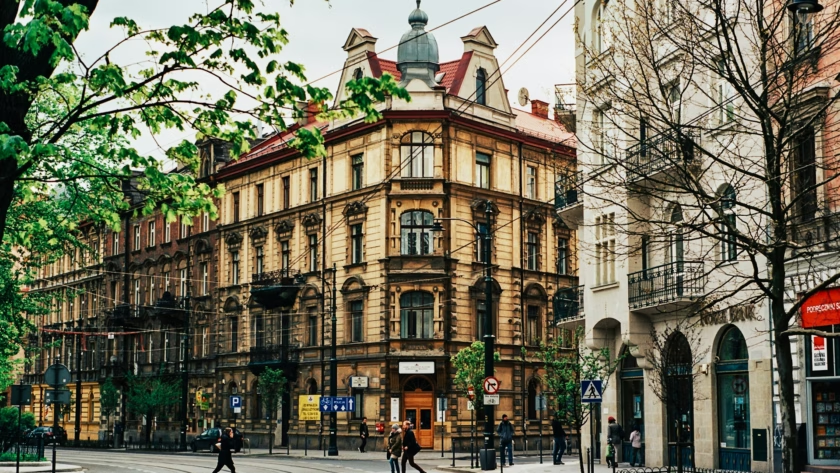
When we picture our favourite city breaks, we often think of quaint cafés, grand architecture or bustling piazzas, not overflowing litter bins or unhygienic public spots that can ruin the moment. However, for travellers, cleanliness matters just as much as culture.
In ABTA’s 24/25 research, Europe was overwhelmingly the top choice for UK holidaymakers heading abroad, with 83% of travellers enjoying a break there during the year. After beach holidays, city breaks remained the most popular type of holiday (43%), showing that urban escapes continue to draw millions in search of a change of scenery. [1]
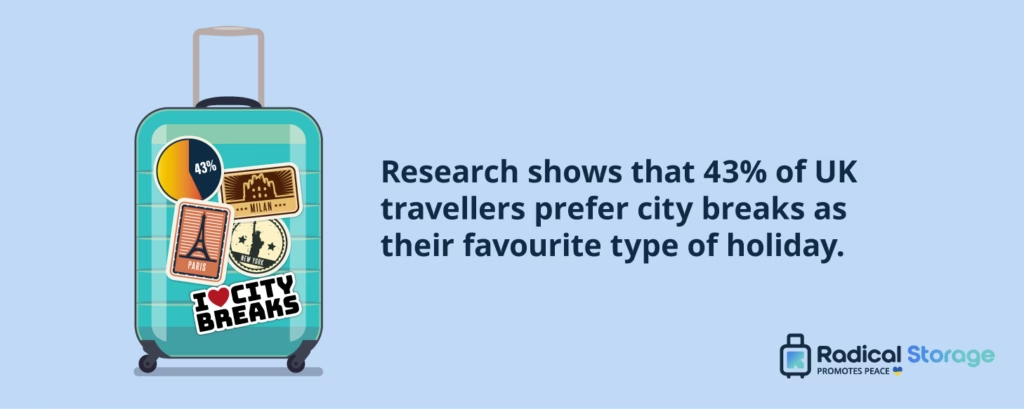
With so many exploring top cities across Europe and beyond each year, we wanted to know: how clean do these destinations really feel to visitors?
We chose the 100 cities from Euromonitor’s Top 100 City Destinations Index. For each city, we analysed the top 10 attractions and checked that each had Google reviews available. For those with reviews, we analysed over 70,000 real online reviews from the last twelve months, and we scanned for words like ‘clean’ and ‘dirty’ to measure which cities are most often praised or criticised for cleanliness.
The findings reveal the worst and best cities across the world for cleanliness levels to help travellers plan ahead for their next city break.
Key findings
- Kraków is the world’s cleanest city, with 98.5% of cleanliness-related reviews praising its tidiness.
- Sharjah (98.5%), Singapore (98%), Warsaw (97.8%) and Doha (97.4%) were also in the top five cleanest cities.
- Budapest is revealed to be the dirtiest city, with nearly 40% of cleanliness-related reviews describing it as dirty.
- Following Budapest, Rome (35.7%), Las Vegas (31.6%), Florence (29.6%), and Paris (28.2%) were the dirtiest cities.
- Poland performs exceptionally well with both Kraków (1st) and Warsaw (4th) in the global top five for cleanest cities.
- Historic city centres face challenges in appearing clean, with cities like Rome, Florence, and Paris perceived as dirty by over 28% of reviewers.
World’s Cleanest Cities
1. Kraków, Poland
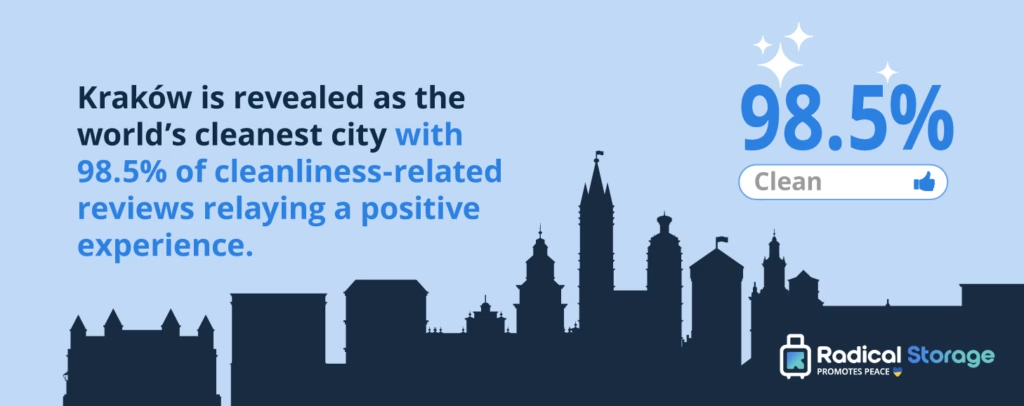
The data analysis reveals Kraków as the world’s cleanest city, with an impressive 98.5% of cleanliness-related reviews using positive language, which places the Polish city ahead of all other cities in the study, and many visitors arrange left luggage in Kraków while they explore.
Kraków’s spotless reputation likely stems from more than just good street cleaning. Poland as a whole has invested heavily in waste-management systems and public-space maintenance over the past decade, [2] from advanced recycling infrastructure and public space maintenance.
In the European Commission’s ‘Quality of Life in European Cities’ of 2023 (the latest report), more than 80% of Kraków residents say they are totally satisfied with their public spaces, such as markets, squares and pedestrian areas. [3] The locals’ pride translates into the look and feel of the city to tourists.
Kraków’s compact, walkable layout will also play its part, allowing visitors to experience its cleanliness first-hand along the cobbled streets or riverside walks, instead of from a car window.
| Top 20 Cleanest Cities in the World | ||
|---|---|---|
| City | Total reviews in the last 12 months mentioning cleanliness | Percentage of positive reviews |
| Kraków | 456 | 98.5% |
| Sharjah | 403 | 98.0% |
| Singapore | 1899 | 97.9% |
| Warsaw | 139 | 97.8% |
| Doha | 575 | 97.4% |
| Riyadh | 1135 | 96.9% |
| Prague | 305 | 96.4% |
| Muscat | 524 | 96.4% |
| Dubai | 3093 | 96.3% |
| Fukuoka | 108 | 96.3% |
| Abu Dhabi | 1046 | 96.1% |
| Zurich | 255 | 95.7% |
| Edinburgh | 722 | 95.4% |
| Los Angeles | 1931 | 95.2% |
| Lima | 142 | 95.1% |
| Cancún | 443 | 94.8% |
| Porto | 286 | 94.8% |
| Copenhagen | 289 | 94.5% |
| Taipei | 430 | 94.4% |
| Valencia | 685 | 94.3% |
While Kraków takes the top spot, it isn’t the only city praised for its spotless streets. Across the continent and beyond, several destinations share similarly high cleanliness scores, showing that well-kept urban spaces are becoming a point of pride for tourists and residents alike.
2. Sharjah, UAE
Edging just behind Kraków, Sharjah earns a near-perfect cleanliness score of 98% positive reviews, proof that the UAE’s cultural capital keeps its streets as clean as its museums. This is nothing new for the city, with the Sharjah Municipality imposing fines in the last decade to maintain the cleanliness of the city. [4] In the last three years, the city has invested over Dh75 million in new street cleaning and waste collection equipment for the city, too. [5]
3. Singapore, Singapore
Singapore has also long set the global standard for urban cleanliness, and our data confirms this spotless reputation with nearly 98% of reviews using positive language around tidiness, with many visitors arranging short-term luggage in Singapore while they explore.
Its success comes from strict laws against littering, spitting and chewing gum, efficient waste management, green architecture and with messages of cleanliness deeply ingrained in school, workplaces and local culture. [6]
4. Warsaw, Poland
Joining Kraków near the top, Warsaw shows that cleanliness is more than a southern Polish focus. With 97.8% positive cleanliness mentions, the capital combines modern infrastructure with green space to create a clean space for visitors and locals, with many travelers arranging bag storage in Warsaw while they explore.
Cleanliness runs deep in Polish culture, with local governments organising community clean-up events such as Czysta Warszawa. With participation in these events increasing by 30% in the last few years, it’s no wonder this has impacted visitors’ experiences of the capital city. [7]
5. Doha, Qatar
A popular tourist destination, Doha manages to keep its city impressively clean, with 97.4% of reviews analysed praising its tidiness.
Despite welcoming millions of visitors a year, the city invests heavily in the upkeep. In fact, Qatar Tourism has partnered with the Ministry of Public Health to invest in the ‘Qatar Clean’ program for hotels during and following the COVID-19 pandemic. [8]
World’s Dirtiest Cities
1. Budapest, Hungary
While so many cities are praised for their spotless streets, others struggle to make the same impression on visitors. The data also revealed a different side to city breaks, where litter and graffiti impacted experiences.
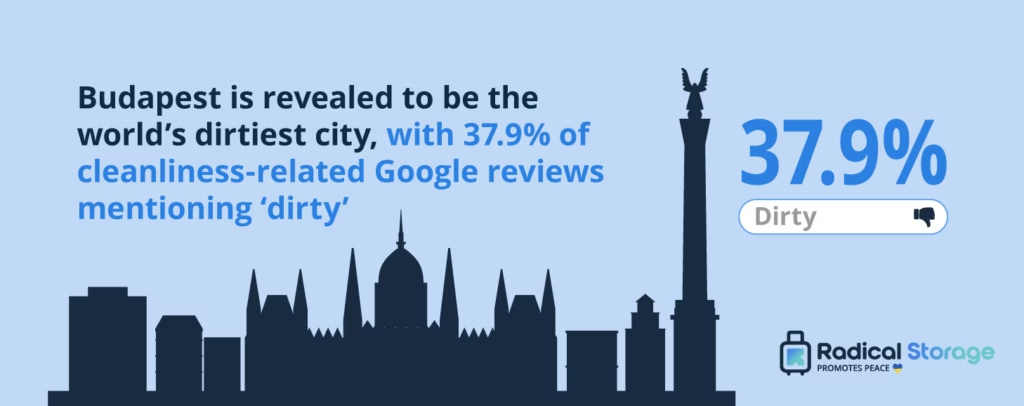
At the other end of the spectrum, Budapest tops the list as Europe’s dirtiest city, with more than 37.9% of cleanliness-related reviews describing dirt or poor upkeep, a far higher rate than any of the other European cities or beyond, and some travelers still arrange baggage services in Budapest while moving around.
The perception of low cleanliness for Budapest may be the result of the city’s waste-management system struggling to keep up with the high level of visitors. In September 2025, Hungary’s tourism industry jumped 8.3% with Budapest alone recording a 12% jump from the same month in 2024. [9]
| The 20 Dirtiest Cities in the World | ||
|---|---|---|
| City | Total reviews in the last 12 months mentioning cleanliness | Percentage of negative reviews |
| Budapest | 1673 | 37.9% |
| Rome | 736 | 35.7% |
| Las Vegas | 4695 | 31.6% |
| Florence | 203 | 29.6% |
| Paris | 1241 | 28.2% |
| Milan | 194 | 26.8% |
| Verona | 271 | 26.2% |
| Frankfurt | 203 | 24.6% |
| Brussels | 386 | 24.4% |
| Cairo | 771 | 23.6% |
| Heraklion | 139 | 23.0% |
| New York City | 3737 | 22.2% |
| Barcelona | 563 | 20.4% |
| Johor Bahru | 1494 | 20.3% |
| Seville | 431 | 20.2% |
| San Francisco | 1229 | 18.7% |
| Miami | 1289 | 16.7% |
| Hyderabad | 633 | 16.1% |
| London | 1547 | 15.8% |
| Osaka | 755 | 15.6% |
The data shows a pattern that some of the most visited cities across the world are the most criticised for their cleanliness levels. After Budapest, cities like Rome, Paris and Florence, where ancient sites and high tourist levels are expected, cleanliness seems a bigger challenge.
2. Rome, Italy
The famous Eternal City, Rome ranks amongst the lowest for cleanliness perception, with 35.7% of reviews mentioning dirt. The uncleanliness levels of the city may directly reflect the dissatisfaction of residents. In 2023, the city came 7th bottom for how satisfied people living in the city were, with 71% saying not satisfied, and bottom for residents staying the quality of life in the city increasing compared to the previous five years, with only 3% agreeing that it had improved, while visitors may still rely on baggage facilities in Rome when moving around. [3]
3. Las Vegas, USA
Outside Europe, Las Vegas ranks as one of the world’s dirtiest destinations in our data, with 31.6% of cleanliness-related reviews being negative, and many visitors still look for where to leave luggage in Las Vegas while they explore.
Given its 24-hour nightlife and enormous visitor turnover, it’s perhaps unsurprising that maintaining spotless streets is a challenge. The city also isn’t ignorant of the issues with initiatives such as Pick It Up Las Vegas running to clean up storm drains, tunnels, streets and parks. [10]
4. Florence, Italy
With 29.6% of cleanliness related reviews mentioning dirt, Florence faces similar struggles, and some travelers still research luggage services in Florence while moving around. Its narrow medieval streets and high pedestrian numbers make cleaning operations difficult.
However, the city is doing what it can to make a difference, introducing AI bins to make waste disposal interesting and easier for residents across the city. [11]
5. Paris, France
Remaining one of the world’s most iconic destinations, Paris still has 28.2% of reviews in the analysis that mentioned dirt, and many visitors continue to check left luggage in Paris while exploring.
However, since a large cleanup was launched before the 2024 Olympic Games, the city has invested a lot into improving the city’s hygiene, including key milestones like making the River Seine swimmable to the public again and improving public health generally. [12]
Methodology
We chose the 100 cities from Euromonitor’s Top 100 City Destinations Index. For each city, we analysed the top 10 attractions and checked that each had Google reviews available. If an attraction didn’t have Google reviews, we moved to the next one on the list.
Our dataset includes every Google review posted between October 2024 and November 2025 that mentioned “clean” or “dirty,” providing a comprehensive view of perceptions of cleanliness across European and global destinations. For each city, the top 10 tourist attractions were selected to focus the analysis on locations most frequented by visitors.
Using a text analysis, reviews were scanned for mentions of cleanliness-related words including ‘clean’ and ‘dirty’. Mentions were then categorised as positive or negative depending on the context, allowing each city to be assigned a ‘cleanliness score’ based on the proportions.
To ensure accuracy:
- Cities with fewer than 100 total reviews were excluded from the dataset.
- False positives and negatives (such as “not clean” or “not dirty”) were manually removed.
- Only English-language reviews were included to maintain consistency across all cities.
In total, the dataset included 71,692 “clean” mentions and 10,165 “dirty” mentions, producing an overall picture of which destinations are most praised and most criticised for cleanliness.
Sources
[1] ABTA, ‘Holiday Habits 24/25’, 2025
[2] European Environment Agency, ‘Total Waste Generation’, 2025
[3] European Commission, ‘Report on Quality of Life in European Cities’, 2023
[4] Gulf News, ‘Cleanliness and Priority’, 2019
[5] BEEAH, ‘For Clean Streets in Sharjah’, 2022
[6] Medium, ‘What We Can Learn from Singapore’, 2025
[7] Clean Whale, ‘Impressive Cleaning Habits of Poland’, 2025
[8] Visit Qatar, ‘Making safety a priority’
[9] Etias, ‘Hungary Sees Travel Boom’, 2025
[10] Pick It Up Las Vegas, 2025
[11] ESM Magazine, ‘Unicoop Firenze Smart Bin’, 2025
[12] Smart Water Magazine, ‘Paris Bets Big Clean’, 2025
