
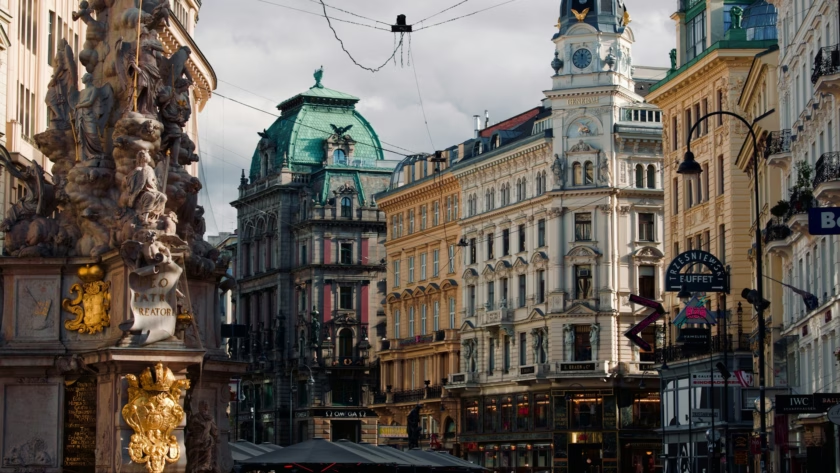
Vienna operates on a different frequency from most European cities. There are no trendy rooftop bars dominating the skyline, no viral Instagram queues, no manufactured cool. What you get instead is a city that has been doing things its way for centuries — imperial palaces worn into everyday life, coffeehouse culture that UNESCO actually put on its Intangible Heritage list, a classical music scene that’s still the best on the planet, and wine taverns in the hills just twenty minutes from the city centre. This Vienna travel guide cuts through the generic advice and gives you exactly what you need to plan a trip that earns its place among the most memorable you’ll take.
Quick answer: The best time to visit Vienna is April to May or September to October. Three to four days covers the main sights well; five to seven days lets you settle into the pace of the city. A solid Vienna itinerary balances the grand palaces and museums with the neighbourhood streets, market mornings, and evenings that don’t end until the small hours.
Why Vienna in 2026?
2026 marks the 250th anniversary of the Albertina, one of Europe’s great print and drawing collections, which is running a major celebratory exhibition series throughout the year. The Burgtheater — Austria’s national theatre — is also marking a significant anniversary season. More broadly, Vienna has continued to invest heavily in its public transport network: as of January 1, 2026, Wiener Linien restructured its entire fare system for the first time in over 13 years, adding new lines and mobility services. And for music lovers, 2026 sees a special Mozart 270th birthday concert series at the Musikverein. There has rarely been a better year to come. Keep reading our Vienna travel guide to understand why you should plan your trip to Vienna this year.
Best Time to Visit Vienna
| Season | Months | Avg Temp | Crowd Level | Best For |
|---|---|---|---|---|
| Spring | April – May | 12–20°C | Medium | Palace gardens, outdoor sightseeing, festivals |
| Summer | June – August | 22–28°C | High | Outdoor concerts, Danube island, long evenings |
| Autumn | September – October | 14–20°C | Medium | Best all-round; mild weather, wine taverns open |
| Winter | November – March | 0–6°C | Low–Medium | Christmas markets, opera season, budget prices |
Choosing the best time to visit Vienna depends mostly on what you want from the city. Spring — particularly late April through May — is the most visually rewarding: the palace gardens bloom, outdoor café terraces reopen, and the Wiener Festwochen arts festival gets underway. The light is soft, the crowds are manageable, and the temperatures are ideal for walking.
September and October are equally strong, with the added bonus of the wine tavern season being in full swing and the opera season resuming after summer. Winter in Vienna is genuinely special if you lean into it: the Christmas markets around Rathausplatz and Schönbrunn are some of the best in Europe, concerts fill every hall nightly, and hotel prices are at their lowest outside the market weeks themselves. Summer is perfectly fine — the Donauinselfest in July is one of Europe’s largest free music festivals — but July and August bring peak crowds and prices to match.
How Many Days in Vienna?
The question of how many days in Vienna depends on your pace and interests. Here’s a realistic breakdown:
- 2 days: Covers the absolute essentials — Stephansdom, Hofburg, a palace (Schönbrunn or Belvedere), one museum, one coffeehouse. You’ll be moving fast.
- 3–4 days: The sweet spot for first-timers. Enough time for both major palaces, two or three top museums, the Naschmarkt, a concert or opera evening, and a neighbourhood wander through Neubau or Spittelberg.
- 5–7 days: Ideal for going deeper — day trips to the Vienna Woods or Klosterneuburg, an evening at a Heuriger wine tavern, leisurely mornings in the Prater, and exploring the city’s lesser-known districts without a schedule.
Most visitors who come for four days wish they’d booked five. Give yourself at least one morning with no plan.
Vienna Itinerary: Day-by-Day Breakdown
Here is a 4-day Vienna travel guide itinerary to make your trip more seamless:
Day 1 – The Imperial Core
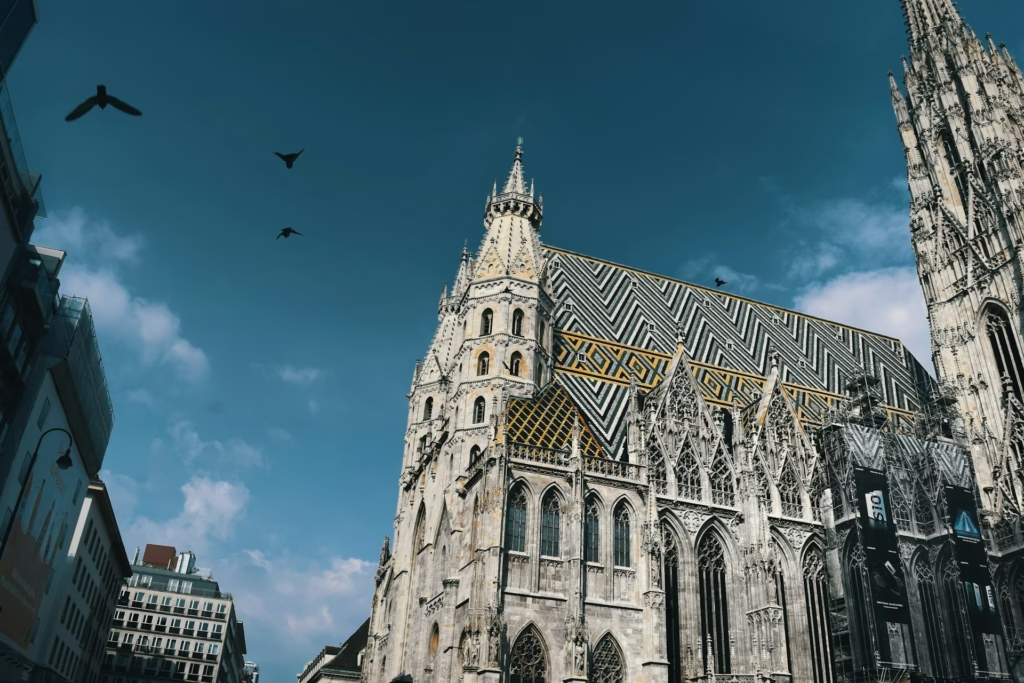
Start at Stephansdom (St. Stephen’s Cathedral) before the crowds arrive. Entry to the main nave is free; the tower climb costs €6 and earns you the best skyline view in the 1st District. From there, walk west along the Graben — Vienna’s elegant pedestrian street — to the Hofburg Imperial Palace complex. The Sisi Museum and Imperial Apartments (€18 combined) give you the human story behind the Habsburg dynasty better than any textbook. End the afternoon with a slow walk along the Ringstrasse past the Opera House, Parliament, and City Hall. If budget allows, book a standing-room opera ticket for the evening — as little as €4 to €10.
Day 2 – Schönbrunn and the 7th District
Head to Schönbrunn Palace first thing. The Grand Tour of the palace interior takes about an hour (€34); the gardens are entirely free and worth at least as much time. Hike up to the Gloriette for panoramic city views. In the afternoon, take the U4 back into the city and explore the 7th District (Neubau) — Vienna’s creative neighbourhood, packed with independent bookshops, vintage stores, and the kind of coffee that takes itself seriously without being annoying about it. The Museumsquartier sits on the border of Neubau and makes a good late-afternoon stop; MUMOK (modern art) and the Leopold Museum are both here.
Day 3 – Belvedere, Naschmarkt and an Evening Concert
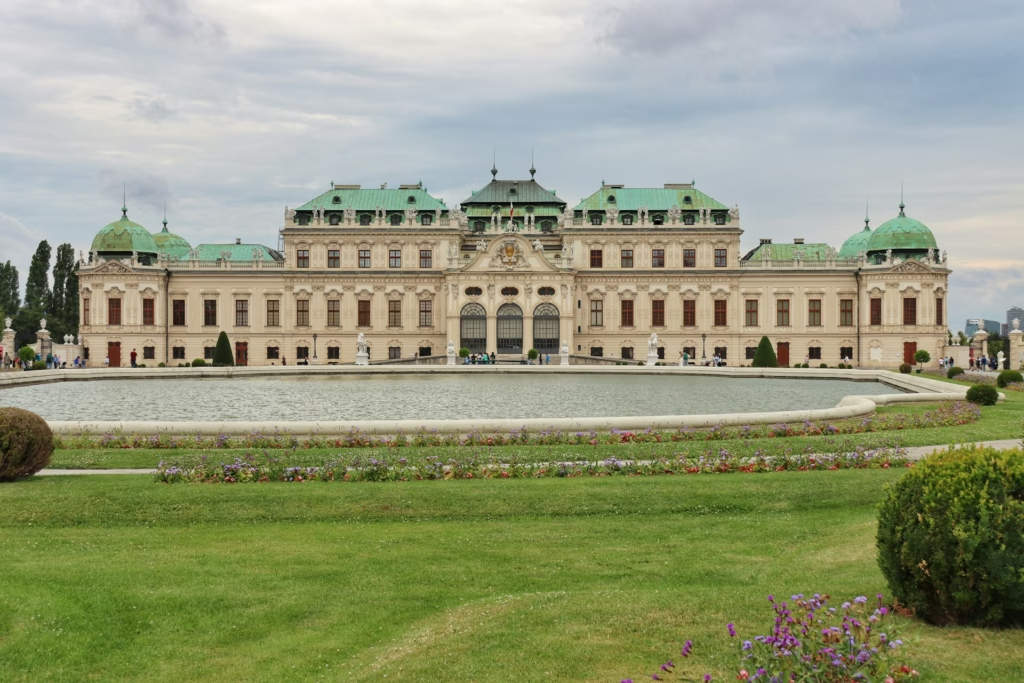
The Upper Belvedere (€18) houses Gustav Klimt’s The Kiss, which is even more extraordinary in person than any reproduction suggests. Allow two hours. Afterwards, walk or tram to the Naschmarkt — Vienna’s sprawling open-air market running along the Wienzeile. It’s part food market, part flea market on Saturdays, part social event. Try Käsekrainer (cheese-stuffed sausage) from one of the stands — locals eat it as a late-night snack but it works perfectly at noon. Book a classical concert for the evening at the Musikverein or the Konzerthaus; tickets start from €29 for some programmes.
Day 4 – Slow Morning, Hidden Spots
Take a morning coffeehouse session seriously. Café Central (1st District) is architecturally spectacular; Café Sperl (6th District, Gumpendorfer Straße 11) is more authentic and less tourist-heavy, dating from 1880. Then visit the Zentralfriedhof (Central Cemetery) — vast, peaceful, and free, with the honorary graves of Beethoven, Brahms, Schubert, and both Strausses. It sounds morbid; it isn’t. Finish at St. Marx Cemetery to find Mozart’s grave, wild with overgrown lilac in spring. Zero tourists. Tram #71 takes you directly.
Things to Do in Vienna
There is no shortage of things to do in Vienna. The harder task is prioritising. Below are the experiences that separate a good Vienna trip from an exceptional one.
Schönbrunn Palace
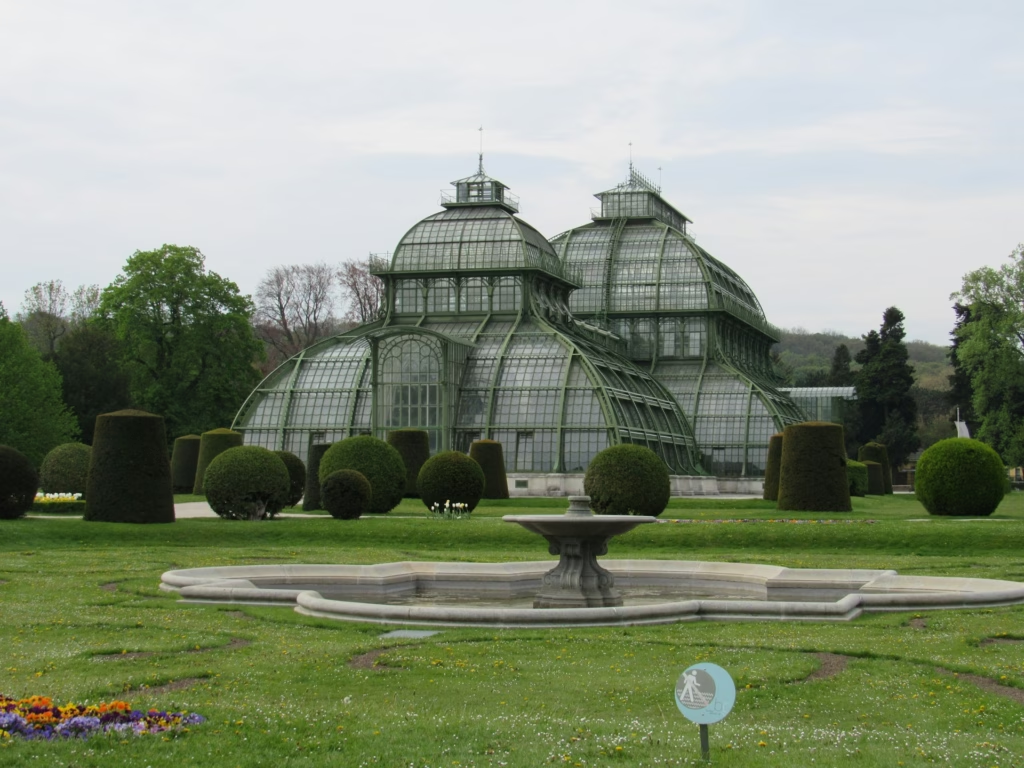
The former summer residence of the Habsburgs is the most visited attraction in Austria — and it earns the attention. The palace interior is remarkable, but the real value is the gardens: 186 hectares of baroque landscaping that are completely free to enter. The Gloriette hilltop pavilion (€5 entry or free from outside) gives the kind of view that makes you understand why the Habsburgs built their empire here.
The Belvedere
Split across two baroque palaces facing each other across formal gardens, the Belvedere houses one of Austria’s finest art collections. The Upper Belvedere is where you find Klimt’s The Kiss alongside Schiele, Kokoschka, and Monet. The Lower Belvedere focuses on baroque and medieval art. A combined ticket (€29) covers both; Upper Belvedere alone (€18) is the priority for most visitors.
Kunsthistorisches Museum (KHM)
The Art History Museum on the Ringstrasse is one of Europe’s truly great art museums — Bruegel, Caravaggio, Vermeer, Raphael, all under one imperial roof. It’s free on the first Sunday of each month, which tends to make it busier. Budget a minimum of two hours; three is better.
Vienna State Opera
The Wiener Staatsoper is one of the world’s busiest opera houses, with a different programme almost every night of the season. Standing room tickets sell online 80 minutes before curtain for €4–10 — legitimately the best deal in European culture. Full-price tickets range from €30 to several hundred depending on the production and seat. Check the schedule at wiener-staatsoper.at well before your trip.
The Vienna Coffeehouse
Viennese coffeehouses are UNESCO-listed cultural heritage — not for the coffee specifically (though a Melange is excellent), but for what they represent: a tradition of spending hours at a marble-topped table with a newspaper, a notebook, or a friend, and being charged for exactly one drink. Café Central, Café Hawelka, and Café Landtmann near the Burgtheater are classics. Café Sperl in the 6th is the least touristy of the first-tier options. A Melange (white coffee) runs €4–5; a slice of Apfelstrudel is €5–7.
Naschmarkt
Vienna’s kilometre-long open-air market along the Wienzeile has around 120 stalls selling everything from Austrian cheeses and Styrian pumpkin oil to Turkish spices and fresh fish. It’s at its best on Saturday mornings when an antiques and flea market extends the full length of it. Go hungry.
The Prater and the Riesenrad
The Prater is a vast public park on the edge of Leopoldstadt — 6 square kilometres of parkland crossed by the Hauptallee, a 4.5 km chestnut-lined avenue perfect for cycling or a long walk. At its entrance stands the Riesenrad, the giant Ferris wheel built in 1897 that is one of Vienna’s most recognisable landmarks (€14 to ride). The surrounding Wurstelprater fairground is the oldest amusement park in the world, still operating and wonderfully odd.
Free Things to Do in Vienna
- Walk the Ringstrasse: The grand boulevard circles the 1st District past the Opera, Parliament, Rathaus, Burgtheater, and both main museums — all viewable from the street for free.
- Schönbrunn Gardens: Fully free to enter and roam regardless of whether you visit the palace.
- Volksgarten rose garden: Blooms in May–June; entirely free; right next to the Burgtheater.
- Danube Island (Donauinsel): 21 km of waterfront parkland, free, excellent for cycling and swimming in summer.
- Summer Night Concert at Schönbrunn: The Vienna Philharmonic plays a free outdoor concert in the palace gardens every June (June 19, 2026).
- Museum free Sundays: The Kunsthistorisches Museum, Naturhistorisches Museum, and others are free on the first Sunday of each month.
| Attraction | Entry Price | Tip |
|---|---|---|
| Schönbrunn Palace (Grand Tour) | €34 | Book online; gardens are completely free |
| Belvedere Palace (Upper) | €18 | Houses Klimt’s The Kiss; book timed entry in peak season |
| Kunsthistorisches Museum | €22 | Free first Sunday of the month; budget 2–3 hours minimum |
| St. Stephen’s Cathedral (Stephansdom) | Free (towers extra) | South tower climb €6; panoramic views worth it |
| Hofburg Imperial Apartments + Sisi Museum | €18 | Combined ticket with Imperial Silver Collection is good value |
| Albertina | €19.90 | 250th anniversary exhibitions in 2026; less crowded than KHM |
| Vienna State Opera (standing room) | €4–10 | Buy online 80 min before curtain; world-class for almost nothing |
| Spanish Riding School | From €15 (morning practice) | Book 1 week ahead; morning practice far cheaper than full shows |
Where to Stay in Vienna
An important aspect of a complete Vienna travel guide is knowing where to stay in Vienna, which shapes your entire experience. Vienna’s districts each have a distinct character, and choosing well means less time on transport and more time doing the things that make the trip worthwhile.
| District | Vibe | Best For | Notes |
|---|---|---|---|
| 1st District (Innere Stadt) | Historic, grand | First-timers, sightseeing | UNESCO World Heritage; most expensive; walkable to everything |
| 7th District (Neubau) | Creative, indie | Design lovers, younger travellers | Independent shops, galleries, excellent cafés |
| 6th District (Mariahilf) | Commercial, central | Shoppers, mid-range stays | Mariahilfer Straße shopping; good transport links |
| 2nd District (Leopoldstadt) | Multicultural, lively | Budget travellers, Prater fans | Jewish heritage, Prater park, Naschmarkt nearby; good value |
| 4th/5th District (Wieden/Margareten) | Local, quiet | Longer stays, local vibe | Great cafés and restaurants; 20–30% cheaper than 1st District |
| 3rd District (Landstraße) | Residential, accessible | Belvedere visitors, families | Near Belvedere Palace; Hauptbahnhof hub; reasonable prices |
Budget picks: Wombat’s City Hostel on the Naschmarkt (dorm beds from €29) and Jo&Joe Vienna near Westbahnhof are both well-regarded. For budget hotels, the 6th and 7th Districts offer solid private rooms from €80–100 per night with fast metro connections into the 1st District.
Mid-range: Hotel Brauhof Wien near Westbahnhof offers good value at around €100–130 per night. Motel One Staatsoper sits one block from the Opera House and punches above its price for location and design.
Splurge: Hotel Sacher (home of the original Sachertorte) and Hotel Bristol are the classic choices opposite the Opera. Rates start around €350–500 and go significantly higher during opera ball and Christmas market season.
Important: Vienna increased its tourist tax (Ortstaxe) from 3.2% to 8.5% from December 2025. This is calculated on your accommodation rate and paid at check-in — factor it into your budget, as it adds a meaningful amount across a multi-night stay.
Public Transport in Vienna
Public transport in Vienna is one of the most efficient urban networks in Europe — 5 U-Bahn lines, 29 tram routes, and 127 bus lines covering the entire city, running 24 hours on weekends. As of January 1, 2026, Wiener Linien restructured its fares for the first time since 2012. Here’s what changed and what it means for visitors.
| Ticket / Pass | Price (2026) | Best For |
|---|---|---|
| Single journey | €3.20 (€3.00 online/app) | One-off trips; valid for one continuous journey including transfers |
| 24-hour pass | €10.20 | One full day of unlimited travel across U-Bahn, tram, and bus |
| 7-day pass | €28.90 | Visits of 4–7 days; best value for most tourists |
| 31-day pass | €75.00 | Longer stays or digital nomads |
| City Airport Train (CAT) | €16 one-way / €27 return | 16 min to Wien Mitte; fast but pricier than the S-Bahn alternative |
| Vienna City Card (combined) | From €17 | Transport + museum discounts; compare against Vienna Pass inclusions |
Key change for 2026: The 48-hour and 72-hour tourist passes have been discontinued. The 24-hour (€10.20) and 7-day (€28.90) passes are now the main short-stay options. Buy tickets digitally via the WienMobil app for a 5% discount.
From the airport: The City Airport Train (CAT) costs €16 one-way and takes 16 minutes to Wien Mitte. The S7 S-Bahn covers the same route in 25 minutes for around €4 and is included in a valid 24-hour or 7-day pass — this is what locals and savvy travellers use. Taxis and rideshares cost €35–50 to the city centre.
Local tip: Trams 1 and 2 along the Ringstrasse loop past the Opera House, Parliament, City Hall, Burgtheater, and the main museums. Riding a full circuit on a standard ticket is the cheapest guided tour of Vienna’s grandest architecture you’ll find.
Vienna Travel Guide: Daily Budget
| Traveller Type | Daily Budget (per person) | What’s Included |
|---|---|---|
| Budget | €65–85 | Hostel dorm, supermarket meals, public transport, free sights |
| Mid-range | €120–180 | Private hotel, restaurants, paid attractions, concerts |
| Luxury | €400+ | Five-star hotel, fine dining, private tours, opera tickets |
The Vienna daily budget for a mid-range traveller runs around €120–180 per person per day in 2026, based on current data from multiple travel cost trackers. Budget travellers who stay in hostels, buy breakfast from supermarkets (Hofer and Billa are both excellent), use the 7-day transport pass, and focus on free attractions can manage €65–85 per day. Luxury travellers at five-star hotels with opera tickets and tasting menus will easily spend €400 or more.
For in-depth cost estimates, also read: Is Vienna Expensive? 2026 Cost Guide & Money-Saving Tips
Key individual costs
- Hostel dorm bed: €29–42 per night (higher on weekends and peak season)
- Private hotel room (3-star, central): €100–160 per night
- Mittagsmenü (lunch special at a Gasthaus): €10–15 for a full meal with a drink — the best-value eating in Vienna
- Coffeehouse coffee and cake: €9–12 (you’re paying for the table and the time, and it’s worth it)
- Beer at a Heuriger wine tavern: €4–6; quarter-litre of house wine: €4–5
- Standing room opera ticket: €4–10
- 7-day transport pass: €28.90 (covers your entire stay for most visits)
- Schönbrunn Grand Tour: €34; Belvedere Upper: €18; KHM: €22
- Vienna tourist tax: 8.5% of accommodation rate per night, added at check-in
Money-saving moves: Always order the Mittagsmenü at lunch rather than from the à la carte menu — restaurants across every district offer a 2–3 course set lunch with a drink for €10–15, and the quality is consistently high. Museum-hop on the first Sunday of the month when entry to the main national collections is free. Drink Vienna’s tap water — it comes directly from alpine springs and is some of the finest drinking water in Europe, free from public fountains throughout the city. Take the S7 S-Bahn from the airport rather than the CAT and save €12 per person each way.
Store Your Luggage in Vienna with Radical Storage
Vienna’s palaces, museums, and coffee houses don’t pair well with a rolling suitcase. Whether you’re arriving on an early train into Wien Hauptbahnhof before check-in, heading out for an opera evening after a late checkout, or squeezing in one last morning at the Naschmarkt before your flight, dragging bags around turns a great day into an exhausting one.
Radical Storage has secure luggage storage locations across Vienna, close to the major transport hubs and sightseeing areas. Drop your bags in seconds, explore the city completely hands-free, and pick up whenever you’re ready. Every item is insured up to €10,000, and booking takes less than a minute via the app or website.
Vienna Travel Tips
These are the Vienna travel tips that actually change how good your trip is — not the standard “bring comfortable shoes” advice.
- Book Palaces Early: Pre-purchase timed tickets for Schönbrunn and Belvedere. Summer walk-up lines exceed 45 minutes, and slots sell out quickly.
- Opera Standing Room: Excellent acoustics and a local vibe. Buy tickets online 80 minutes before the show at wiener-staatsoper.at.
- New Transport Passes: 48/72-hour passes are gone. Use 24-hour (€10.20) or 7-day (€28.90) passes via the WienMobil app for a 5% discount.
- Carry Cash: Many cafes and markets are cash-only. Keep €50–100 handy. Use city ATMs instead of airport exchanges for better rates.
- Saturday at Naschmarkt: Visit Saturday morning for the flea market, antique prints, and the best street food atmosphere.
- Tipping Etiquette: Round up by 5–10% when paying. Say “Stimmt so” (keep the change) rather than leaving coins on the table.
- Visit a Heuriger: Take a 20-minute tram to Grinzing or Stammersdorf for wine gardens and local glasses for €4–6.
- Alpine Tap Water: Drink the tap water; it’s fresh from the Alps and free at public fountains citywide.
- Master “Bitte”: This word means please, you’re welcome, and here you go. Using it bridges the gap with formal local service.
Vienna Neighbourhood Guide
1st District (Innere Stadt)
The historic core — and a UNESCO World Heritage Site — contains the densest concentration of imperial architecture in Europe. Stephansdom, the Hofburg, the Graben, Kohlmarkt, and the Staatsoper are all here. It’s the most expensive place to sleep and eat, but walking its streets after the tour groups leave in the evening is genuinely magic.
7th District (Neubau)
Vienna’s creative neighbourhood — independent, not yet overrun. MuseumsQuartier sits on its eastern edge. Mariahilfer Straße (Vienna’s main shopping street) borders it to the south. The streets between are filled with record shops, concept stores, wine bars, and some of the city’s best small restaurants.
2nd District (Leopoldstadt)
Home to the Prater, the Riesenrad, and one of Vienna’s most vibrant and multicultural communities. The Karmelitermarkt runs several mornings a week and feels genuinely local. The 2nd District is also the historic centre of Vienna’s Jewish community — the Jewish Museum at Dorotheergasse and the medieval synagogue ruins at Judenplatz both tell this history with care.
4th–5th Districts (Wieden / Margareten)
Quieter, more residential, and significantly cheaper than the 1st. The Naschmarkt forms the northern border. Schleifmühlgasse has a good cluster of independent galleries and bookshops. Several small wine bars give the evenings a genuinely local feel at prices well below the tourist circuit.
What to Eat and Drink in Vienna
Austrian cuisine is often underrated. It is not complicated food, but it is very good food — rich, hearty, and built around quality ingredients that the Alpine region has always produced well.
- Wiener Schnitzel: Veal, pounded thin, breaded, and fried in clarified butter until the coating bubbles and blisters. The definitive version is at Figlmüller Wollzeile. The coating should ripple, not lie flat — that’s how you know the fat was hot enough.
- Tafelspitz: Boiled prime beef in broth, served with apple-horseradish and rösti-style potato. Emperor Franz Joseph’s favourite. Plachutta Wollzeile is the standard reference point.
- Sachertorte: Dense chocolate cake with an apricot jam layer. Hotel Sacher and Demel have been disputing whose is the authentic original since 1876. Try both; form your own opinion.
- Käsekrainer: A cheese-stuffed pork sausage, eaten standing at a Würstelstand (sausage kiosk) late at night or at the Naschmarkt. Bitzinger near the Albertina is the most famous.
- Melange: Vienna’s signature coffee — a shot of espresso topped with steamed milk and milk foam. Order it at any coffeehouse and take your time with it.
- Grüner Veltliner: Austria’s signature white wine — dry, peppery, and completely underrated internationally. Drink it at a Heuriger in the Vienna hills or at any decent wine bar in the 7th District.
Budget eating tip: The Mittagsmenü system runs at almost every sit-down restaurant from roughly 11:30 AM to 2:30 PM on weekdays. For €10–15 you get a 2–3 course set lunch with a drink included. University area restaurants around the 9th District (Alsergrund) are reliably cheap and reliably full of locals.
Upcoming Events in Vienna 2026
Vienna’s events calendar runs year-round with genuine depth. Whether you’re into classical music, contemporary art, street festivals, or seasonal markets, there’s almost always something worth timing your visit around.
| Event | Dates | Location | What to Expect |
|---|---|---|---|
| Vienna Philharmonic New Year’s Concert | Jan 1, 2026 | Musikverein | Globally broadcast; watch it live from outside on screens |
| Opernball (Vienna Opera Ball) | Feb 19, 2026 | Vienna State Opera | Austria’s most glamorous annual ball; tickets from €380 |
| Vienna Festival (Wiener Festwochen) | May 8 – Jun 21, 2026 | City-wide | 6-week arts festival: theatre, dance, performance across venues |
| Philharmonic Summer Night Concert | Jun 19, 2026 | Schönbrunn Gardens | Free outdoor concert by the Vienna Philharmonic; arrive early |
| Donauinselfest (Danube Island Festival) | Jul 3–5, 2026 | Danube Island | Free open-air music festival; Europe’s largest; 3 million visitors |
| Rathaus Film Festival | Jul – Aug 2026 | Rathausplatz | Free nightly opera and concert screenings on a giant screen |
| Long Night of Museums | Oct 3, 2026 | City-wide | €16 ticket; 80+ museums open until 1 AM — exceptional value |
| Vienna Christmas Markets | Late Nov – Dec 26, 2026 | Multiple locations | Rathausplatz is biggest; Schönbrunn and Spittelberg are cosier |
The Donauinselfest in early July is Europe’s largest free open-air music festival — 3 million visitors over three days, dozens of stages, entirely free. The Long Night of Museums on October 3 is one of the best-value evenings in the city’s calendar. And the Wiener Festwochen in May–June is Vienna’s pre-eminent arts festival — six weeks of international theatre, dance, and performance across the city. Check the official Vienna tourism events calendar at wien.info for exact schedules and booking links.
Getting to Vienna
By Air: Vienna International Airport (VIE) is 18 km from the city centre. The S7 S-Bahn is the best value airport connection — around €4, takes 25 minutes to Wien Mitte, and is covered by a valid 24-hour or 7-day transport pass. The City Airport Train (CAT) takes 16 minutes for €16 one-way. Taxis and rideshares run around €35–50 to the centre.
By Train: Wien Hauptbahnhof connects to most major European cities. From Munich: 4 hours by EuroCity. Budapest: 2.5 hours by Railjet. Prague: 4 hours by Railjet. Night trains from Amsterdam, Hamburg, and Rome also serve Vienna — book via ÖBB at oebb.at.
By Bus: FlixBus serves Vienna from many European cities at lower cost than the train. The main bus station (VIB) is at Wien Erdberg, U3 line, with fast connections into the centre.
Vienna Travel Guide: In Summary
Use this Vienna travel guide as a starting point, not a checklist. The palaces, the museums, and the opera are all extraordinary — but what makes Vienna stay with people long after they leave is harder to schedule. It’s the unhurried hour in a coffeehouse with no particular place to be. The walk home from a concert at midnight through streets lit by gas lamp reproductions. The glass of Grüner Veltliner in a vine-covered garden twenty minutes from the city centre. This is a city that rewards visitors who slow down for it. Build that into your Vienna itinerary, and the trip will be far better for it.
For more European city guides, visit Radical Storage Travel