

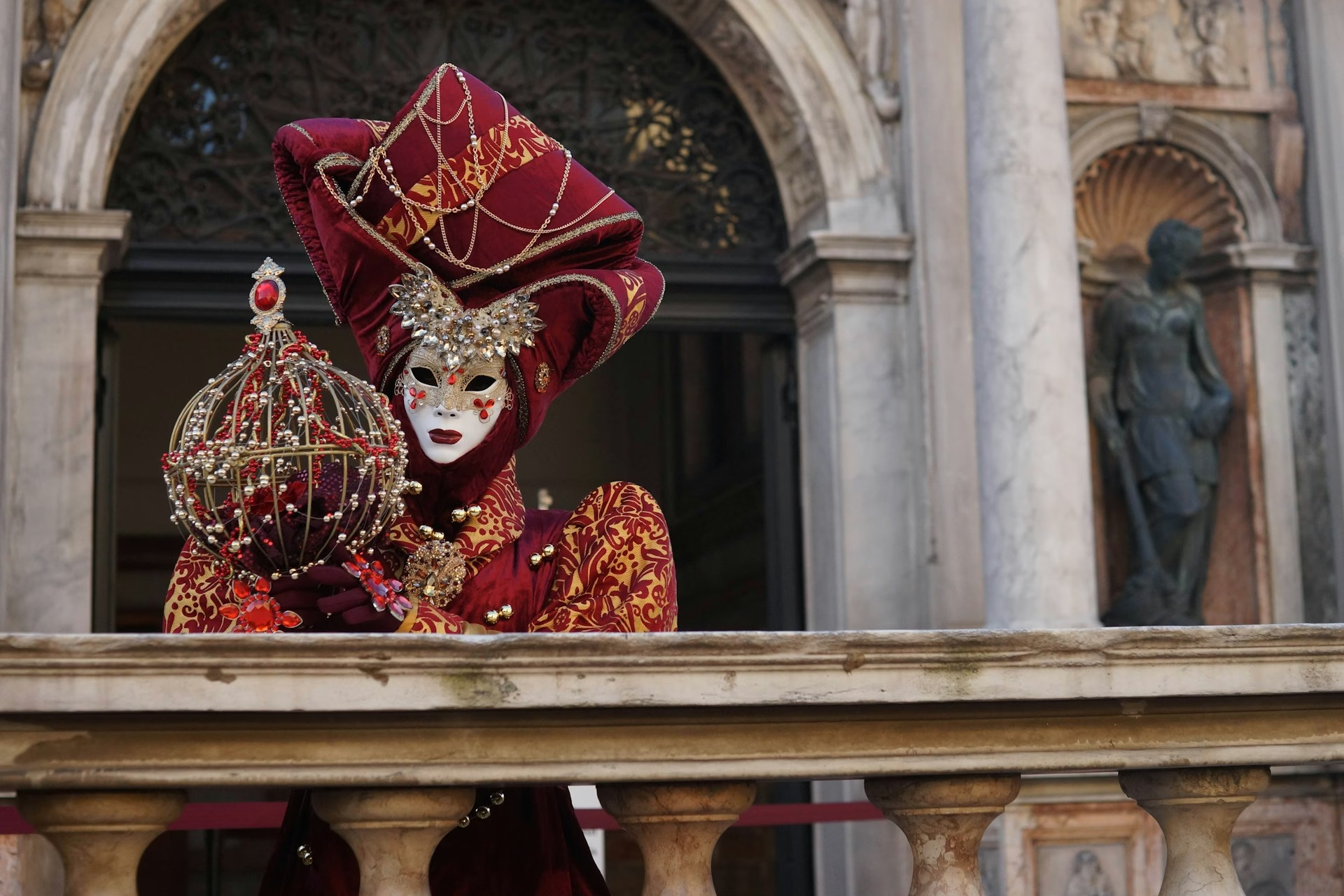
Fog drifts across canal water as a figure in an 18th-century gown and porcelain mask glides past on a gondola, this is the Venice Carnival 2026, where reality blurs into theatrical fantasy for 18 extraordinary days. Unlike Carnevale in Italy‘s other celebrations, Viareggio’s political satire floats or Ivrea’s orange battles, the Venetian Carnival creates intimacy through anonymity. Here, strangers become characters in a living historical drama, united by elaborate Venice Carnival masks that erase modern identity and resurrect centuries of Serenissima tradition.
When is Carnival in Venice 2026?
Carnival in Venice 2026 runs January 31 through February 17, 2026, exactly 18 days culminating on Martedì Grasso (Mardi Gras). The Venice Carnival 2026 dates break into two distinct experiences: the intimate first week and the crowded final 10 days.
Early carnival (January 31-February 6) attracts locals and savvy travelers who appreciate breathing room. Venetians emerge in family heirloom costumes passed down generations, artisan workshops stay accessible without queues, and photographers capture empty-calle compositions impossible during peak crowds. The major spectacles haven’t begun, but this quieter period offers authentic glimpses of carnival as Venetians celebrate it, not as a tourism spectacle but as a cultural tradition.
Peak carnival (February 7-17) delivers the headline events, Flight of the Angel, water parades, Festa delle Marie, alongside an overwhelming tourist influx that tests patience but creates undeniable energy. Choose your timing based on whether you prioritize atmospheric authenticity or guaranteed access to major productions.
Carnival Venice 2026: The Olympic Spirit Comes to the Lagoon
Carnival Venice 2026 adopts “Olympus: At the Origins of Play” as its unifying theme, celebrating the Milano Cortina 2026 Winter Olympics occurring simultaneously. This marks the first time carnival has explicitly honored athletic competition, appropriate for a maritime republic whose citizens invented modern rowing races through centuries of regattas.
Expect Olympic torch imagery woven into costume designs, athletic competitions reimagined through carnival theatrical lens, and special programming connecting Greek mythology (home of ancient Olympics) with Venetian artistic traditions. The Giorgio Cini Foundation plans exhibitions exploring historical intersections between sport and spectacle in Venetian culture.
Venice Carnival 2026 Schedule: Essential Events
The Venice Carnival 2026 schedule features free public spectacles and exclusive ticketed experiences. Here’s what matters:
Opening Water Parade – February 7
The Festa Veneziana kicks off peak carnival at 11:00 AM with traditional boats parading the Grand Canal from Cannaregio to San Marco. Rowers wear period costumes while musicians on decorated vessels perform Renaissance compositions. Watch from any Grand Canal bridge—Rialto and Accademia offer best vantage points. This free event sets carnival’s visual tone: beauty, tradition, and theatrical excess.
Flight of the Angel – February 8
At noon Sunday, a costumed acrobat descends via cable from Campanile di San Marco’s 98-meter bell tower to the piazza below. This recreates a 16th-century tradition that ended when a performer crashed into the Doge, suspended for centuries before revival in 2001. Expect 30,000+ spectators packing San Marco hours beforehand. Free but requires early arrival and crowd tolerance.
Festa delle Marie – February 14
Twelve young Venetian women in Renaissance gowns process from San Pietro di Castello through city streets to Piazza San Marco, recreating the 944 AD rescue of kidnapped brides. Each Marie represents a Venetian sestiere (district). The parade winds through lesser-known neighborhoods, offering intimate views along residential calli. One Marie receives the festival crown during evening ceremonies.
Best Mask Contest – Daily
Every afternoon in Piazza San Marco, masked participants compete for daily prizes based on costume creativity, historical authenticity, and theatrical presentation. Winners advance to the February 17 grand finale awarding “Most Beautiful Mask” titles. Free to watch, free to enter, just arrive in costume.
Palace Balls and Private Events
Ticketed masked balls occur nightly in historic palazzi along the Grand Canal. Ca’ Vendramin Calergi (Wagner’s final residence) hosts the most prestigious events. Expect €250-600 tickets including multi-course Venetian dinner, live chamber music, and dancing in frescoed ballrooms lit by chandeliers. Book months ahead through established organizers like Antonia Sautter or Venice Events, verify authenticity as scam operators proliferate during carnival.
Venetian Masks: Decoding the Tradition
Venetian masks weren’t party accessories but social equalizers. In 18th-century Venice, the Serenissima Republic legally permitted masks during carnival, erasing class distinctions. Servants gambled beside nobles at Casino Ridotto, aristocrats conducted affairs without scandal, political dissidents spoke freely. Masks provided liberation through anonymity.
The Bauta: Venice’s Signature Mask
The bauta’s jutting chin design allowed wearers to eat and drink without removal—practical anonymity. White baute signified nobility, black indicated commoners. Worn with black cape (tabarro) and tricorn hat, this combination dominated carnival 1600s-1700s. Today’s carnival sees baute everywhere, though most lack the precise geometric angles of authentic period pieces.
The Moretta: Silent Mystery
Women wore this black velvet oval mask held by interior button clenched between teeth, rendering them mute. The moretta (dark one) or muta (mute) added mysterious silence to anonymous encounters. Modern versions use elastic straps rather than the teeth-clenching mechanism, though purists seek authentic reproductions.
Medico della Peste: The Plague Doctor
The beaked mask originated as protective equipment for physicians treating Black Death patients, the long nose contained aromatic herbs believed to filter disease-carrying miasma. Though never actually worn during carnival historically, its unsettling appearance made it tourism’s favorite mask. Expect to see dozens daily despite its anachronistic status.
Where to Buy Authentic Masks
Legitimate artisan workshops use traditional papier-mâché, leather, or ceramic—never plastic. Ca’ Macana (Dorsoduro 3215) creates museum-quality pieces using Renaissance techniques. Tragicomica (Calle dei Nomboli 2800) specializes in historically researched reproductions. Atelier Marega (Fondamenta Venier 2088) offers mask-making workshops. Expect €50-200 for quality masks, €400+ for elaborate masterworks.
Venice Carnival Costumes: Dressing the Part
Venice Carnival costumes range from rental pieces to bespoke creations requiring months of work. Serious participants commission tailored 18th-century reproductions—silk gowns with panniers (side hoops), embroidered waistcoats, period wigs, authentic footwear. These investments reach €5,000-15,000 but transform wearers into living museum pieces.
Rental ateliers serve visitors unwilling to travel with elaborate garments. Nicolao Atelier (Cannaregio 2590) supplied costumes for films, including “Casanova” and “Dangerous Beauty” rentals, €200-600 daily. Antonia Sautter (San Marco 2465) offers historically accurate period dress with expert fitting consultations.
Budget approach: Buy quality mask from reputable artisan (€60-150), pair with elegant black attire or simple period-style dress from carnival vendors (€80-120). This balances authenticity with practicality while avoiding obviously cheap tourist costumes.
Venice Carnival at Night: When Magic Intensifies
Venice Carnival at night transforms completely after day-trippers depart. Fog rolls off lagoon waters, street lamps cast golden pools across ancient stones, and costumed figures create cinematic scenes in empty calli. This is when Venetian masquerade reveals its true character, intimate, mysterious, theatrical.
Photographers prize the hours after 9:00 PM when crowds thin but costumed participants remain. Bridge crossings, narrow sotoporteghi (covered passageways), and canal reflections create atmospheric compositions impossible during daylight chaos. The city becomes a stage set where everyone plays characters in an unnamed production.
Evening events include palace balls (running until 2:00 AM), late-night concerts in historic churches, and spontaneous gatherings in quieter campi where locals celebrate carnival away from tourist epicenters like San Marco.
Venice Carnival Overtourism: Strategies for Survival
Venice Carnival overtourism peaked in 2019 when 3 million visitors overwhelmed 50,000 residents. Post-pandemic, Venice implemented crowd controls including:
- Piazza San Marco access limits during peak days (February 14-17) with potential QR code pre-registration
- One-way pedestrian flows through major corridors when density becomes dangerous
- €5 day-tripper tax (waived for overnight guests), collect receipt as proof
- Large luggage bans on vaporetti and major routes during peak hours
How to Beat the Crowds?
Visit first week (January 31-February 6) before international hordes arrive. Venetians in costume, artisan workshops accessible, restaurants unburdened.
Explore outer sestieri – Cannaregio, Castello, and Dorsoduro offer carnival atmosphere without San Marco crush. Campo Santa Margherita and Campo San Polo become gathering spots for locals.
Embrace early mornings and late nights – Day-trippers arrive 10:00 AM, depart by 7:00 PM. Venice belongs to overnight visitors during edges of day.
Carnival of Venice Trumpet: The Musical Soundtrack
The Carnival of Venice trumpet piece, “Il Carnevale di Venezia,” serves as the carnival’s unofficial musical theme. Originally a Neapolitan folk song, Jean-Baptiste Arban’s 1864 variations transformed it into the trumpet virtuosos’ ultimate test: rapid articulation, extreme high register, and technical demands that separate amateur from professional.
During carnival, brass ensembles perform the composition in Piazza San Marco mornings before crowds arrive. The playful melody perfectly captures carnival’s theatrical spirit, simultaneously serious artistic achievement and joyful celebration.
Planning Your Venice Carnival Experience

Accommodation Strategy
Book 8-12 months ahead. Carnival inflates rates 200-300%. Expect €180-450/night mid-range hotels in Venice proper. Mainland Mestre offers budget alternatives (€70-140/night) with 15-minute train connections to Santa Lucia station. Airbnb rentals in residential neighborhoods like Cannaregio provide authenticity at a moderate cost.
Getting Around
Venice has zero cars, transportation via vaporetto (water bus), traghetto (gondola ferry crossing), or walking. A seven-day unlimited vaporetto pass costs €65. Water taxis run €70-110 from the airport but are convenient for luggage-heavy arrivals. Walking remains fastest for short distances through maze-like calli.
What to Pack
February averages 4-12°C with frequent rain and possible acqua alta (flooding). Waterproof boots are essential; rubber wellies are sold everywhere when the tides rise. Layers for temperature changes. Small crossbody bag for valuables since elaborate costumes lack pockets. If renting costumes, pack comfortable base layers and walking shoes for between-costume hours.
Luggage Storage During Venice Carnival
Venice’s pedestrian-only layout makes luggage challenging even without carnival crowds. Radical Storage provides secure locations near Santa Lucia station, Rialto Bridge, and scattered through main sestieri. Drop bags €5 daily with €10,000 coverage per item. Essential for early hotel checkouts before evening flights, costume ball attendees needing outfit storage between events, or day-trippers exploring carnival between train connections.
Book via mobile app, locations stay open extended hours during carnival. Strategic placement near vaporetto stops and major walking corridors means you’re never far from secure storage when costume changes or travel logistics require hands-free exploration.
Making the Most of Venice Carnival 2026
Venice Carnival rewards those who engage beyond surface tourism. Invest in an authentic mask from a legitimate artisan. Venture past San Marco into quieter sestieri where locals celebrate. Experience Venice Carnival at night when day-trippers leave, and the city reveals its mysterious soul. Consider visiting the opening week before international crowds overwhelm.
Most importantly, embrace the theatrical role-playing that defines Venetian Carnival. Behind your mask, you’re not a tourist, you’re a character in a centuries-old tradition that once allowed servants and nobles to dance together as equals. That democratic magic, where anonymity creates unexpected freedom, remains Venice Carnival’s greatest gift to participants willing to truly wear the mask.