
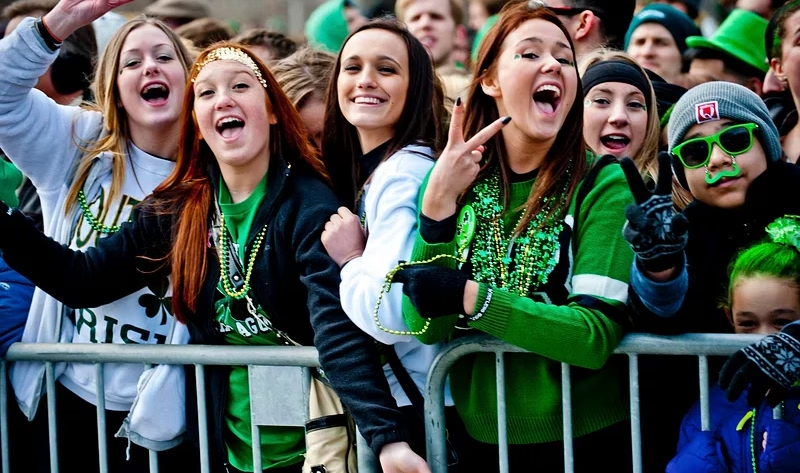
Plumbers dump orange powder into the Chicago River, boats churn the water, and within minutes the entire waterway transforms into an emerald ribbon snaking through downtown skyscrapers. This surreal scene happens only once a year, making St Patrick’s Day Chicago unlike any celebration on earth. While New York claims the largest parade and Dublin hosts the original, Chicago invented something no other city can replicate: dyeing a major urban river bright green.
Chicago St Patrick’s Day 2026 officially falls on Tuesday, March 17th, but the city concentrates its massive celebration on the preceding Saturday (March 14th) when half a million people converge downtown to witness the Chicago River green spectacle, followed immediately by America’s second-largest St Patrick’s Day parade. This timing lets working professionals and families participate without taking midweek days off, creating a weekend-long festival atmosphere that spreads across the entire city.
Chicago River St Patrick’s Day: How the Magic Happens
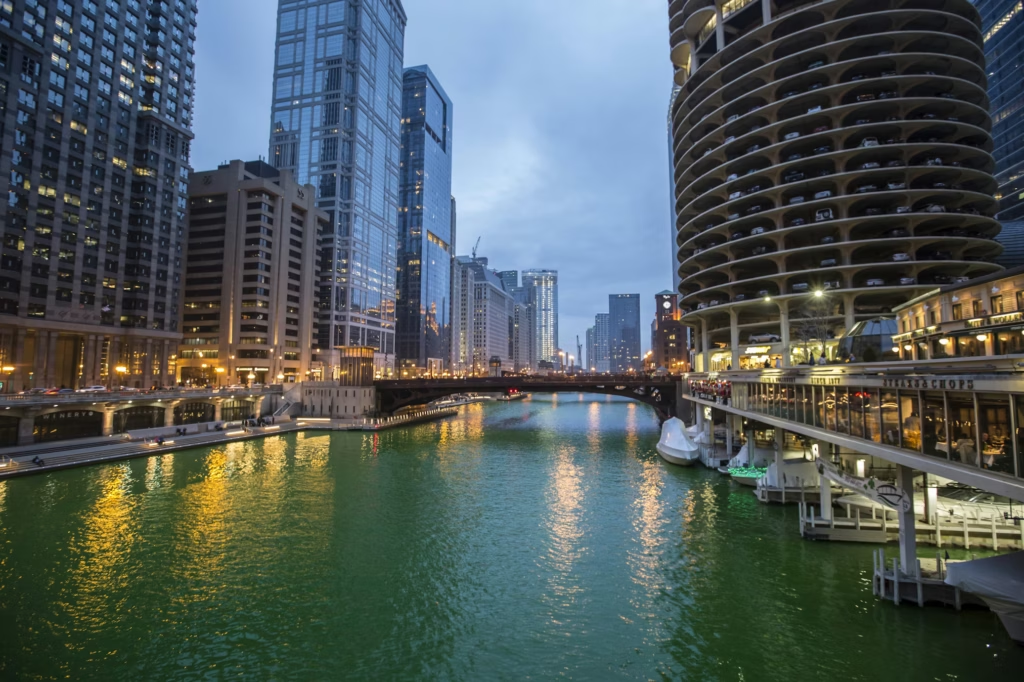
The Chicago River dyeing happens Saturday, March 14th, 2026 at precisely 10:00 AM. Members of Chicago Plumbers Local 130 UA spread what looks like orange powder from motorboats traveling between State Street and Columbus Drive. The substance hits water, chemical reactions occur, and the river erupts in brilliant emerald green that rivals anything in Ireland itself.
The History of River Dying
This tradition began accidentally in 1961 when Business Manager Stephen Bailey noticed a plumber’s coveralls stained perfect Irish green. The plumber had been using dye to detect leaks in the river system. Bailey realized if the dye could stain clothes so vividly, it could color the entire river. The next year, they dumped 100 pounds of dye and turned the Chicago River green for a week. Environmental concerns eventually led to today’s eco-friendly vegetable-based formula that achieves the same spectacular effect while dissipating harmlessly within hours.
Planning Your Viewing Experience
Understanding how long does the Chicago River stay green helps plan your viewing. The brilliant color peaks immediately after dyeing completes (around 10:15 AM) and maintains intensity for roughly 2-3 hours. By 1:00-2:00 PM, the green has faded noticeably. Serious photographers arrive early to capture the transformation process and the vivid color at its peak.
Best viewing concentrates along Upper Wacker Drive between State and Columbus. The lower Riverwalk closes to general public except for expensive ticketed events ($100+ per person). Arrive by 9:00 AM for comfortable positioning. By 9:30 AM, crowds thicken uncomfortably. At 9:45 AM, you’re fighting for glimpses through smartphone screens held overhead. The 400,000+ spectators who attend create density that makes late arrivals genuinely unpleasant.
When is the St Patrick’s Day Parade in Chicago?
The Chicago St Patrick’s Day Parade 2026 steps off at noon Saturday, March 14th, strategically timed so river dyeing spectators can walk directly to parade viewing areas. This marks the 71st annual parade, making it younger than New York’s but still deeply rooted in Chicago tradition.
The Shannon Rovers Irish Pipe Band has led every parade since 1956, their bagpipes announcing the procession’s arrival before anyone sees the first float. Behind them come over 100 parade units: Irish step dancers executing precise choreography while moving down Columbus Drive, elaborate floats built by neighborhood groups and Irish cultural organizations, high school marching bands from across eight states competing for attention, and politicians riding in convertibles waving to constituents.
Schedule and Participation
The St Patrick’s Day Parade Chicago 2026 attracts around 400,000 spectators lining the route, creating a three-hour procession that passes any single viewing spot in roughly 90 minutes. The parade’s scale impresses: it takes this long simply for all units to cover the 1.2-mile route. Participants range from authentic Irish cultural groups to American organizations with tenuous Celtic connections, from precision dance troupes to high school bands enjoying their Chicago trip.
Chicago St Patrick’s Day Parade Route
The Chicago St Patrick’s Day Parade route follows Columbus Drive through Grant Park and the downtown area:
| Stage | Location | Notable Landmarks |
| Start / Assembly | Balbo Dr. & Columbus Dr. | Near Soldier Field and Museum Campus. |
| ↓ | North on Columbus Drive | Passes through the heart of Grant Park. |
| ↓ | Mid-Route | Passes Buckingham Fountain and Millennium Park. |
| Finish | Monroe Dr. & Columbus Dr. | Located near the bend of the Chicago River. |
Columbus Drive’s wide lanes accommodate the parade without completely paralyzing downtown traffic (unlike older routes through narrow Loop streets). Grant Park’s open space to the east provides viewing areas where families spread blankets and claim territory hours before the parade starts. The backdrop of Chicago’s skyline and Lake Michigan creates dramatic photo opportunities unavailable at most urban parades.
Prime viewing concentrates near Buckingham Fountain and around Balbo Drive where parade units are fresh and performers still energetic. By Monroe Drive, some marching bands have lost formation and dancers show fatigue. Arrive before 11:00 AM for spots directly on barriers. After 11:30 AM, you’re watching through gaps between taller spectators or viewing from Grant Park’s elevated areas.
St Patrick’s Day in Chicago: Four Parades, One Weekend
St Patrick’s Day in Chicago doesn’t end with the downtown parade. The city hosts three additional major parades on Sunday, March 15th, each reflecting distinct neighborhood character. The St Patrick’s Day Chicago events spread celebration across communities where Irish heritage runs generations deep.
The South Side Irish Parade (Western Avenue from 103rd to 115th Street, noon start) claims the title of the largest community St Patrick’s Day parade outside Dublin. This working-class neighborhood celebration draws 300,000+ spectators who line Western Avenue to watch bagpipers, local school groups, and community organizations parade past Beverly and Morgan Park’s brick bungalows. The atmosphere differs markedly from downtown’s corporate-sponsored spectacle, feeling more like an enormous neighborhood block party where everyone seems to know everyone.
Community Spirit on the Northwest and Archer Avenue
The Northwest Side Irish Parade transforms Norwood Park (Northwest Highway and Nagle Avenue) into another green celebration at noon. Smaller than the South Side event, this parade maintains intimate, family-friendly vibes where local businesses sponsor floats and kids run alongside marchers collecting candy. The Chicago Working Families’ Archer Avenue Parade in Garfield Park provides yet another neighborhood celebration, emphasizing labor unions and working-class Irish-American identity.
Chicago St Patrick’s Day Bar Crawl
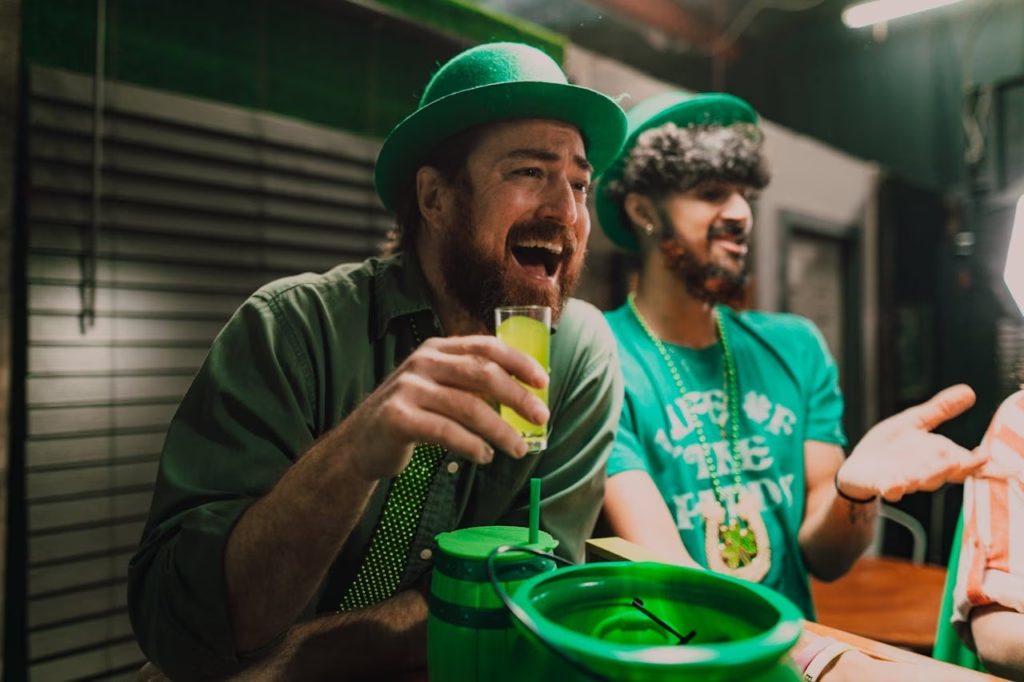
The Chicago St Patrick’s Day bar crawl scene explodes across multiple neighborhoods once parade viewing concludes. River North transforms into an outdoor party as bars between the river and Chicago Avenue pour green beer to crowds spilling onto sidewalks. Organized crawls ($30-50 for wristband admission) include multiple venues, drink specials, and shuttle service between River North, Wrigleyville, and Lincoln Park.
Authentic Pubs and Traditional Sessions
Classic Irish pubs deliver more authentic experiences than sports bars jumping on the holiday bandwagon. The Irish Oak (3511 N Clark Street) features live traditional Irish music, and Guinness poured properly with two-part pours. Chief O’Neill’s (3471 N Elston Avenue) brings Irish music sessions alongside classic pub fare. Cork & Kerry (10614 S Western Avenue) on the South Side maintains a neighborhood pub atmosphere without downtown’s aggressive crowds.
Wrigleyville on Clark Street north of Wrigley Field becomes particularly chaotic as Cubs fans and St Patrick’s Day celebrants collide. Division Street in Wicker Park attracts younger crowds seeking nightclub atmospheres over traditional pub settings. Most establishments implement cover charges ($10-25) parade weekend and strictly enforce 21+ policies with ID checks at doors. Lines form by early afternoon at popular spots, so arriving before 2:00 PM increases chances of entry without hour-long waits.
Quick Reference Guide
| Event | Details |
| River Dyeing | Saturday, March 14, 10:00 AM | State to Columbus on Upper Wacker |
| Downtown Parade | Saturday, March 14, Noon | Columbus Drive, Balbo to Monroe |
| South Side Parade | Sunday, March 15, Noon | 103rd-115th on Western Avenue |
| Green Duration | 3-5 hours after dyeing (approx. 10:15 AM – 2:00 PM) |
| Admission | Free for river dyeing and all parades |
What to Know Before You Go
Weather: March temperatures average 3-10°C (37-50°F). Dress in warm layers and waterproof jacket. Events proceed regardless of weather conditions.
Transportation: CTA trains (Blue, Red, Brown, Orange lines) provide best access. Avoid driving as Loop closures affect major streets.
Timing: Arrive by 9:00 AM for river dyeing viewing, by 11:00 AM for parade spots. Crowds exceeded 500,000 combined on Saturday.
Luggage Storage for St Patrick’s Day
Hotels rarely accommodate early check-ins before celebrations begin, and late checkouts create problems for visitors catching evening flights after parade day. Radical Storage maintains secure locations throughout downtown Chicago, near Millennium Park, Union Station, and the Loop. Drop bags for €5 per day with €10,000 coverage per item. Book through the Radical Storage app for locations operating extended weekend hours. Store luggage before the river dyeing, experience Chicago’s celebration hands-free, then retrieve bags before departures.
Frequently Asked Questions
No, Chicago uses eco-friendly vegetable-based dye that’s safe for aquatic life. The orange powder turns green on contact with water and dissipates naturally within hours.
Yes, several companies offer river cruise tickets ($60-100) for on-water viewing of both dyeing and parade festivities. Book months in advance as these sell out quickly.
Most bars operate first-come basis, but popular spots along the river and in Wrigleyville implement cover charges ($10-25) and may sell advance tickets for guaranteed entry.
New York’s Fifth Avenue parade draws larger crowds (2 million+), but Chicago’s is the second-largest in America. The river dyeing makes Chicago’s celebration unique worldwide.
Final Thoughts
Chicago’s St Patrick’s Day celebration earns its reputation through sheer audacity. What other city would dye a major urban river bright green just because someone noticed pretty staining on work clothes? This willingness to create spectacle on a massive scale defines Chicago’s approach to St Patrick’s Day, from the river transformation that attracts worldwide media attention to four separate parades spanning different neighborhoods.
The practical challenges of experiencing this celebration shouldn’t be underestimated. Half a million people concentrating in downtown areas create genuine logistical problems around viewing positions, transportation, and simply moving through crowds. Early arrival times matter significantly. Solving basics like luggage storage before the river dyeing means you can focus on the experience rather than managing belongings through packed crowds. These preparations separate visitors who capture great photos and memories from those who spend the day frustrated by circumstances they could have anticipated.