


Enjoy São Paulo Carnival without Luggage!
Find affordable luggage storage near you
The São Paulo Carnival operates on a different frequency than Rio’s famous beach party. South America’s largest city hosts samba parades that rival Rio’s production quality while maintaining closer ties to the working-class communities that created the tradition. Carnival in São Paulo means cheaper tickets, easier access, and celebrations that feel more neighborhood festival than international tourism spectacle. While Carnival in Brazil typically means Rio in most travelers’ minds, São Paulo’s version offers authentic Brazilian Carnival experience without the premium pricing or overwhelming tourist crowds.
São Paulo Carnival 2026 Dates
The São Paulo Carnival 2026 dates officially run February 13-17, 2026, culminating on Carnival Tuesday before Ash Wednesday. However, unlike the compressed Rio experience, São Paulo’s celebrations start weeks earlier with pre-carnival blocos (street parties) beginning in January and continuing through February’s official carnival week.
Sambódromo Schedule
| Date | Event | Details |
|---|---|---|
| Friday, Feb 13 | Grupo de Acesso 2 | Opening parades; Free admission |
| Saturday, Feb 14 | Grupo de Acesso 2 | Parades continue; Free admission |
| Sunday, Feb 15 | Grupo Especial (Day 1) | Competition begins with the top 8 schools |
| Monday, Feb 16 | Grupo Especial (Day 2) | Competition concludes with the remaining 8 schools |
| Saturday, Feb 21 | Champions’ Parade | Grand finale featuring the top 6 winning schools |
Performances start between 9:00 PM and 10:00 PM, running until dawn. Each school gets exactly 82 minutes to complete its entire presentation; exceeding this limit costs points in judging.
São Paulo Brazil Carnival 2026: Why Choose the Paulistano Experience
São Paulo Brazil Carnival 2026 offers distinct advantages over Rio’s more famous celebration:
Price – Sambódromo tickets cost 40-60% less than Rio equivalents. Hotels don’t implement carnival surcharges as aggressively. Budget travelers can experience elite-level samba parades without Rio’s premium pricing.
Accessibility – Less tourist saturation means easier last-minute ticket purchases, shorter security lines, and more relaxed atmosphere inside the Sambódromo. You’re watching alongside paulistanos, not international tour groups.
Urban authenticity – São Paulo’s samba schools originated as factory workers’ social clubs and soccer fan groups. Schools like Vai-Vai (founded 1928) and Camisa Verde e Branco (1953) maintain grassroots community connections that Rio’s commercialized schools sometimes lose.
Diversity – São Paulo hosts Brazil’s largest LGBTQ+ carnival scene with dedicated blocos like Minhoqueens celebrating drag culture. The city’s immigrant communities, Japanese, Italian, and Lebanese, add multicultural dimensions absent from Rio’s celebrations.
Brazilian Carnival: São Paulo’s Place in the National Celebration
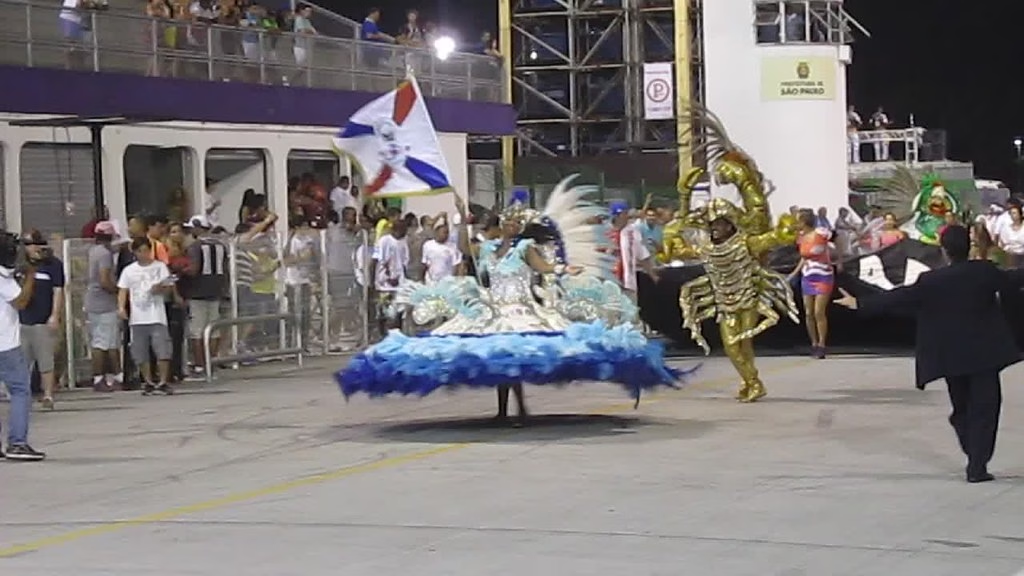
Brazilian Carnival varies dramatically by city. Rio emphasizes spectacle and international tourism. Salvador prioritizes street celebrations with trio elétrico trucks. Recife features frevo dance and giant puppets. São Paulo synthesizes elements, professional Sambódromo productions rivaling Rio’s scale combined with democratic street blocos numbering in the hundreds.
What distinguishes São Paulo is its working-class accessibility. While Rio’s prime Sambódromo seats reach R$1,500-3,000, São Paulo’s equivalent sections cost R$400-800. This pricing reflects the city’s industrial identity, carnival remains celebration for the masses, not premium tourism product.
São Paulo Carnival 2026 Tickets: Sambódromo Access
São Paulo Carnival 2026 tickets are sold through Clube do Ingresso and authorized resellers:
General Admission (Arquibancadas)
Concrete bleacher seating in numbered sectors. R$80-180 depending on location. No food or drink included. Best value for budget travelers.
VIP Boxes (Camarotes)
Private suites with open bar, buffet, air conditioning, and bathrooms. R$600-1,200 per person. Popular options include Camarote 011 and Bar Brahma.
Special Sections
Tourist Sector offers cushioned seats with multilingual staff (R$250-350). Accessible seating available at reduced rates. Photography pit requires credentials.
When to Buy
Tickets release November-December. Unlike Rio’s instant sellouts, São Paulo maintains availability through January. Champions’ Parade (February 21) sells faster, so book this date first if attending only one night.
São Paulo Street Blocos: Free Carnival for Everyone
São Paulo hosts over 500 street blocos during carnival season. These free public parties let anyone join. Major blocos include Bloco da Batata (Vila Madalena, 100,000+ attendees), Minhoqueens (LGBTQ+ focused, República neighborhood), Bantanta (west zone, family-friendly), and Banda do Trem (traditional brass bands following historic tram routes).
Blocos publish schedules on social media (@carnasaopaulo on Instagram). Arrive 30-60 minutes early for good viewing spots. Bring water, wear comfortable shoes, apply sunscreen, and guard belongings in crowds.
São Paulo’s Elite Samba Schools
Fourteen schools compete in Grupo Especial championship. Top contenders include Vai-Vai (15 championships, founded 1928), Gaviões da Fiel (Corinthians supporters’ club origin), Mocidade Alegre (pursuing 8th championship), and Unidos do Peruche (oldest continuously operating school since 1956).
Each school performs 80-82 minutes covering 700-meter parade route. Presentations include opening commission, wings of 200-300 costumed dancers, floats, 300+ drummers, and flag-carrying couples.
Planning Your São Paulo Carnival Experience

Transportation: Metro runs until 1:00 AM during carnival. Portuguesa-Tietê station serves Sambódromo. Uber/99 surge 3-5x near major events. Walking between Vila Madalena, Pinheiros, and República blocos works better than fighting traffic.
Safety: Carry minimal cash, use money belt, avoid expensive jewelry. Travel in groups after dark. February averages 23-28°C with afternoon thunderstorms. Pack breathable clothes, comfortable shoes, rain jacket, sunscreen, and water bottle.
Luggage Storage for Carnival Visitors
Traveling through São Paulo during carnival with luggage creates unnecessary hassle, whether arriving before hotel check-in, departing after checkout, or catching connecting flights between carnival dates. Radical Storage provides secure locations near main metro stations, including República, Sé, and Luz.
Drop your bags at R$25 daily (approximately €5) with R$15,000 coverage, explore carnival hands-free, then retrieve before continuing journeys. Essential for visitors attending overnight Sambódromo events who need somewhere safe to leave belongings during 6-8 hour parade marathons. Book via mobile app with extended February operating hours.
Frequently Asked Questions
Not better, different. Rio offers a beach setting, international glamour, and tourism infrastructure. São Paulo provides urban authenticity, better value, easier access, and grittier energy.
Technically, yes, through year-round enrollment and rehearsal attendance. Realistically, no for 2026 as schools finalize lineups months before carnival. Instead, join street blocos where spontaneous participation is encouraged and expected.
Generally, yes, during the daytime in established neighborhoods. Exercise standard urban precautions: travel in groups, guard belongings, and avoid isolated areas after dark. Larger blocos (100,000+ attendees) see more petty theft, and smaller neighborhood parties often feel safer.
Recommended but not critical. Unlike Rio’s instant sellouts, São Paulo maintains availability closer to carnival dates. However, Champions’ Parade (February 21) and prime VIP boxes sell faster. Book 1-2 months ahead for guaranteed preferred seating.
Final Thoughts
São Paulo Carnival 2026 delivers an authentic Brazilian carnival without Rio’s tourist premium. The samba school parades match Rio’s production quality at 40-60% lower cost, while hundreds of free street blocos create democratic celebrations where everyone participates. You get professional Sambódromo competition, accessible pricing, and a carnival that still belongs to paulistanos rather than international tour operators. Whether watching elite samba schools or dancing with locals at Bloco da Batata, São Paulo proves carnival transcends beaches and postcards.