
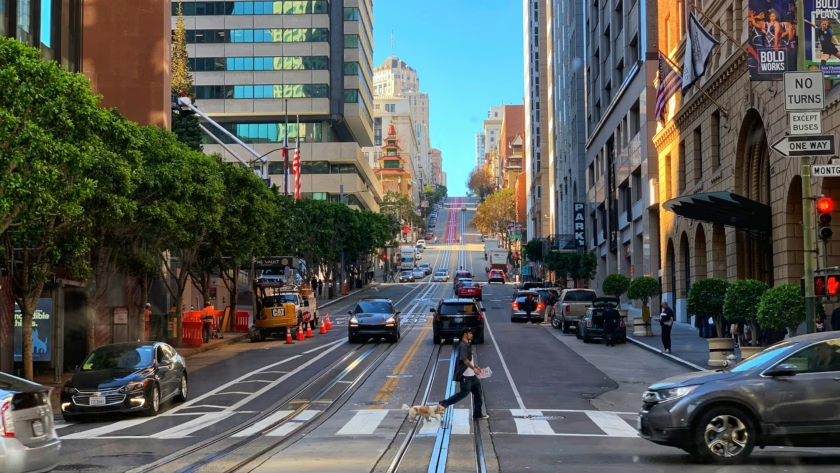
Experience the freedom of a car-free lifestyle where coffee shops, offices, and local landmarks sit just a short stroll from your front door. That’s right, walkable cities offer all of that. So if you’re wondering what are the most walkable cities in the US are, the 2026 answer from official Walk Score® data is clear: San Francisco, New York City, Boston, Chicago, Washington D.C., and Miami continue to lead America’s most walkable major cities. New for 2026, Oakland has climbed firmly into the top 10, and Jersey City — with an impressive Walk Score of 86.6 — has emerged as one of America’s most compelling pedestrian-friendly urban destinations, sitting just behind San Francisco and New York in the official national rankings.
This comprehensive guide ranks the top walkable cities in America based on the latest official Walk Score data (walkscore.com), U.S. Census Bureau figures, Transit Scores, and Bike Scores — helping you find the perfect pedestrian-friendly destination whether you’re visiting, relocating, or simply curious about car-free living options.
- Key Findings: Top Insights on the Most Walkable Cities in the US
- Top 10 Most Walkable Cities in the US: 2026 Ranking
- Why Walkability Matters in 2026
- Understanding Walk Scores and Walkability Metrics in the US
- Comparison Table of the Best Walkable Cities in the US (2026)
- Most Walkable Big Cities in the US
- Most Walkable Mid Sized Cities in the US
- Most Walkable Small Cities in the US
- Most and Least Walkable Cities: A Comparative Look
- Safest Most Walkable Cities in the US
- Affordable Top Walkable Cities in the US for Every Budget
- Tips for Exploring America’s Most Walkable Cities
Key Findings: Top Insights on the Most Walkable Cities in the US
- San Francisco holds the top position among walkable US cities with an official Walk Score of 88.7, the highest of any major American city.
- New York City follows with a Walk Score of 88.0 and 55% of households living car-free, the highest car-free rate in the nation.
- Jersey City, NJ has a Walk Score of 86.6, making it the third most walkable city by score in the country and an increasingly prominent pedestrian-friendly destination.
- Boston ranks fourth overall with a Walk Score of 82.8, cementing its place among America’s most walkable historic cities.
- Chicago (Walk Score: 77.2), Washington D.C. (76.7), and Miami (76.6) all cluster in the Very Walkable tier.
- Oakland, CA, now holds a Walk Score of 75.3, making it a top 10 most walkable major US city and a notable 2026 riser.
- Small cities like Burlington, VT, and Ann Arbor, MI offer excellent walkability with lower costs of living.
- Cities investing in pedestrian infrastructure saw walkability scores improve by an average of 5 points since 2020.
- 78% of Millennials and Gen Z prioritize walkability when choosing where to live, according to survey data.
Top 10 Most Walkable Cities in the US: 2026 Ranking
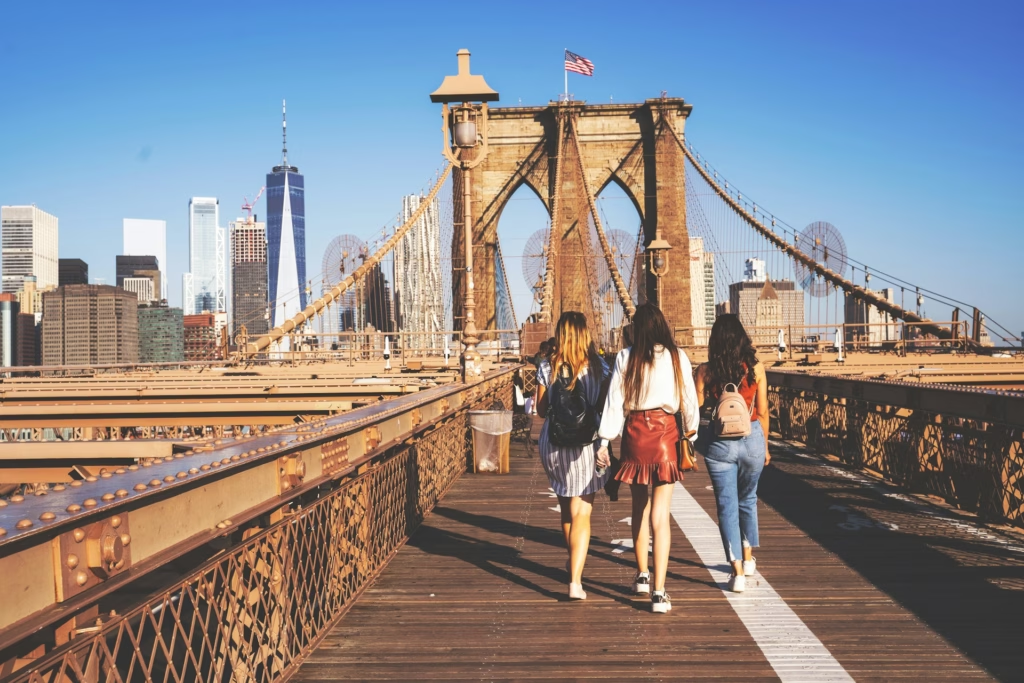
Here is the definitive list of the best walkable cities in the US with their most walkable neighborhoods, based on current official Walk Score data from walkscore.com.
1. San Francisco, California – Top-Ranked Walkable City in the US
Walk Score: 88.7 | Transit Score: 77.1 | Bike Score: 72.3
San Francisco’s compact layout and distinctive neighborhoods make it a walker’s paradise despite its famous hills. The city’s 49-square-mile footprint contains an impressive diversity of walkable districts, each with unique character and amenities. San Francisco’s commitment to pedestrian-first policies — including the Better Streets Plan, expanded parklets, and permanent pedestrian-priority zones that evolved from pandemic-era slow streets — has cemented its position at the top of the national walkability rankings.
The San Francisco Municipal Transportation Agency’s (SFMTA) Pedestrian Program continues investing in safer street crossings, wider sidewalks, red visibility curbs, and pedestrian zones throughout the city. Dolores Park and the Presidio offer scenic pedestrian routes that connect walkable neighborhoods. Even the city’s iconic hills — served by historic cable cars when leg day feels like too much — have become part of San Francisco’s distinctive pedestrian character.
Best Walkable Neighborhoods: Chinatown, Tenderloin, Polk Gulch, North Beach, Mission District, Hayes Valley, Nob Hill
Visiting on foot? Find luggage storage in San Francisco and explore these walkable neighborhoods without carrying your bags.
2. New York City, New York – Leading US Pedestrian-Friendly Urban Hub
Walk Score: 88.0 | Transit Score: 88.6 | Bike Score: 69.3
New York City is built for the walker. The city’s grid system makes navigation intuitive, while its density ensures that restaurants, shops, and services are never more than a few blocks away. Manhattan’s most walkable neighborhoods — Union Square, Chinatown, NoHo, Little Italy, and NoLita — all carry Walk Scores of 99–100. An impressive 55% of New York households live car-free, the highest percentage in the nation according to U.S. Census data.
The city’s 24/7 subway system (472+ stations) and comprehensive bus network complement its walkability at any hour. Recent expansions of the Open Streets program, continued development along the High Line, and pedestrian plaza improvements throughout the five boroughs have further enhanced the city’s pedestrian experience. From the tree-lined streets of Brooklyn Heights to the art galleries of Chelsea, New York’s mix of density and design keeps everything within walking distance.
Best Walkable Neighborhoods: Greenwich Village, Chelsea, Union Square, Park Slope (Brooklyn), Astoria (Queens), NoLita, Little Italy
Heading to the Big Apple? Find luggage storage in New York City near these walkable neighborhoods.
3. Jersey City, New Jersey – America’s Fast-Rising Walkable City
Walk Score: 86.6 | Transit Score: 70.5 | Bike Score: 63.9
Jersey City deserves its place among the elite: with a Walk Score of 86.6, it is the third most walkable city in America by score, sitting between New York City and Boston. Often overshadowed by its famous neighbor across the Hudson, Jersey City has quietly become one of the most walkable urban destinations in the US. Its waterfront walkways along the Hudson River, expanding car-free pedestrian mall, and neighborhoods like Historic Downtown, the Heights, Bergen-Lafayette, and Greenville offer the full walkable city experience with iconic views of Manhattan, the Statue of Liberty, and Ellis Island.
Jersey City’s Transit Village status provides dedicated funding for maintaining and upgrading pedestrian infrastructure. The Hudson-Bergen Light Rail and PATH trains offer seamless connections to Manhattan, making Jersey City a genuinely car-free-capable city with lower costs than neighboring New York.
Best Walkable Neighborhoods: Journal Square, McGinley Square, The Heights, Historic Downtown, Greenville
4. Boston, Massachusetts – Historic & Highly Walkable US City
Walk Score: 82.8 | Transit Score: 72.4 | Bike Score: 69.4
Boston’s historic core was designed before automobiles, resulting in narrow, winding streets that naturally prioritize pedestrians over vehicles. The city’s compact size — you can walk across the entire downtown in under an hour — makes it exceptionally navigable on foot. The nation’s oldest subway (the T) complements its walkable street design, while Beacon Hill’s Walk Score of 99 and the Chinatown-Leather District’s 99 illustrate how pedestrian-friendly the city’s best neighborhoods are.
The famous 2.5-mile Freedom Trail takes pedestrians past 16 of Boston’s historic sites and serves as a model for how historical preservation and walkability can enhance urban tourism. Recent improvements along the Rose Kennedy Greenway and the completion of pedestrian connectivity projects between neighborhoods have maintained Boston’s position as one of America’s premier walking cities.
Best Walkable Neighborhoods: Beacon Hill, North End, Chinatown-Leather District, Back Bay, South End, Bay Village, Fenway-Kenmore
Exploring the Freedom Trail? Find luggage storage in Boston to walk the city hands-free.
5. Chicago, Illinois – Midwest Meets World-Class Urban Walkability
Walk Score: 77.2 | Transit Score: 65.0 | Bike Score: 72.2
Chicago stands out as one of the most walkable big cities in the US, combining Midwestern practicality with world-class urban design. The city’s grid layout provides predictable navigation, while its neighborhood structure ensures most residents have commercial corridors within walking distance. Chicago’s lakefront trail stretches 18.5 miles along Lake Michigan, providing scenic walking routes with stunning views of both the lake and the iconic skyline, accessible from the city through pedestrian bridges.
The elevated L train system connects pedestrian-friendly nodes throughout the city. Chicago’s 500+ city parks, world-class museums, restaurants, and sports venues are frequently within walking distance of each other in its most walkable districts. The Near North Side, West Loop, East Ukrainian Village, and Wicker Park consistently rank among the most walkable neighborhoods in the Midwest.
Best Walkable Neighborhoods: The Loop, Near North Side, West Loop, Wicker Park, East Ukrainian Village, Lincoln Park, Lakeview
Walking the Loop or the Lakefront Trail? Find luggage storage in Chicago and explore the city without your bags.
6. Washington, D.C. – The Nation’s Capital with Superior Walkability
Walk Score: 76.7 | Transit Score: 68.7 | Bike Score: 69.5
The nation’s capital combines monumental grandeur with highly walkable neighborhoods. Washington’s distinctive diagonal avenues, laid out by Pierre L’Enfant, create shorter walking routes between destinations and numerous small parks at intersections. The city’s height restrictions on buildings have resulted in a human-scaled cityscape with excellent street-level engagement — rare among major American cities.
D.C.’s comprehensive Metro system supports car-free living, and the Capital Bikeshare program adds additional mobility options. The National Mall offers miles of pedestrian-priority space connecting iconic landmarks, while walkable districts like Dupont Circle, U Street, and the rapidly growing Navy Yard and Capitol Riverfront areas have created new pedestrian-friendly urban environments.
Best Walkable Neighborhoods: Dupont Circle, U Street Corridor, Capitol Hill, Adams Morgan, Mount Vernon Square, Georgetown
7. Miami, Florida – Tropical Vibes and Enhanced Walkability
Walk Score: 76.6 | Transit Score: 57.0 | Bike Score: 64.0
Miami offers a distinctive walkable experience shaped by its tropical climate and multicultural atmosphere. The city has dramatically improved its walkability over the past five years, transforming from a car-centric metropolis to one with vibrant pedestrian districts. Miami’s top walkable neighborhoods are clustered in Downtown, Wynwood-Edgewater, and Little Havana, all of which appear in Walk Score’s top neighborhood rankings for the city.
Miami Beach leads the region’s walkability with its Art Deco district and beachfront promenade. On the mainland, Brickell and Wynwood have developed into dense, mixed-use areas where walking is the preferred mode of transportation. The Metromover downtown circulator is free to ride and supports walking trips throughout the urban core.
Best Walkable Neighborhoods: Downtown, Wynwood-Edgewater, Little Havana, South Beach, Brickell, Coconut Grove
8. Oakland, California – The Bay Area’s Rising Walkable City
Walk Score: 75.3 | Transit Score: 56.6 | Bike Score: 65.5
Often overshadowed by its famous neighbor across the bay, Oakland has emerged as one of the most walkable major US cities in 2026, holding the eighth position in the official Walk Score rankings. The city’s compact downtown, Koreatown-Northgate, Fruitvale Station area, and Laney College neighborhood all score highly for pedestrian accessibility. Colorful street murals and public art decorate Oakland’s walkable districts, giving pedestrians visual interest alongside everyday amenities.
Oakland’s cultivated waterfront — where you can walk from restaurant to shop to bar along the water at Jack London Square — combined with its investment in walkable neighborhood commercial corridors, has elevated the city into the top tier of American pedestrian-friendly destinations. BART stations provide seamless connections between Oakland’s walkable neighborhoods and the broader Bay Area.
Best Walkable Neighborhoods: Koreatown-Northgate (KONO), Downtown, Fruitvale Station, Temescal, Laney College area
9. Philadelphia, Pennsylvania – The Classic US Walkable City
Walk Score: 74.8 | Transit Score: 67.0 | Bike Score: 66.7
Philadelphia’s walkability stems from its historic grid layout designed by William Penn in the 17th century — one of the first planned cities in America. The city’s compact downtown, known as Center City, offers an exceptional concentration of historic sites, restaurants, shops, and cultural institutions within a highly walkable area. Center City West, Avenue of the Arts South, and Washington Square West are Philadelphia’s three most walkable neighborhoods according to Walk Score.
In 2026, Philadelphia became the first US city to be designated a UNESCO World Heritage City, reflecting the outstanding character of its historic built environment. The city’s 10,000+ acres of public parks and the Circuit Trails network have enhanced pedestrian connectivity, while its affordability compared to other Northeast walkable cities makes it particularly attractive. A two-minute walk separates the Liberty Bell from Independence Hall.
Best Walkable Neighborhoods: Rittenhouse Square, Center City West, Avenue of the Arts South, Washington Square West, Old City, Fishtown
10. Seattle, Washington – US City Transforming Its Pedestrian Experience
Walk Score: 74.4 | Transit Score: 59.6 | Bike Score: 71.1
Seattle has transformed its walkability despite challenging topography and famously rainy weather. The city’s International District, Belltown, and First Hill neighborhoods rank highest for walkability within the city. Seattle’s recent waterfront redevelopment — reconnecting the city with Puget Sound after decades of an elevated highway barrier — has created a premier walking destination linking multiple neighborhoods and attractions including Pike Place Market, the Space Needle area, and the Olympic Sculpture Park.
The expanding Link light rail system continues to add walkable transit nodes throughout the city, while Seattle’s distinctive neighborhood centers — Capitol Hill, Fremont, University District, and Columbia City — each offer self-contained walkable environments with local businesses and services within a short stroll.
Best Walkable Neighborhoods: International District, Belltown, First Hill, Capitol Hill, Fremont, University District
Just Outside the Top 10: Long Beach, California – Blending Beachfront Living with Urban Walkability
Walk Score: 73.3 | Transit Score: 48.9 | Bike Score: 70.1
Long Beach sits just outside the official top 10 most walkable cities in the US for 2026. This Southern California city offers a distinctive blend of beachfront living and urban walkability, with Belmont Shore, Central Long Beach, and Belmont Heights leading the city’s most walkable neighborhoods. The downtown and waterfront areas feature wide sidewalks, dedicated pedestrian zones, and mixed-use developments that encourage walking as the primary mode of local transportation.
Long Beach’s bike share program, expanding public transit, and recent completion of several urban trails and enhanced streetscapes complement its walkable design. The historic Queen Mary Ship, the Aquarium of the Pacific, and the Pine Avenue restaurant and bar district are all within comfortable walking distance in the downtown core.
Best Walkable Neighborhoods: Belmont Shore, Central Long Beach, Belmont Heights, Downtown, Alamitos Beach, East Village Arts District
Why Walkability Matters in 2026
In today’s urban landscape, the ability to navigate a city on foot is no longer just a convenience — it’s a lifestyle choice with measurable implications for health, environment, finance, and quality of life. Walkable cities foster vibrant communities where daily necessities, entertainment, and social connections are just steps away.
Living in one of the most walkable cities in the US means reduced transportation costs, with car-free households saving an estimated $10,000–12,000 annually compared to those with vehicles. Beyond financial benefits, walkable neighborhoods promote physical activity: residents of high-walkability areas get 35–45 more minutes of weekly exercise than those in car-dependent locations, according to research cited by Homes.com. Every 10-point increase in Walk Score correlates with approximately 16 additional minutes of walking per week.
The real estate value of walkability is quantifiable. Research shows that a 10-point increase in Walk Score is associated with $4,000–34,000 higher home values, depending on the market — making walkable neighborhoods a sound investment as well as a lifestyle choice. Walkable areas also show a 1.9% lower adult obesity rate per 10-point increase in Walk Score.
Environmentally, walkable urban designs significantly reduce carbon emissions. Cities with high Walk Scores show up to 35% lower per-capita carbon footprints compared to sprawling, car-dependent metros. The social fabric of walkable cities is also stronger: residents of walkable neighborhoods consistently report higher levels of community trust, social capital, and civic engagement — the simple act of walking creates more opportunities for spontaneous human interaction than commuting alone in a vehicle.
Understanding Walk Scores and Walkability Metrics in the US
When discussing the most walkable cities in the US, it’s essential to understand how walkability is measured. The most widely recognized metric is the Walk Score®, which evaluates locations on a scale from 0 (car-dependent) to 100 (walker’s paradise).
How Walk Score Works: Evaluating US Pedestrian-Friendly Cities
Walk Score calculates the walkability of any address in the United States based on proximity to key amenities — grocery stores, schools, parks, restaurants, and retail. Points are awarded based on distance, with destinations within a 5-minute walk (¼ mile) receiving maximum points. The algorithm also considers pedestrian friendliness by analyzing population density, block length, and intersection density. The 130 US cities with a population of 200,000 or more have an average Walk Score of 48 — making any city above 70 genuinely stand out.
Walk Score categories:
- 90–100: Walker’s Paradise — daily errands don’t require a car
- 70–89: Very Walkable — most errands can be accomplished on foot
- 50–69: Somewhat Walkable — some amenities within walking distance
- 25–49: Car-Dependent — most errands require a car
- 0–24: Car-Dependent — almost all errands require a car
US Walkable Cities: Factors Influencing Walkability Score
While Walk Score provides a standardized metric, true walkability encompasses additional While Walk Score provides a standardized, transparent metric, true walkability encompasses additional factors:
- Pedestrian Safety: Quality of sidewalks, presence of crosswalks, traffic calming measures, and pedestrian accident rates
- Comfort and Aesthetics: Tree coverage, building diversity, street furniture, shade, and visual interest along walking routes
- Topography: Hills and elevation changes that may challenge pedestrians (relevant in San Francisco, Seattle, and Pittsburgh)
- Climate: Weather patterns that affect year-round walkability — Boston and Chicago are excellent summer walking cities; Miami and Phoenix offer pleasant winters
- Safety from Crime: Security measures and crime rates that impact pedestrian comfort, particularly at night
- ADA Accessibility: Accommodations for people with disabilities, including curb cuts, tactile paving, and accessible crosswalk signals
The most walkable cities in the US excel not just in proximity to amenities but in creating comprehensive pedestrian experiences that address all these dimensions of walkability.
The 2026 ranking is based on current official Walk Score® data from walkscore.com, supplemented by U.S. Census Bureau population and car ownership figures, Transit Scores, and Bike Scores from the same platform. The city-level rankings and scores presented here reflect the current official standings from walkscore.com as of April 2026.
Comparison Table of the Best Walkable Cities in the US (2026)
| Rank | City & State | Scores (Walk / Transit / Bike) | Population & Car-Free Households (%) | Best Walkable Neighborhoods |
|---|---|---|---|---|
| 1 | San Francisco, CA | 88.7 / 77.1 / 72.3 | ~870,000 (High) | Chinatown, Tenderloin, Polk Gulch, North Beach, Mission District, Hayes Valley, Nob Hill |
| 2 | New York City, NY | 88.0 / 88.6 / 69.3 | ~8.3M (55%) | Greenwich Village, Chelsea, Union Square, Park Slope, Astoria, NoLita, Little Italy |
| 3 | Jersey City, NJ | 86.6 / 70.5 / 63.9 | ~292,000 (High) | Journal Square, McGinley Square, The Heights, Historic Downtown, Greenville |
| 4 | Boston, MA | 82.8 / 72.4 / 69.4 | ~680,000 (High) | Beacon Hill, North End, Chinatown-Leather District, Back Bay, South End, Bay Village, Fenway-Kenmore |
| 5 | Chicago, IL | 77.2 / 65.0 / 72.2 | ~2.7M (Moderate) | The Loop, Near North Side, West Loop, Wicker Park, East Ukrainian Village, Lincoln Park, Lakeview |
| 6 | Washington, D.C. | 76.7 / 68.7 / 69.5 | ~670,000 (High) | Dupont Circle, U Street Corridor, Capitol Hill, Adams Morgan, Mount Vernon Square, Georgetown |
| 7 | Miami, FL | 76.6 / 57.0 / 64.0 | ~440,000 (Low) | Downtown, Wynwood-Edgewater, Little Havana, South Beach, Brickell, Coconut Grove |
| 8 | Oakland, CA | 75.3 / 56.6 / 65.5 | ~400,000 (Moderate) | Koreatown-Northgate (KONO), Downtown, Fruitvale Station, Temescal, Laney College area |
| 9 | Philadelphia, PA | 74.8 / 67.0 / 66.7 | ~1.56M (Moderate) | Rittenhouse Square, Center City West, Avenue of the Arts South, Washington Square West, Old City, Fishtown |
| 10 | Seattle, WA | 74.4 / 59.6 / 71.1 | ~740,000 (Moderate) | International District, Belltown, First Hill, Capitol Hill, Fremont, University District |
Data sources: Walk Score (February 2026), U.S. Census Bureau, city transportation departments
Most Walkable Big Cities in the US
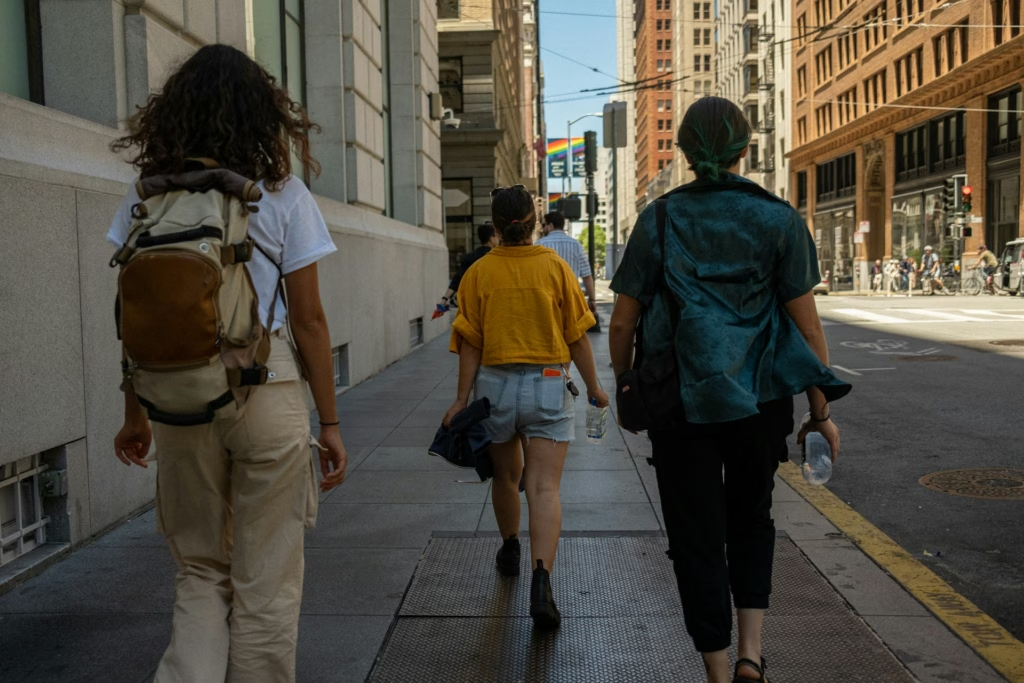
When focusing specifically on major metropolitan areas with populations over 500,000, the walkability picture is led by cities with historic urban cores and robust public transit. Here are the top 5 most walkable big cities in America for 2026:
- New York City: Walk Score 88.0. With 55% of households living car-free, New York is built for pedestrian life. From Manhattan’s grid to Brooklyn’s brownstone neighborhoods, the city’s 24/7 transit and density make car ownership genuinely optional.
- Chicago: Walk Score 77.2. The Windy City’s grid layout and neighborhood commercial corridors ensure most residents have daily necessities within walking distance. The elevated L train and 18.5-mile lakefront trail support both utilitarian and recreational walking at scale.
- Philadelphia: Walk Score 74.8. William Penn’s 17th-century grid still delivers pedestrian dividends in 2026. The city’s historic core — America’s first planned city and now its first UNESCO World Heritage City — offers an exceptional concentration of walkable history, culture, and daily life amenities.
Most Walkable Mid Sized Cities in the US
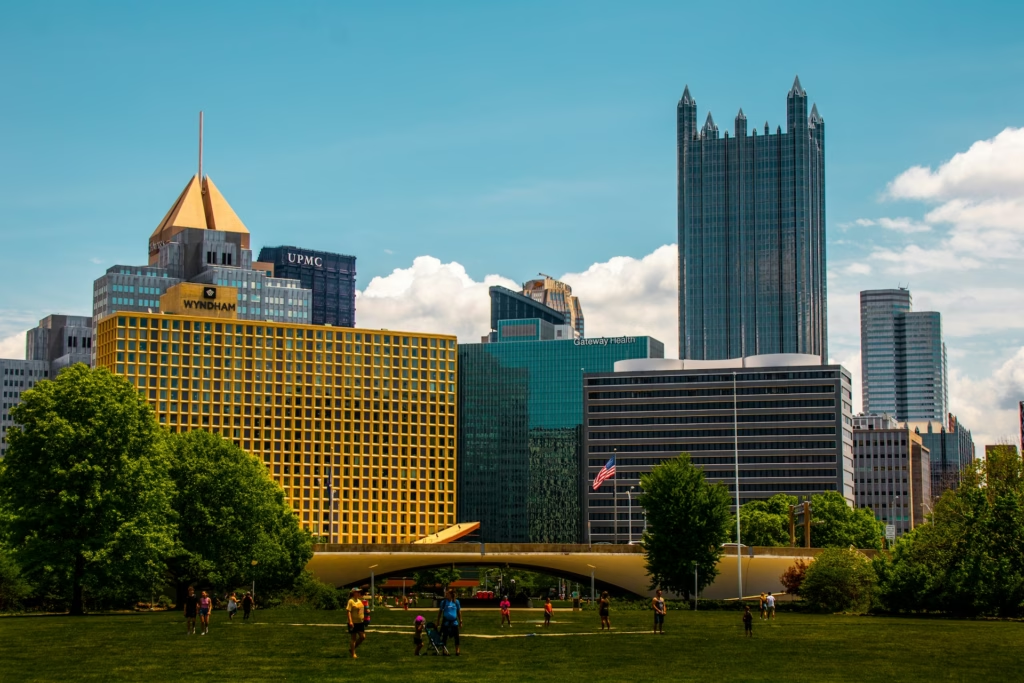
The most walkable mid-sized cities in the US (population 200,000–500,000) often offer the perfect balance of urban amenities and manageable scale. These cities provide walkability without the congestion and cost of larger metros — and several are punching well above their weight class on pedestrian infrastructure.
- Portland, Oregon (Walk Score: 67.3, Bike Score: 82.7) stands out through intentional urban planning. It features small 200-foot blocks. These are among the shortest in the nation. The city maintains a commitment to ‘20-minute neighborhoods. The car-free Tilikum Crossing bridge and a vibrant food cart scene enhance its walkability. Additionally, the Pearl District’s mixed-use development makes Portland synonymous with sustainable pedestrian urbanism. Portland’s Walk Score has trended slightly as development patterns evolve. However, its Bike Score of 82.7 remains the second-highest in the nation.
- Minneapolis, Minnesota (Walk Score: 71.4, Bike Score: 83.5): Minneapolis defies its northern climate with an innovative year-round pedestrian strategy. The city’s 9-mile indoor Skyway system connects 80 blocks of downtown buildings, providing a sheltered walking environment even in Minnesota winters. Its neighborhood commercial nodes and the top-ranked national Bike Score of 83.5 make it a model for year-round walkable urbanism.
- Pittsburgh, Pennsylvania (Walk Score: 62.4): Pittsburgh’s dramatic topography has not prevented it from developing highly walkable neighborhood districts. Its distinct neighborhoods — many perched on hillsides — offer self-contained walkable environments with local character and services. A thriving tech, healthcare, and creative economy has reinvested in pedestrian infrastructure across the city’s walkable cores, and housing remains far more affordable than coastal walkable cities.
- St. Louis, Missouri (Walk Score: 65.7) features several exceptionally walkable districts. These include the Central West End, Soulard, and the historic Lafayette Square. Forest Park serves as a car-free green backbone for the city. At 1,375 acres, it is larger than New York’s Central Park. This massive green space connects multiple walkable districts and houses world-class free museums and galleries.
- New Orleans, Louisiana (Walk Score: 58.0): New Orleans’ historic core makes it one of America’s most atmospheric walking cities. The French Quarter and Garden District offer quintessential walkable environments with narrow streets, continuous building frontages, and abundant destinations. The historic streetcar lines complement pedestrian trips, connecting multiple walkable neighborhoods including Magazine Street and the Marigny.
Most Walkable Small Cities in the US

The most walkable small cities and towns in the US (population under 200,000) often provide exceptional pedestrian-oriented environments with distinctive local character, frequently at a fraction of the cost of major metros.
- Burlington, Vermont: Burlington’s pedestrian-only Church Street Marketplace — a four-block outdoor mall with year-round events, local shops, and restaurants — anchors a dense, mixed-use downtown that serves as a national model for small-city walkability. The city’s compact size allows residents to reach most destinations on foot, while its waterfront path along Lake Champlain provides scenic car-free connections between neighborhoods.
- Ann Arbor, Michigan: Ann Arbor ranks among America’s most walkable small cities, with the University of Michigan campus seamlessly integrated into a vibrant walkable downtown. The city’s commitment to pedestrian infrastructure includes an extensive network of mid-block passages and car-free zones that enhance connectivity, while its restaurant and retail scene rivals cities twice its size.
- Santa Barbara, California: Santa Barbara’s Spanish colonial design creates one of the most beautiful walkable small cities in the US. The city’s paseos (pedestrian passages) form a network of car-free pathways through downtown, while its beachfront provides miles of scenic walking routes. The compact urban form ensures most daily needs are within walking distance of residential areas.
- Charlottesville, Virginia: Charlottesville’s Downtown Mall — one of the longest pedestrian malls in the US at eight blocks — and its university-adjacent neighborhoods create a highly walkable small city environment. The historic downtown offers a vibrant car-free commercial district, while residential areas maintain connected street grids that make walking to daily destinations practical and pleasant.
- Savannah, Georgia: Savannah’s distinctive plan with 22 historic squares makes it one of the most walkable and visually engaging small cities in the US. The grid is interrupted by these public green spaces, creating a rhythm of shaded oases that define the pedestrian experience. Savannah’s compact historic district — a UNESCO World Heritage Site — ensures most destinations are within a comfortable walking distance.
Most and Least Walkable Cities: A Comparative Look
Understanding what makes the most walkable cities in the US successful can be illuminated by contrasting them with the least walkable major US cities. This comparison reveals the profound impact of design choices, development patterns, and infrastructure investments on everyday pedestrian experience.
Most Walkable Cities in the US (Walk Score 70+)
Cities like San Francisco (88.7), New York (88.0), Boston (82.8), Chicago (77.2), Washington D.C. (76.7), and Miami (76.6) share several defining characteristics:
- Historic Development Patterns: Many were established before automobiles, resulting in pedestrian-friendly street grids with short blocks and high intersection density
- Mixed-Use Zoning: Residential, commercial, and recreational spaces are integrated rather than separated into single-use zones
- Density: Higher population density supports more local businesses within walking distance — the most walkable neighborhoods typically have over 15,000 people per square mile
- Public Transportation: Robust transit systems complement walking as a primary mode of transportation, with Transit Scores above 60 in most top walkable cities
- Pedestrian Infrastructure: Sidewalks, crosswalks, traffic calming measures, and pedestrian-only areas are prevalent and well-maintained
Least Walkable Cities in the US (Walk Score below 30)
The least walkable large cities in the US tell a different story. Official Walk Score data identifies several cities with significant room for improvement. Jacksonville, FL (25.6), Winston-Salem, NC (22.5), and Chesapeake, VA (21.3) currently rank at the bottom. Among cities with over 1 million residents, Dallas, TX (46.0) often ranks as the most unwalkable. Experts cite its sprawling, car-centric design as the primary reason for this low score. These cities typically feature:
- Auto-Centric Development: Designed primarily for car travel with wide roads, high speeds, and minimal pedestrian accommodation
- Single-Use Zoning: Strict separation of residential, commercial, and industrial areas that forces car trips between daily destinations
- Low Density: Sprawling development patterns that create long distances between destinations and make walking impractical for most errands
- Limited Public Transportation: Inadequate transit options that force car dependency even for short trips
- Incomplete Pedestrian Infrastructure: Missing sidewalks, dangerous crossings, and pedestrian-hostile environments that make walking unsafe
The transformation potential: Upgrading car-dependent cities to enhance walkability
The contrast between America’s most walkable cities and its least walkable cities highlights the impact of intentional planning decisions. However, many formerly car-dependent cities are actively working to improve their walkability:
- Indianapolis has transformed its downtown with the 8-mile Cultural Trail — a $63 million urban cycling and pedestrian path connecting walkable arts and cultural districts that has catalyzed significant development along its route
- Oklahoma City has invested in pedestrian infrastructure through its MAPS (Metropolitan Area Projects) program, funding the Scissortail Park and the Boathouse District as walkable urban anchors
- Detroit is rebuilding its core with walkable, mixed-use development in areas like Midtown and New Center, supported by the QLine streetcar and expanded trail networks
- Nashville, despite a low Walk Score of 28.8, is actively investing in new sidewalks, protected bike lanes, and transit as part of its rapidly growing urban core
These examples prove a key point. Most walkable U.S. cities benefit from historic, pedestrian-scale designs. However, newer and car-dependent cities can still improve. They achieve this through strategic infrastructure investments. Changes in land-use policy also play a significant role.
Safest Most Walkable Cities in the US

Safety is a crucial component of true walkability. The safest, most walkable cities in the US combine pedestrian-friendly design with low crime rates and traffic safety measures. This enables environments where walking feels genuinely secure at all hours.
- Boston, Massachusetts (Walk Score: 82.8): Boston ranks among the safest most walkable cities in the US. The city’s comprehensive pedestrian safety plan has reduced traffic injuries through infrastructure improvements and education campaigns. Well-lit streets, active public spaces, and the city’s Vision Zero initiative — which aims to eliminate pedestrian fatalities — enhance security throughout walkable neighborhoods.
- Portland, Oregon: Portland stands out among the safest most walkable cities with its long-standing Vision Zero commitment to eliminate traffic fatalities. The city’s neighborhood greenways — residential streets redesigned for low-stress walking and cycling — provide safe routes separated from heavy traffic, while active street life creates natural surveillance.
- Washington, D.C. (Walk Score: 76.7): The district’s Pedestrian Master Plan has systematically improved crosswalks, sidewalks, and traffic signals across the city. Well-designed public spaces, strategic lighting, and the strong presence of residents and tourists throughout the day and evening improve security in walkable neighborhoods.
- Minneapolis, Minnesota (Walk Score: 71.4): Minneapolis’s comprehensive pedestrian safety program and traffic calming measures have significantly reduced accidents involving walkers. Its connected park network provides safe walking routes throughout the city, while the Skyway system provides sheltered walking even during extreme winter conditions.
- Seattle, Washington (Walk Score: 74.4): Seattle’s pedestrian master plan prioritizes safety improvements in high-risk areas. Whereas the city’s waterfront redevelopment has created a well-lit, active pedestrian environment. Seattle’s commitment to adequate street lighting improves nighttime walking safety significantly compared to many peer cities.
Affordable Top Walkable Cities in the US for Every Budget

While many of the most walkable cities in the US have high costs of living, genuinely affordable walkable cities exist across the country. These communities offer the benefits of pedestrian-friendly environments without the premium price tags of the most expensive coastal urban centers.
- Philadelphia, Pennsylvania (Walk Score: 74.8): Philadelphia stands out as the most affordable of the top-10 walkable major US cities. Housing costs are significantly lower than nearby New York or Washington D.C., while Walk Score and transit coverage remain strong. The city’s extensive SEPTA public transportation system further reduces living costs by making car ownership genuinely optional for most residents.
- Pittsburgh, Pennsylvania (Walk Score: 62.4): Pittsburgh ranks among the most affordable walkable cities in the US. It has median home prices in walkable neighborhoods well below the national average for comparable urban environments. The city’s distinct walkable districts — Lawrenceville, Shadyside, the South Side Slopes — offer urban amenities at prices that would be impossible in coastal cities, while a thriving tech and healthcare economy supports employment.
- Cleveland, Ohio (Walk Score: 57.1): Cleveland features several highly walkable neighborhoods — Ohio City, Tremont, and University Circle — at price points far below those in coastal cities. These areas offer the walkable urban experience at a fraction of the cost found in the most walkable cities on either coast, making Cleveland an outstanding option for budget-conscious walkable urban living.
- Baltimore, Maryland (Walk Score: 64.3): Baltimore provides walkable urban living at significantly lower costs than neighboring Washington D.C. Neighborhoods like Fells Point, Federal Hill, and Mount Vernon offer historic architecture and pedestrian-friendly design with housing prices that remain accessible to middle-income households. The MARC train provides fast access to D.C. for commuters.
- Milwaukee, Wisconsin (Walk Score: 61.5): Milwaukee combines Midwest affordability with several highly walkable neighborhoods including the Historic Third Ward, Brady Street, and Bay View. The city’s compact urban core and affordable housing costs make it a standout among walkable cities for those who prioritize living costs alongside pedestrian-friendly design.
Tips for Exploring America’s Most Walkable Cities
Whether you’re visiting or relocating to one of the most walkable cities in the US, these strategies will help you make the most of the pedestrian experience:
- Use Walk Score as a Starting Point
Before visiting or relocating, check neighborhood Walk Scores at walkscore.com to identify the most walkable areas. Remember that scores can vary dramatically within cities — even New York has car-dependent neighborhoods in its outer reaches.
- Stay in Walkable Neighborhoods
When visiting the most walkable cities in the US, choose accommodations in highly walkable districts. This allows you to experience the city as a pedestrian from the moment you step outside, rather than commuting in from car-dependent areas.
- Explore Neighborhood Commercial Districts
The most walkable cities feature distinctive commercial streets that serve as the heart of neighborhood life. These areas often showcase local character better than downtown tourist zones and provide authentic experiences of daily life in walkable communities.
- Use Public Transit for Longer Trips
The most walkable cities in the US typically offer excellent public transportation that complements walking. Learning the basics of the local transit system extends your range and provides backup when weather turns or fatigue sets in.
- Walk Different Routes
- Consider Seasonal Factors
Walkability changes with the seasons. Cities like Boston and Chicago offer delightful summer walking but challenging winter conditions. Miami, Long Beach, and San Diego reverse this pattern with pleasant winters. Plan activities accordingly.
- Engage with Local Walking Culture
The most walkable cities each have distinctive pedestrian cultures and etiquette. Observe local walking patterns and norms to blend in and fully experience the city as residents do.
- Utilize Walking Tours
Walking tours provide orientation and context when exploring the most walkable cities in the US. Many cities offer specialized tours focusing on architecture, history, food, or street art that deepen appreciation of the pedestrian environment. Tip-based free walking tours are available in most top-10 cities.
- Store Your Luggage
When exploring on arrival or departure days without a hotel check-in, use a luggage storage service like Radical Storage to explore walkable neighborhoods hands-free.
Methodology and Data Sources
Our 2026 analysis of the most walkable cities in the US blends quantitative data with qualitative insights across multiple transparent sources.
Primary Data Sources:
- Walk Score® (walkscore.com): Official city-level Walk Scores, Transit Scores, and Bike Scores drawn directly from the Walk Score platform. Walk Score measures walkability using proximity to amenities, population density, block length, and intersections. The platform covers 2,800+ cities and 10,000+ neighborhoods. City-level rankings and scores reflect current official data from walkscore.com.
- U.S. Census Bureau: Population figures, commuting trends, and car ownership data, including the 55% car-free household figure for New York City.
- Local Transportation Departments: Data on sidewalk coverage, crosswalk density, pedestrian safety initiatives (Vision Zero programs), and recent infrastructure investments.
- Homes.com Walk Score Analysis: Research connecting Walk Score increases to home values ($4,000–34,000 per 10-point increase) and health outcomes (1.9% lower adult obesity rate per 10-point increase).
- Resident and traveler feedback: Survey data from Quantumrun and other sources, including the finding that 78% of Millennials and Gen Z prioritize walkability when choosing where to live.
Limitations:
- Walk Score may not capture all qualitative aspects of walkability, including comfort, aesthetics, shade, and subjective safety
- Walkability can vary dramatically by neighborhood within a single city — city-level scores represent averages across all areas
- Individual experiences of walkability differ based on personal preferences, physical abilities, and sensitivity to crime or traffic
- Seasonal weather significantly affects walkability across regions — Walk Score does not adjust for climate
- Cities with historically strong walkability infrastructure may have slower score improvement than rapidly developing cities, even if absolute quality improves
