
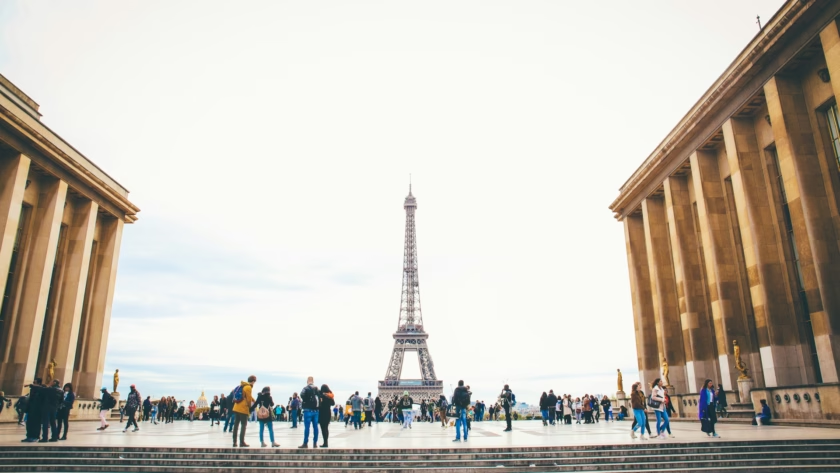

Travel light in Paris!
Find affordable luggage storage near you
If you’re planning a trip to the City of Light, your first question might be: is Paris safe? The direct answer is yes—Paris is generally a safe city for tourists, ranking among the safer major European capitals. In 2025, Paris maintains a moderate safety index of 65.2 according to international safety metrics, making it a secure destination for most travelers.
That said, like any major metropolitan city, Paris has its share of petty crime and areas that require additional caution. Whether you’re concerned about is Paris safe to travel to in general, or have specific questions about safety at night or in particular neighborhoods, this comprehensive guide will address all your concerns.
As Paris prepares to welcome visitors after hosting the 2024 Olympics, the city has maintained enhanced security measures, making it an even safer destination than in previous years. This guide examines safety across all arrondissements and provides specific advice for different types of travelers, from solo female tourists to families and American visitors.
Overall Safety in Paris
When asking is Paris a safe city, it’s important to put things in perspective. Paris regularly ranks among the top 50 safest cities globally, with crime rates lower than many major U.S. cities. The violent crime rate in Paris is notably low, with most crime affecting tourists being non-violent theft and scams.
The most recent Numbeo Paris safety statistics from 2025 show that:
- Paris has a crime index of 58.09, placing it in the moderate range
- Safety index is at 41.91 (Safety is ranked high for walking alone during daylight)
- Petty theft remains the most common crime against tourists
In 2025, following the Olympics, Paris has maintained increased police presence in tourist areas, with approximately 5,000 officers regularly patrolling the most visited districts. This has contributed to a 12% decrease in reported tourist-targeted crimes compared to pre-Olympic levels.
Is Paris safe to travel to right now? Current travel advisories from most countries, including the U.S. State Department, list Paris under “Exercise Normal Precautions” or equivalent moderate advisory levels, indicating no special concerns beyond standard travel vigilance.
Is Paris Safe at Night?
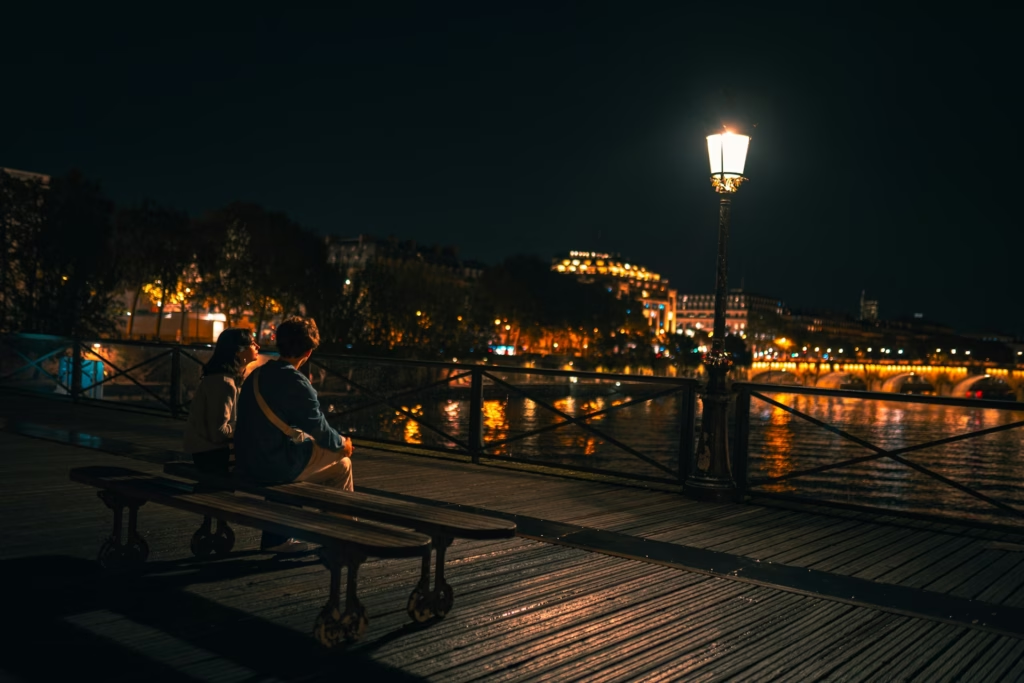
A common concern among travelers is: is Paris safe at night? While Paris transforms into a magical place after dark, night safety requires some additional awareness. Most tourist areas remain well-lit and heavily populated until late, particularly in central arrondissements (1st through 8th).
Areas that are generally safe for nighttime activities include:
- The illuminated Eiffel Tower area until midnight
- Champs-Élysées with its late-night shops and cafés
- The Latin Quarter, bustling with student life
- Le Marais district with its vibrant nightlife
- The Seine riverbanks, especially with guided evening cruises
Areas requiring more caution after dark include:
- Northern parts of the 18th arrondissement (beyond the main Montmartre tourist area)
- Parts of the 19th and 20th arrondissements
- Les Halles area late at night
- Train and metro stations after the last scheduled services
Night safety tips:
- Use reputable ride-sharing apps or official taxis rather than walking long distances late at night
- Stay on well-lit, populated streets
- Travel in groups when possible after 11 PM
- Be particularly vigilant on the last metro trains of the night
The Paris metro runs until approximately 1:15 AM on weekends (midnight on weekdays), and the night bus network (Noctilien) operates from 12:30 AM to 5:30 AM, providing safe transportation options throughout the night.
Safety for Different Travelers
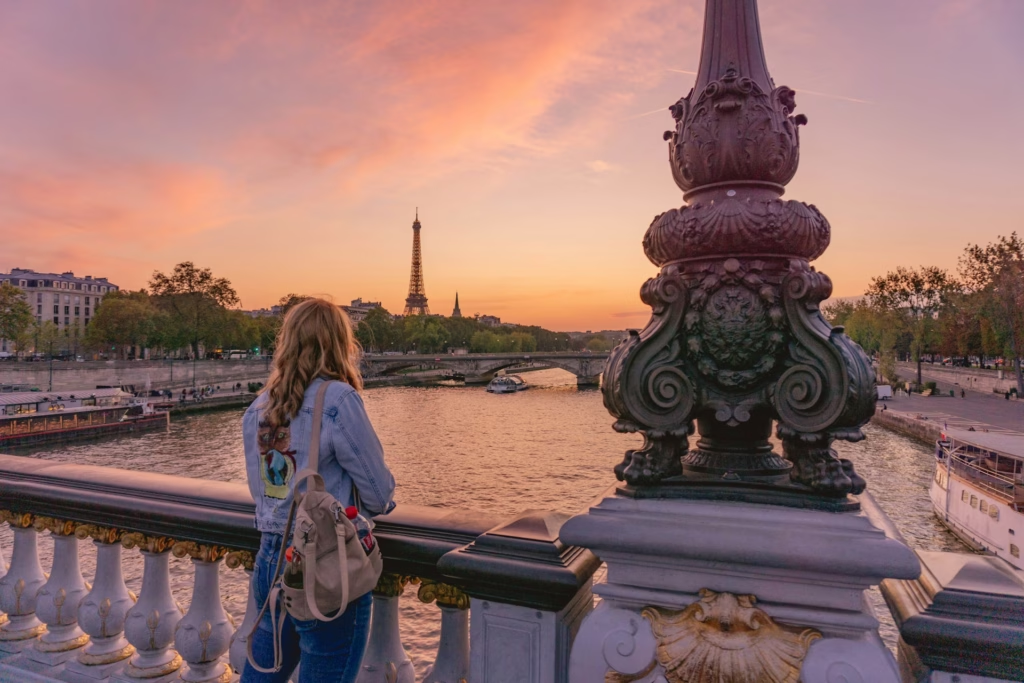
Is Paris Safe for Solo Female Travelers?
Paris is generally considered safe for women traveling alone, with 89% of solo female travelers reporting positive experiences in recent surveys. However, street harassment can occur, particularly in less touristy areas.
Safety recommendations for solo female travelers include:
- Staying in well-reviewed accommodations in central arrondissements
- Using extra caution at night, particularly around train stations
- Being aware that friendly conversations in cafés or bars might sometimes be misinterpreted
- Dressing like locals to avoid standing out as a tourist
- Using doorman services at hotels when returning late
- Being assertive when dealing with unwanted attention
One solo female traveler shared: “I’ve visited Paris alone three times and always felt comfortable. The key is researching safe neighborhoods, staying aware of your surroundings, and projecting confidence as you move through the city.”
Safety for Families and LGBTQ+ Travelers
Paris is extremely family-friendly, with extensive security measures at major attractions and family-oriented spaces. Most museums have enhanced security protocols, and family-focused areas like Jardin d’Acclimatation and Jardin du Luxembourg are well-monitored and safe.
For LGBTQ+ travelers, Paris ranks as one of Europe’s most welcoming cities. The Marais district (4th arrondissement) is the heart of LGBTQ+ Paris and is considered very safe. Public displays of affection between same-sex couples are common and generally accepted, particularly in central and western districts.
Safety by Arrondissement
Paris is divided into 20 arrondissements (administrative districts), spiraling outward from the center. Safety varies considerably between these districts:
| Arrondissement | Safety Rating (1-10) | Notes |
|---|---|---|
| 1st (Louvre) | 9/10 | Very safe, heavily policed tourist area |
| 2nd (Bourse) | 8/10 | Safe business district with some quiet areas at night |
| 3rd & 4th (Marais) | 8/10 | Generally very safe, popular with tourists |
| 5th (Latin Quarter) | 8/10 | Safe student area, lively at night |
| 6th (Saint-Germain) | 9/10 | Upscale and very safe |
| 7th (Eiffel Tower) | 9/10 | Very safe, residential and tourist area |
| 8th (Champs-Élysées) | 8/10 | Safe but watch for pickpockets in crowded areas |
| 9th (Opéra) | 7/10 | Generally safe with some areas requiring caution at night |
| 10th (Canal Saint-Martin) | 6/10 | Mixed safety, caution advised around Gare du Nord |
| 11th & 12th | 7/10 | Generally safe residential areas |
| 13th | 7/10 | Safe residential area, few tourists |
| 14th & 15th | 8/10 | Very safe residential districts |
| 16th | 9/10 | Upscale, very safe residential area |
| 17th | 8/10 | Safe residential district |
| 18th (Montmartre) | 6/10 | Variable: tourist areas safe, northern sections less so |
| 19th & 20th | 5/10 | Exercise caution, especially at night |
Neighborhood Safety Guide
Is the Latin Quarter in Paris Safe?
The Latin Quarter in the 5th arrondissement is considered very safe and is one of Paris’s most charming areas. With its student population from the Sorbonne University, the area remains lively into the evening. The safety rating for the Latin Quarter is approximately 8/10, with well-lit streets and regular police patrols.
Safety tips for the Latin Quarter:
- Exercise standard caution around Place Saint-Michel, especially on weekend nights
- Be aware of your belongings in busy restaurant areas
- The quiet streets behind the Panthéon are safe but can be very quiet at night
Is Montmartre Paris Safe?
The question is Montmartre Paris safe has a nuanced answer. The main tourist areas of Montmartre, including Sacré-Cœur Basilica and Place du Tertre, are generally safe during daylight and early evening hours with significant police presence. However, safety decreases as you move north and east away from these areas.
Montmartre safety breakdown:
- Tourist heart (around Sacré-Cœur): 7/10 safety rating during day, 6/10 at night
- Areas near Pigalle: Exercise caution, particularly at night
- Northern Montmartre: Best avoided after dark for inexperienced travelers
The steps leading up to Sacré-Cœur can attract scam artists and pickpockets, so remain vigilant in this area. Using the funicular instead of the steps can be a safer option, especially at dusk.
Is Belleville Paris Safe?
Belleville in the 20th arrondissement has a gritty, authentic character and is currently undergoing gentrification. The answer to is Belleville Paris safe depends largely on specific streets and timing. During daylight hours, Belleville is generally safe (6/10) and offers a vibrant multicultural experience with excellent Chinese and North African restaurants.
At night, the safety rating drops to approximately 5/10, and visitors should exercise increased caution. The Belleville Park area and main boulevards are safer than some of the side streets. Solo travelers might prefer to visit Belleville during daylight hours and choose other neighborhoods for nighttime activities.
Is Paris Red Light District Safe?
When asking is Paris red light district safe, most people are referring to Pigalle in the 18th arrondissement, historically known for adult entertainment. Modern Pigalle has undergone significant gentrification, particularly South Pigalle (affectionately called “SoPi” by locals).
The famous Moulin Rouge area is heavily touristed and moderately safe (6/10), especially before midnight. However, north of Boulevard de Clichy, caution is advised, particularly late at night.
Safety tips for Pigalle:
- Visit earlier in the evening (before 11 PM) for a safer experience
- Stay on main streets and avoid secluded areas
- Be firm with touts promoting shows or clubs
- Consider taking a taxi directly to and from specific venues rather than wandering
Common Safety Concerns
Pickpocketing and Scams
Pickpocketing remains the most common crime affecting tourists in Paris. Hotspots include:
- Metro line 1 and RER A (particularly around major tourist stops)
- The area around the Eiffel Tower
- The Louvre entrance
- Crowded shopping areas on Champs-Élysées
- Busy train stations like Gare du Nord
Common scams to be aware of:
- The petition scam: People approach asking you to sign a petition, then demand money
- The friendship bracelet: Someone ties a bracelet around your wrist then demands payment
- The gold ring: Someone “finds” a gold ring near you and offers to sell it
- The dropped wallet/phone: Creating a distraction while an accomplice pickpockets you
Prevention measures:
- Use anti-theft bags or money belts
- Keep minimal valuables in front pockets
- Be extremely cautious in crowded situations
- Firmly say “non merci” and walk away from people trying to engage with these typical scams
Protests and Civil Unrest
Paris has a long tradition of public demonstrations, most of which are peaceful. However, some can turn disruptive. In 2025, protests have been less frequent than in previous years but still occur regularly on Saturdays.
To avoid getting caught in demonstrations:
- Check local news or ask your hotel about planned protests
- Avoid Place de la République, Bastille, and Nation on Saturdays
- If you encounter a protest, move calmly away from the area
- Follow police instructions immediately if given
Terrorism Risk
Following several incidents in the past decade, Paris has implemented extensive counter-terrorism measures. The current terrorism threat level is “elevated but stable,” similar to other major European capitals.
Security is particularly visible at:
- Major tourist attractions
- Shopping centers
- Transportation hubs
- Large public gatherings
These measures include armed patrols, bag checks at major attractions, and enhanced surveillance systems. While the risk cannot be eliminated entirely, authorities work continuously to maintain security.
Emergency Information
Important emergency numbers in Paris:
- General Emergency: 112 (European emergency number)
- Police: 17
- Ambulance: 15
- Fire Department: 18
- SOS Médecins (house calls): 3624
- Pharmacy On Duty: 3237
- U.S. Embassy: +33 1 43 12 22 22
- Tourist Help Line: +33 1 45 30 10 38
The Paris Tourist Office offers assistance to visitors who have been victims of crime. They can help with translation, canceling credit cards, and contacting embassies.
Safety Tips for Paris
To ensure a safe visit to Paris, follow these practical tips:
- Stay aware of your surroundings at all times, especially in crowded places
- Use hotel safes for passports, extra cash, and valuable items
- Make digital copies of important documents
- Learn basic French phrases – locals appreciate the effort and may be more helpful
- Dress like a local – avoid obvious tourist attire like souvenir shirts or fanny packs
- Keep belongings secure on public transportation, especially on busy routes
- Avoid public Wi-Fi for sensitive transactions
- Purchase travel insurance that covers theft and medical emergencies
- Register with your embassy if staying for an extended period
Common questions about Paris safety
Paris has comparable safety levels to cities like Rome, Barcelona, and Madrid. It’s generally safer than London for violent crime but has higher rates of petty theft.
Most areas in Paris are safe to visit during daylight hours. The areas requiring the most caution are certain parts of the northern 18th, 19th, and 20th arrondissements after dark, and around major train stations late at night.
Yes, Paris is very family-friendly with excellent safety measures at attractions popular with children. Parks are well-maintained and monitored, and most museums have special security protocols for family areas.
The Paris metro and bus systems are generally safe but are primary locations for pickpocketing. Exercise increased vigilance, especially on lines frequented by tourists and during rush hours.
Yes, many of the enhanced security measures implemented for the Olympics have remained in place, including increased police presence in tourist areas and improved surveillance systems.
Credit card use is safe and widespread in Paris. However, always keep your card in sight during transactions and check for skimming devices at ATMs.
Official Paris taxis are very safe. Look for the illuminated “Taxi Parisien” sign on the roof and official license plates. Alternatively, use established rideshare apps.
File a police report immediately (necessary for insurance claims), contact your embassy if you’ve lost passport documentation, and cancel any stolen cards right away.
Is Paris Safe? The Verdict
So, is Paris safe? The evidence clearly shows that Paris is indeed a safe destination for travelers who exercise reasonable precautions. Like any major global city, it requires standard urban safety awareness, but the vast majority of the 30+ million annual visitors experience no safety issues beyond perhaps minor annoyances.
The city’s beauty, culture, and romance far outweigh the manageable risks, especially if you stay in central arrondissements, remain aware of your surroundings, and follow the safety tips outlined in this guide. Paris in 2025 continues to strengthen its security measures, particularly in tourist-heavy areas, making it even safer than in previous years.
Whether you’re planning to visit the iconic landmarks, explore local neighborhoods, or enjoy the legendary culinary scene, you can feel confident that Paris welcomes you with both open arms and strong security. By staying informed and alert, your Parisian adventure will be remembered for its magnificent experiences rather than any safety concerns.
Before your trip, consider using Radical Storage’s luggage storage services to safely store your bags while exploring this magnificent city, freeing you to enjoy Paris unencumbered and with greater peace of mind.
Sources
- Numbeo Crime in Paris
- U.S. Department of State – France Travel Advisory
- Is it safe to travel to Paris in 2025? | Berkshire Hathaway Travel Protection
- Is Paris Safe to Visit in 2025? | Travellers Worldwide
- Paris Crime Rate – Safety Travel Guide | BonAdvisor
This safety guide was last updated on March 2025. While we strive to provide the most current information, safety situations can change. Always check recent travel advisories before your trip.
