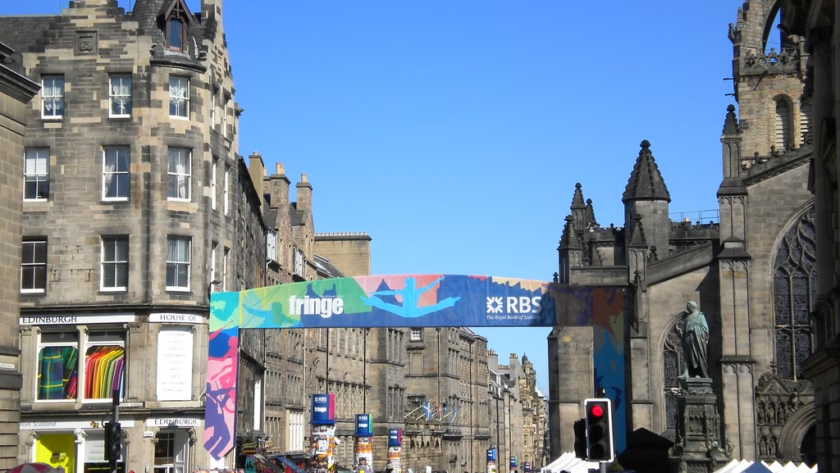
The numbers alone make the Edinburgh Fringe 2026 hard to comprehend. In 2026, the world’s largest performing arts festival runs from Friday 7 August to Monday 31 August, with 3,649 shows across 258 venues and 53,884 scheduled performances from companies flying in from 71 countries. For 25 days, Edinburgh stops being a Scottish city and becomes something closer to a planet of its own — every street, basement, pub, and converted parking structure turned into a stage.
This guide covers Edinburgh Fringe 2026 dates, how ticketing works, the key Fringe venues, where to stay, how to get there from Edinburgh Waverley and beyond, and where to store luggage in Edinburgh so you can move through the city freely.
Edinburgh Fringe 2026 Dates and Key Facts
| Detail | Information |
|---|---|
| Official dates | Friday 7 – Monday 31 August 2026 |
| Preview period | Some shows from Wednesday 5 August |
| Programme launch | Thursday 4 June 2026 |
| Number of shows | 3,649 (confirmed as of June 2026) |
| Venues | 258 across Edinburgh |
| Performances | 53,884 total scheduled |
| Countries represented | 71 |
| Box office | 180 High Street, Edinburgh EH1 1QS |
| Official website | edfringe.com |
The 2026 Fringe runs to the latest possible date on the calendar — 31 August falls on a Monday this year, giving the festival maximum stretch. Most shows run from 7 August onwards, though many performers hold preview performances from 5 or 6 August, often at lower ticket prices with smaller audiences. If you want to see multiple shows at a discount, the preview period is genuinely worth targeting.
The Fringe Society releases the programme in stages rather than all at once. The first batch of shows went live in February 2026, with further reveals in April and May, and the full printed programme launched on 4 June. Shows can continue registering right up to and even during the festival, so browsing edfringe.com periodically throughout the summer will surface late additions.
What the Edinburgh Fringe Actually Is
The Fringe started in 1947 when eight theatre groups turned up uninvited to Edinburgh to perform on the margins of the newly established Edinburgh International Festival. They were not selected, vetted, or invited — they simply showed up. That open-access DNA has never left. In 2026, as in every year, there is no selection committee, no curatorial gate, no genre restriction. Anyone who can find a venue and pay the registration fee can put on a show. What this creates is a programme that ranges from established comedians testing new material in 50-seat rooms to complete unknowns who will be household names in five years.
Comedy makes up the largest share of the programme, but the full genre list covers theatre, dance, physical theatre, circus, cabaret, children’s shows, musicals, opera, music, spoken word, and exhibitions. The Fringe is the origin of the phrase “fringe theatre” — a term now used globally — and it remains the festival where more careers are launched, more risks are taken, and more unexpected things happen per square mile than anywhere else on the performing arts calendar.
The Edinburgh Fringe 2026 programme’s dominant themes, according to the official Fringe Society press release, include digital anxiety and artificial intelligence, political and social commentary, and stories of resilience. Specific shows exploring AI include Copycat at Pleasance and the audience-controlled RapGPT: Macshane. Political comedy and satire are particularly well represented, with Matt Forde’s Project Holy Moly at Pleasance among the more high-profile bookings.
The Royal Mile and the Fringe Street Experience
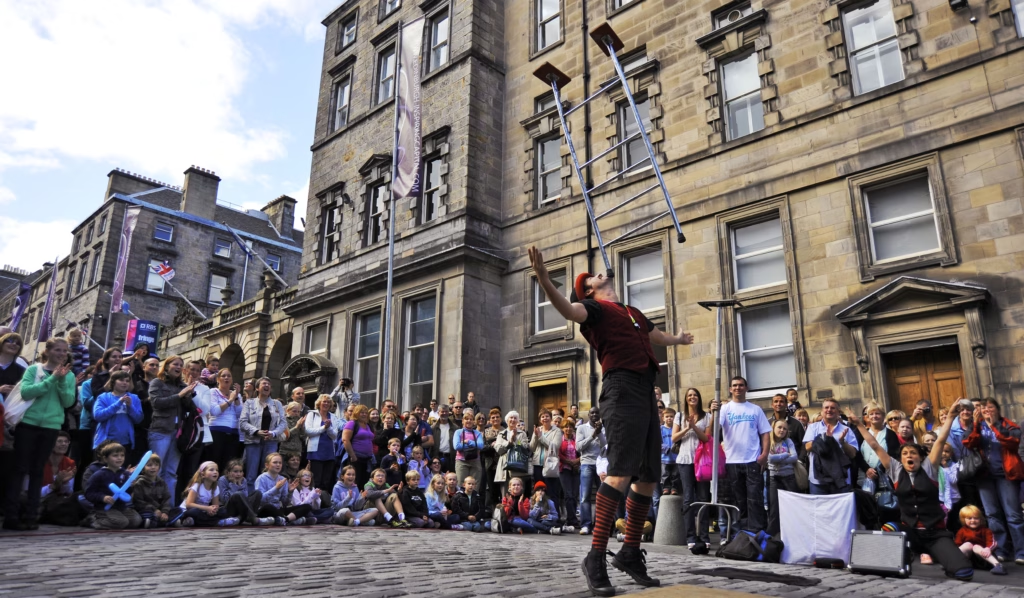
The Royal Mile — the historic cobblestone spine of Edinburgh’s Old Town, running from Edinburgh Castle at the top to the Palace of Holyroodhouse at the bottom — transforms completely during the Fringe. For 25 days it becomes an open-air stage, filling with street performers, living statues, fire-eaters, circus acts, and hundreds of performers handing out flyers for their shows.
The street performances are entirely free to watch, though the convention is to tip performers after watching a full act — a coin or a note in the hat is the norm. The Royal Mile is also home to the Fringe Shop at 180 High Street, which functions as the central box office and information point for the entire festival, and where you can collect a free copy of the printed programme once it has launched.
Walking the Mile at any point during the festival is an experience in itself, regardless of what shows you have booked. But be prepared: during peak afternoons it is extremely crowded, movement is slow, and performers compete hard for your attention. Leave more time than you think between venues, and use the official EdFringe app rather than paper maps for navigating between shows.
Fringe Venues in 2026: The Big Four and Beyond
The Big Four
The “Big Four” refers to the four largest venue operators at the Fringe. Together they account for a large proportion of total ticket sales and run multiple performance spaces under each brand name.
- Assembly is the oldest of the four, founded in 1981. It operates 17 theatre spaces during the Fringe, with venues on George Street and around The Mound, including the iconic Assembly Hall — a Gothic-looking Church of Scotland building that looks something like Hogwarts from the outside. Assembly’s total Fringe operation is more than three times the size of the Edinburgh International Festival.
- Gilded Balloon is based at Teviot Row House on Bristo Square — a massive Victorian university union building. It is known primarily for comedy and cabaret, has a rowdy late-night atmosphere, and has launched more emerging stand-up careers than any other single venue hub in Edinburgh. Gilded Balloon Teviot returns to the programme in 2026 after a period of absence, which is one of the most anticipated venue news stories of this year’s festival.
- Pleasance operates two main hubs: Pleasance Courtyard and Pleasance Dome on Bristo Square. The Courtyard is a cobblestone space surrounded by bars and outdoor seating, with indoor performance rooms ranging from 50 to 700 seats, including Pleasance Grand — one of the largest Fringe venues available. Pleasance is the venue most associated with consistent quality across comedy, theatre, and emerging talent.
- Underbelly is visually impossible to miss: its signature upside-down purple cow tent is pitched on Bristo Square and has become one of the defining images of the Fringe. Underbelly also operates venues under the city streets in the Cowgate vaults and runs the Circus Hub on the Meadows for large-scale physical theatre and circus. It specialises in high-energy, bold, and immersive work.
Beyond the Big Four
The remaining 250-plus Fringe venues range from major independent spaces — Summerhall, the Scottish Storytelling Centre on the Royal Mile, Just the Tonic at The Caves, and the Monkey Barrel Comedy Club — to improvised venues in church basements, pub back rooms, shipping containers, and moving buses. Part of what makes the Fringe genuinely different from every other arts festival is that a 30-seat upstairs room in a pub on Cowgate is as legitimate a venue as Pleasance Grand, and the show you see in that pub room is just as likely to be the best thing you witness all week.
How to Get Edinburgh Fringe 2026 Tickets
Tickets for every show in the programme are available through a single centralised system at edfringe.com and through the official EdFringe app. You can also buy in person at the Fringe Box Office at 180 High Street or at individual venue box offices throughout the city.
The app is the most practical tool for navigating the programme on the ground — it shows what is starting soon near your current GPS location, lets you filter by genre, price, and date, and generates a QR code for each booking that venue staff scan at the door.
Most shows are ticketed events with fixed prices. Ticket prices generally range from around £6 to £35, with Pay What You Can and free shows also available throughout the programme. Free shows typically collect voluntary donations at the end — this is the primary income for many early-career performers, so tipping generously in proportion to what you enjoyed is part of the Fringe’s unwritten social contract.
For the most popular shows — particularly at the Big Four venues — booking in advance is advisable. Many headline comedy acts at Gilded Balloon and Pleasance sell out weeks before the festival. However, walk-up tickets are also a legitimate and popular way to experience the Fringe, with long lines forming outside in-demand shows from around an hour before curtain. The Half Price Hut, operated by the Fringe Society, offers discounted day-of tickets for selected shows throughout the festival.
Where to Stay for Edinburgh Fringe 2026
Edinburgh’s accommodation market during August is the tightest of any UK city during any annual event. Hotel prices double or triple compared to low season, and the most central properties sell out months in advance. A survey of availability in May 2026 found that a basic central room at peak Fringe was running from around £200 per night — significantly higher than a decade ago.
The earlier you book, the more you pay in absolute terms but the better your options. Waiting until July for a cheap central room is not a viable strategy.
Old Town
The Old Town — which includes the Royal Mile, the Cowgate, the Grassmarket, and Victoria Street — puts you within walking distance of almost every major Fringe venue. The atmosphere is unmatched. The downsides are noise (the Cowgate runs until 5am on an extended licence, and the Royal Mile is busy until midnight), higher prices, and limited availability. For Fringe visitors who want to be fully immersed, this is the right base. For those who need sleep, it requires careful consideration of which street your accommodation is on.
New Town
New Town is a 10–15 minute walk from the Old Town across Princes Street Gardens, with Edinburgh Waverley train station sitting between the two areas. Georgian architecture, quieter streets, and a marginally calmer night-time atmosphere make it a better choice for those who want reasonable proximity to the festival without being inside the noise. It is also the best transport hub in the city.
Budget Alternatives
Leith, Bruntsfield, and Morningside offer significantly cheaper accommodation than the centre, with bus routes to the Old Town running every 5–10 minutes from Leith. Glasgow is one hour by train from Edinburgh Waverley and serves as a surprisingly viable base for visitors happy to commute — accommodation there during August is far more available and much cheaper.
| Area | Walk/Transit to Fringe | Accommodation Style | Noise Level |
|---|---|---|---|
| Royal Mile / Old Town | 0–10 min walk | Hotels, hostels, guesthouses | Very high |
| New Town | 10–15 min walk | Hotels, B&Bs, chains | Low–moderate |
| Southside / Newington | 20 min walk | Hostels, B&Bs, university rooms | Low |
| Leith | 20–25 min by bus | Hotels, B&Bs, serviced apartments | Low |
| Glasgow | 60 min by train | Full range | Low |
Getting to Edinburgh: Waverley and Beyond
Edinburgh Waverley is the city’s main train station. It sits perfectly between the Old Town and New Town. From here, you can easily walk to the Royal Mile and most Fringe venues.The station is served by LNER and Avanti trains from London King’s Cross, taking about 4.5 hours. Frequent ScotRail services also run from Glasgow Central and Glasgow Queen Street in roughly 50 minutes. A wide range of other national rail connections service the station as well.
From Edinburgh Airport, the Edinburgh Tram runs directly to Waverley Bridge, with a journey time of approximately 30–35 minutes and a fare of around £8.50. The Airlink 100 bus covers the same route in a similar time at a slightly lower cost.
Edinburgh’s city centre roads are heavily restricted during August due to the volume of festival pedestrian traffic. Driving into the city during the Fringe is strongly discouraged, and parking is very limited. The tram, Lothian Buses, and walking are the most reliable ways to move around.
Luggage Storage Edinburgh: How Radical Storage Can Help
August in Edinburgh creates a particular logistical challenge: arriving early before hotel check-in, checking out on the morning of a late show, or connecting between venues with a suitcase you cannot bring into Pleasance or the Underbelly vaults. Carrying large bags through the festival crowds on the Royal Mile is the kind of thing that ruins an afternoon.
Radical Storage provides secure luggage storage Edinburgh visitors can actually rely on, through a network of verified partner businesses across the city — shops, hotels, and local businesses near major transport hubs and visitor areas. Drop your bags before the shows, collect them when you are ready. Pricing starts from £5 per bag per day, all locations are verified and insured, and booking takes a few minutes online.
Practical Tips for Edinburgh Fringe 2026
- Leave more time between shows than you think. Edinburgh’s Old Town looks compact on a map and is anything but during the Fringe. Cobblestone streets, slow-moving crowds, and venues that have multiple performance spaces inside large buildings all eat into transit time. The Fringe Society’s official guidance explicitly warns against back-to-back bookings and advises planning gaps between shows.
- Use the EdFringe app. It is the most efficient way to browse the programme by what is starting near you in the next hour. The Shake to Search function suggests random shows — one of the more charming ways to discover something unexpected.
- Book the popular shows early, browse the rest late. High-profile Pleasance and Gilded Balloon comedy acts sell out. Everything else is worth arriving early for walk-up tickets or using the Half Price Hut for same-day deals.
- Attend something free every day. The street events on the Royal Mile are free, the Scottish National Museum and National Museum of Scotland have no admission charge, and there are hundreds of free Fringe shows across the programme. The Fringe can be genuinely expensive if you book five ticketed shows per day — mixing in free events keeps the daily cost manageable.
- The street events on the Royal Mile are entirely free. You can also visit the National Museum of Scotland with no admission charge. Beyond that, the programme features hundreds of free Fringe shows.
- The Fringe can get genuinely expensive if you book five ticketed shows a day. Mixing in these free events is a great way to keep your daily costs manageable.
- Pack for four seasons. Edinburgh in August averages 18°C with frequent rain. A compact waterproof layer is non-negotiable, and comfortable walking shoes matter more than almost any other packing decision you make.
Conclusion
The Edinburgh Fringe 2026 spans 25 days, featuring 3,649 shows across 258 venues. It remains the largest cultural event on the planet outside of the Olympics and the World Cup. You can go for the comedy, the theatre, or the street performers on the Royal Mile. You can also just enjoy the experience of a city that completely reinvents itself for a month. Either way, the festival consistently delivers unexpected, must-see moments. To make the most of it, book your accommodation early and plan your travel from Waverley. Keep your daily schedule flexible. Be sure to store your luggage before hitting the venues. What follows is truly one of the best four weeks in European cultural life.