
Germany has its own logic around tipping, and once you understand it, the whole thing becomes refreshingly simple. Tips are called Trinkgeld — literally “drinking money” — and they exist to say thank you for good service, not to compensate for a wage shortfall. Germany’s statutory minimum wage stands at €12.82 per hour in 2026, meaning hospitality workers earn a proper base salary. That single fact shapes everything about how tipping in Germany works: amounts are modest, nothing is obligatory, and nobody expects the 20% North American standard.
So is tipping customary in Germany? Yes — but modestly and on your own terms.
Is Tipping Expected in Germany?
Tipping is customary in Germany but never compulsory. A 2023 poll found that 78% of Germans tip in restaurants, but the amounts stay at 5–10% rather than the higher percentages common in the US. The social norm is simple: if the service was good, you leave something. If it was poor, you genuinely do not have to — and nobody will make a scene about it.
Is tipping common in Germany across all situations? It varies by setting. Table-service restaurants, taxis, hairdressers, and hotel staff are the places where a tip is most expected. Fast-food counters, supermarket checkouts, and self-service cafés are not tipping situations.
Always check your bill before tipping. Some upscale restaurants add a service charge labelled “Bedienung inklusive” — if that appears on your bill, a service charge is already included and any additional tip is purely optional.
How Much to Tip in Germany
The standard across almost every scenario in Germany is 5–10%, with rounding up being just as common as calculating a percentage. Fifteen percent is considered generous. Going above that draws more confusion than appreciation from locals.
| Service | Standard Tip |
|---|---|
| Restaurant (table service) | 5–10%, or round up to a comfortable number |
| Café or bar (table service) | Round up to the next euro or two |
| Café or bar (counter service) | Leave coins in the tip jar, or nothing |
| Taxi or rideshare | Round up the fare; €1–€2 extra for longer rides |
| Hotel bellhop | €1–€2 per bag |
| Hotel housekeeping | €1–€3 per night (leave in an obvious spot) |
| Hotel concierge (exceptional help) | €10–€20 |
| Room service | €1–€2 |
| Hairdresser | 5–10%, or a couple of euros |
| Tour guide | Up to 10% of the tour cost |
| Cloakroom / coat check | €0.50–€2 |
| Restroom attendant | €0.50–€1 |
| Delivery driver | €1–€2 in cash if available |
Tipping in Germany Restaurants: How It Works
Tipping in Germany restaurants is the situation where most visitors have questions — partly because the mechanics of actually paying the tip differ from what many people are used to.
In Germany, the server comes to your table to take payment. You do not leave cash on the table and walk out. When the server arrives, you tell them the total you want to pay — bill plus tip combined — and they make the change accordingly. If your bill is €26 and you want to tip €4, you say “dreißig, bitte” (“thirty, please”) and hand over €30. The server keeps €4 without anything needing to be said explicitly.
If you are paying by card, the process is the same — you tell the server the total you want charged. Some card terminals now have a tip option built in, but not all do, particularly in smaller or older establishments.
A tip of 5–10% is what locals leave in restaurants. On a €42 bill, paying €46 or €47 is entirely appropriate. Going to 15% is unusual but not unwelcome. Going higher than that is simply not part of German restaurant culture and can read as ostentatious rather than generous.
Tipping in Germany with Credit Card
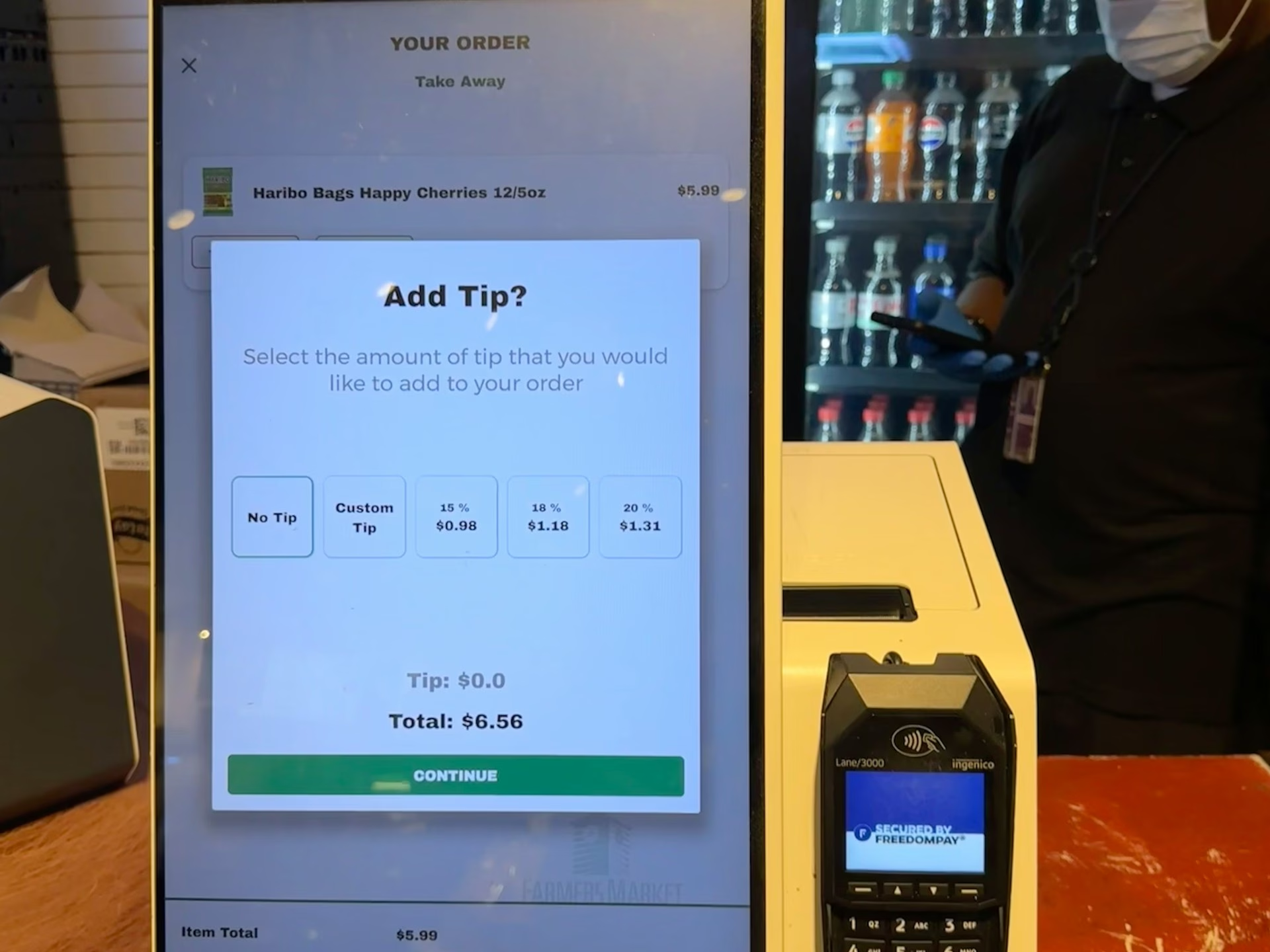
Card payment is increasingly common across Germany, but tipping in Germany with a credit card is still not as seamless as cash tipping in every venue. Many card terminals in restaurants and bars — particularly in smaller towns or older establishments — do not offer an option to add a tip electronically.
Where a card terminal does offer a tip prompt, you can add the amount directly. Where it does not, the recommended approach is to have a small amount of cash ready to hand directly to the server when you pay by card. This is consistent guidance from berlin.de, N26, and several other verified German etiquette sources: if the bill is paid by credit card, give the tip in cash to make sure it reaches the server.
The situation is improving. More venues in cities like Berlin, Munich, and Hamburg now have modern terminals that support card tipping, but carrying a few euros in cash as a backup remains the most reliable approach.
Is Tipping Common in Germany for Taxis?
Around half of Germans tip taxi drivers. The standard approach is to round up the fare to the next comfortable number — a €14.50 ride becomes €15 or €16. For longer journeys or if the driver helped with luggage, an extra euro or two on top is appropriate. Ten percent on a longer journey is also completely acceptable.
If you use Uber or another ride-hailing app in Germany, the app supports in-app tips, but most German passengers simply round up rather than adding a percentage through the app.
Tipping at German Hotels
Hotel tipping in Germany follows broadly international norms, though amounts are on the modest side. Bellhops carrying your luggage to the room typically receive €1–€2 per bag. Housekeeping is rarely tipped by locals, but leaving €1–€3 per night on the pillow or a visible surface is appreciated, particularly on longer stays. A concierge who secures restaurant reservations or event tickets warrants €10–€20 depending on the effort involved. Room service tips of €1–€2 are standard.
Travel Light in Germany with Radical Storage
If you are exploring German cities between hotels or arriving before check-in, Radical Storage offers secure luggage storage through verified partner businesses across Germany — including Berlin, Munich, Hamburg, and Frankfurt — from just €5 per bag per day. Drop your bags, explore freely, and collect them when you are ready at radicalstorage.com.
Germany Tipping Culture vs. US Tipping Culture
In the tipping culture in Germany, the difference comes down to one structural fact: German workers are paid a legal minimum wage with no lower floor for tipped employees. For the United States, the federal tipped minimum wage is $2.13 per hour, making tips income-critical. In Germany, the 2026 Mindestlohn covers all workers equally at €12.82 per hour, so the Trinkgeld is a bonus rather than a baseline.
This means the entire social calculus around tipping is different. Germans who skip a tip in a restaurant are not being rude — they are exercising a genuine option. Visitors who tip the American 20% are not wrong, but they are tipping well above what any local would expect or consider normal. The sweet spot for foreign visitors is to match local norms: 5–10%, rounded up, paid directly to the server or in cash alongside a card payment.
Quick Reference: Do You Tip in Germany?
| Service / Setting | Is Tipping Expected? | Standard Amount / Practice |
| Restaurants with table service | Yes | 5–10% or round up to a clean figure |
| Cafés and bars (table service) | Yes | Round up to the next euro |
| Cafés and bars (counter service) | Optional | Tip jar coins or nothing |
| Taxis | Optional | Common practice to round up the fare |
| Hotels (bellhop, room service) | Yes | €1–€2 per bag or delivery |
| Hotels (housekeeping) | Optional | €1–€3 per night |
| Hairdressers | Yes | 5–10% or a couple of euros |
| Fast food or self-service | No | No tipping expected |
| Supermarkets | No | No tipping expected |
Final Thoughts
Tipping in Germany rewards a different mindset than what most North American visitors are used to, and that is not a bad thing. Five to ten percent, rounded up and handed directly to the person who served you, covers virtually every situation you will encounter. Carry a small amount of cash for restaurants and hairdressers, keep your card tip expectations flexible since terminals vary by venue, and remember that skipping a tip after genuinely poor service is entirely within local norms. Germany’s tipping culture is low-pressure by design, and once you stop calculating percentages and start rounding up, it becomes second nature within a day or two of arrival.