
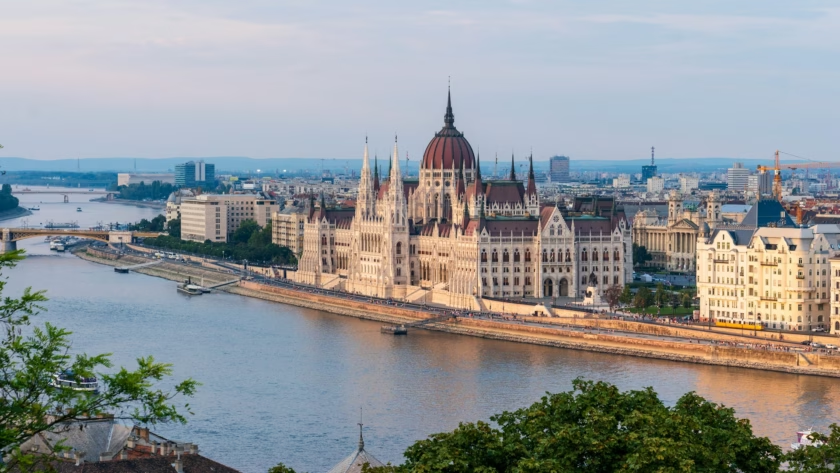
Budapest is Europe’s most enchanting capital, where stunning architecture meets thermal baths, vibrant nightlife, and centuries of history. This comprehensive Budapest travel guide covers everything you need to explore the City of Spas, from iconic landmarks to hidden gems—whether you’re planning your first visit or returning for more.
This guide addresses what travelers ask most: where to stay, what attractions to see, how to spend your time wisely, and how much a Budapest daily budget should be. We’ve included practical Budapest travel tips, public transport information, and solutions like luggage storage for stress-free exploration.
Best Time to Visit Budapest
Peak Season (May–September)
The best time to visit Budapest is late April through May or September through October. Temperatures range from 18–25°C (64–77°F), offering comfortable sightseeing weather.
Peak months (July–August) see crowds and higher prices, but longer daylight hours reward early risers. Summer evenings on the Danube are magical.
Shoulder Season (April & October)
Spring and fall provide the sweet spot: fewer tourists, pleasant weather, and lower accommodation rates. Perfect for enjoying outdoor attractions without excessive crowds.
Winter (November–March)
The winter in Budapest (1–5°C / 34–41°F) transforms the city into a holiday wonderland. Winter markets, thermal baths with steam rising into cool air, and festive lights create a unique charm. Christmas markets (November–December) are world-class. Hotels cost 30–40% less than in summer.
Seasonal Highlights
| Season | Best For | Temperature | Crowds |
| Spring (April–May) | Flowers, mild weather | 15–20°C | Moderate |
| Summer (June–Aug) | Outdoor events, long days | 20–28°C | High |
| Autumn (Sept–Oct) | Pleasant weather, wine season | 12–22°C | Low-Moderate |
| Winter (Nov–Mar) | Christmas markets, thermal baths | 1–8°C | Low |
Budapest Travel Guide Top Attractions
Here are some of the best Budapest travel guide attractions:
Must-See Historic Landmarks
1. Parliament Building
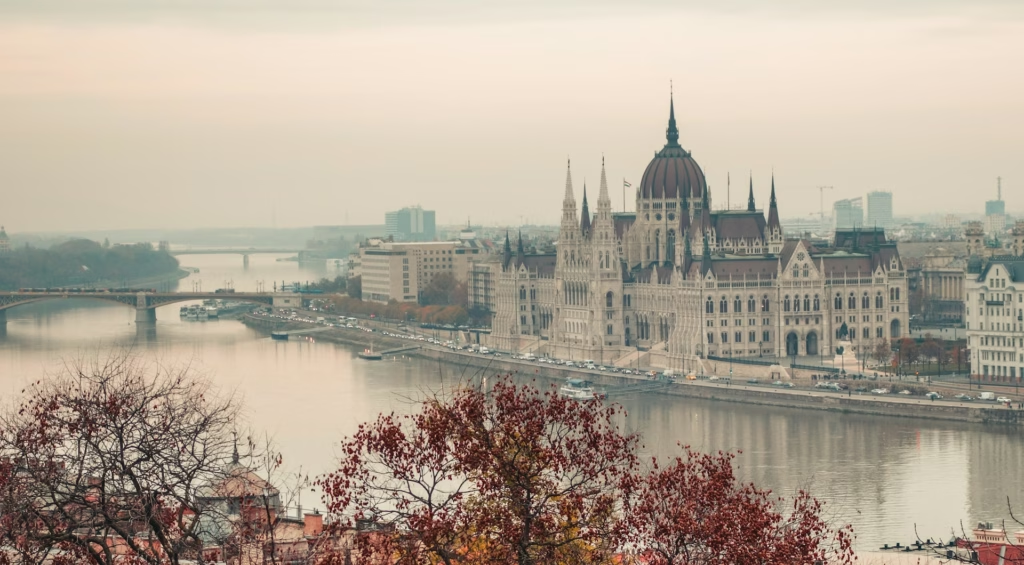
One of the world’s largest parliament buildings, this neo-Gothic masterpiece dominates the Pest skyline. The 268-meter-long facade sparkles at sunset.
- Visit: Guided tours required; book ahead online
- Time needed: 1.5 hours
- Cost: €20–25 (with English guide)
- Pro tip: The rooftop terrace offers free access for the best views (no tour needed)
2. Buda Castle
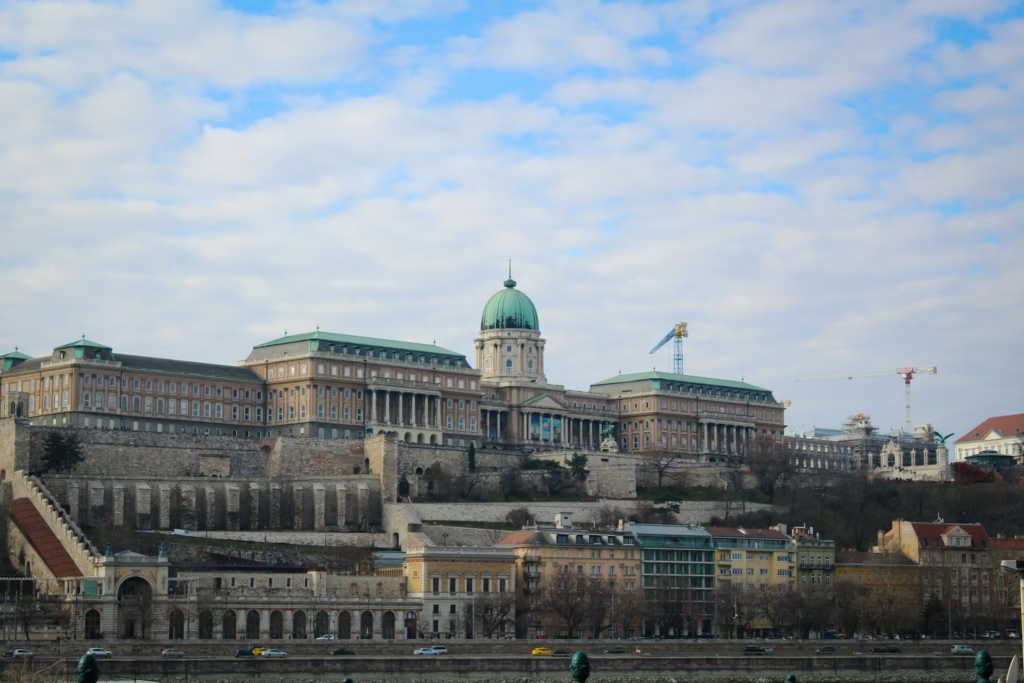
Perched above the Danube, this royal palace offers panoramic views and museums covering Hungarian history, art, and medieval artifacts.
- Location: On Castle Hill, accessible by funicular or walking
- Time needed: 2–3 hours
- Cost: Grounds are free; museums €8–12 each
- Instagram spot: Look back across the river at sunset for golden-hour photos
3. Chain Bridge (Széchenyi Lánchíd)
Europe’s first permanent Danube crossing (opened 1849) connects Buda and Pest. The pedestrian walkway offers unbeatable river views.
- Best time: Early morning or golden hour (6–7 PM)
- Cost: Free
- Fun fact: The bridge closes occasionally for maintenance—check before visiting
4. Thermal Baths (Fürdőszoba)
Budapest has 100+ thermal baths fed by natural springs. The Széchenyi Thermal Bath is the most famous; Gellért Baths offers luxury with river views.
- Széchenyi: €18–25 (entry), outdoor pools in steaming water create surreal scenes
- Gellért: €20–28, more intimate and upscale
- Rudas: €12–18, 16th-century Ottoman architecture, rooftop pool added recently
- Pro tip: Visit mid-week mornings to avoid crowds; afternoons attract locals and tourists
Cultural & Artistic Attractions
- Jewish Quarter & Great Synagogue – One of Europe’s largest synagogues with a moving Holocaust memorial in the courtyard. Historical significance alongside architectural beauty.
- House of Terror – Documents Hungary’s fascist and communist past in a sobering but essential museum.
- Hungarian Parliament Library – Stunning interiors visible during tours; the ornate staircases are architectural treasures.
Hidden Gems Beyond Main Attractions
- Margaret Island (Margaretszigget): A 2.5-km-long island with parks, gardens, and sports facilities. Perfect for jogging, cycling, or picnicking.
- Fisherman’s Bastion: Free to access (though paid platform areas exist). Fairy-tale neo-Gothic towers with unmatched river views.
- Ruin Bars: Szimpla Kert and Instant are converted factories turned into atmospheric nightlife venues filled with art, salvaged furniture, and characters.
- Danube Promenade (Dunakorzó): A leisurely walk with city views, street performers, and riverside cafés.
Budapest Itinerary: Best Budapest Guide Plans
3-Day Budapest Itinerary
– Day 1: Iconic Buda
- Morning: Buda Castle and grounds (2 hours)
- Midday: Fisherman’s Bastion for photos and views (1 hour)
- Afternoon: Chain Bridge walk, then explore Castle Hill’s medieval streets
- Evening: Dinner in Buda’s Old Town; sunset walk along the river
– Day 2: Pest’s Grandeur
- Morning: Parliament Building tour (1.5 hours)
- Midday: Jewish Quarter walk and Great Synagogue visit (2 hours)
- Afternoon: Széchenyi Thermal Bath (2–3 hours)
- Evening: Ruin bar experience in District VII
– Day 3: Beyond the Basics
- Morning: Margaret Island for nature and cycling (2 hours)
- Lunch: Local pálinka and Hungarian fare
- Afternoon: House of Terror or Hungarian Parliament Library tour
- Evening: River cruise at sunset (included in many hotels) or final thermal bath visit
5-Day Budapest Itinerary
- Days 1–3: Follow the 3-day itinerary above
– Day 4: Day Trip Option
- Danube Bend (Visegrád & Esztergom): Medieval ruins, basilica, small-town charm (full-day tour, €40–60)
- OR: Gödöllő Palace (Hungarian royal estate, 45 minutes by train)
– Day 5: Local Experiences
- Morning: Central Market Hall (Nagyvásárló Hall) for Hungarian produce, paprika, and street food
- Late morning: Stroll through the Seventh District (Jewish Quarter) for street art and vintage shops
- Afternoon: Gellért Baths for a final soak
- Evening: Dinner at a traditional Hungarian restaurant; enjoy live folk music
Where to Stay in Budapest
Best Neighborhoods for Travelers
| Neighborhood | Best For | Vibe | Budget |
| Pest Center (District V) | Convenience, nightlife | Bustling, touristy | €60–150/night |
| Buda (Districts I–II) | Quiet, views, history | Peaceful, upscale | €70–200/night |
| District VII (Jewish Quarter) | Culture, street art, ruin bars | Trendy, bohemian | €50–120/night |
| District IX (Ferencváros) | Local scene, affordable | Residential, emerging | €40–100/night |
| District XIII (Margaret Island area) | Nature, quiet | Suburban, peaceful | €45–110/night |
Best Spots for Digital Nomads
If you need to catch up on emails, Budapest is incredibly work-friendly.
- Kelet Kávézó (Buda side): A book-filled cafe perfect for quiet focus.
- Madal Cafe (Pest side): Known for specialty coffee and a peaceful “laptop-friendly” atmosphere.
- Kaptár Coworking: If you need a professional desk, this is one of the highest-rated central spots for travelers
Top Hotel Recommendations by Budget
Luxury:
- Mandarin Oriental Budapest: Danube-facing rooms, rooftop bar, spa access
- Aria Hotel Budapest: Sound-themed luxury in a restored palace
Mid-Range:
- Hotel Baltazár Budapest: Boutique charm near Fisherman’s Bastion
- Promenade City Hotel: River views, central Pest location
Budget:
- Wombat’s City Hostel: Social atmosphere, affordable private rooms and dorms
- Maverick City Lodge: Trendy budget hostel in District VII with ruin bar access
Pro Tip: Wondering if your money will go far? Check out our deep dive: Is Budapest Expensive in 2026? A Full Price Guide
Budapest Daily Budget Breakdown
How much should you budget for Budapest? This Budapest travel guide also covers a realistic Budapest daily budget for different travel styles:
Budget Traveler (€50–70/day)
- Accommodation: €20–30 (hostel dorm)
- Food: €15–20 (street food, markets, budget eateries)
- Attractions: €5–10 (many free walking tours, some paid museums)
- Transport: €2–3 (daily metro pass)
Daily total: €42–63
Mid-Range Traveler (€80–120/day)
- Accommodation: €50–70 (mid-range hotel)
- Food: €20–30 (mix of restaurants and street food)
- Attractions: €10–20 (paid museums, thermal baths)
- Transport: €2–3
Daily total: €82–123
Luxury Traveler (€200+/day)
- Accommodation: €100–200+ (upscale hotel)
- Food: €40–60 (fine dining)
- Attractions: €20–40 (premium experiences, private tours)
- Transport: €5–10 (taxis, private transfers)
Daily total: €165–310+
Money-Saving Tips
- Budapest Card: €30–50 for 24–72 hours; includes free public transport and museum entry
- Thermal baths mid-week: 20–30% cheaper than weekends
- Street food markets: Langos (fried bread) costs €2–4 but is hugely filling
- Free walking tours: Available daily; tip €10–15 per person
- Free museums: Several churches, the Chain Bridge, and Fisherman’s Bastion
- Budapest’s tap water is excellent and safe. You can refill bottles at “Ivócsap” (fire hydrants converted into drinking fountains) found throughout the city in summer.
Must-Have Travel Apps for 2026
- BudapestGO: This is the official app for BKK (public transport). Use it to buy digital tickets, validate them via NFC/QR codes, and plan real-time routes.
- Bolt: While Uber returned to Budapest in 2024, Bolt remains the most reliable and widely used rideshare app for transparent pricing.
- MÁV App: Essential if you are planning day trips to Eger or the Danube Bend, as it allows you to skip the ticket lines at Keleti or Nyugati stations.
Getting Around: Budapest Public Transport Guide
Metro (Subway)
- 4 lines (M1 through M4) serving the entire city
- Cost: Single journey €2.10; day pass €4.75; 10-journey ticket €16
- Best for: Quick, reliable transport
Note: M1 (yellow line) is the world’s oldest continental metro, opened in 1896
Trams & Buses
- Trams: Scenic, especially Tram 2 along the Danube in Pest
- Buses: Comprehensive network serving outer districts
- Combined public transport ticket: €4.75/day covers all three
Danube Ferries
- Scenic alternative: Ferry lines 1 and 2 travel the Danube with city views
- Cost: €2.10 per journey (same as metro)
- Highlight: Ferry to Margaret Island and Obuda
Taxi & Rideshare
- Uber & Bolt: Reliable, meter-based, €3–8 for most city journeys
- Yellow Cab: 24-hour dispatch, slightly cheaper than Uber
- Avoid: Unmarked taxis with inflated rates
Bike Sharing
- Bubi: Budapest’s bike-sharing system; 250+ stations
- Cost: €50/week or €9/day
- Perfect for: Margaret Island, riverside paths, avoiding traffic
Things to Do in Budapest Beyond the Main Attractions
Food & Culinary Experiences
- Central Market Hall: Three floors of Hungarian produce, paprika, langos, and souvenirs (open daily, 6 AM–6 PM)
- Rákóczi Square Market: Local neighborhood market, fewer tourists, better prices
- Hungarian cooking classes: Learn goulash and chimney cake in small groups (€35–50)
- Pálinka tasting: Sample Hungary’s famous fruit brandy at distillery shops
Nightlife & Entertainment
- Ruin bars: Szimpla Kert, Instant, Corvintető—converted factories with art, DJs, and eclectic decor
- Thermal bath parties: Special DJ and party nights at Széchenyi (summer weekends)
- River cruises: Evening Danube cruises with dinner (€30–80 depending on package)
- Theater & opera: Hungarian State Opera House offers affordable tickets (€8–25)
Day Trips from Budapest
- Eger: Wine region, 2 hours north; famous reds and castle ruins
- Tata: Castle, thermal lake, and small-town charm
- Danube Bend (Danube Bend): Visegrád (medieval fortress) and Esztergom (royal basilica)
Upcoming Events in Budapest (2026)
- Budapest Spring Festival (April): Classical music, theater, dance across multiple venues
- Formula 1 Grand Prix (May): High-speed motorsport on city streets
- Jewish Summer Festival (June–July): Music, theater, cultural performances in District VII
- Margaret Island Open-Air Theater (May–September): Classical and contemporary performances
- Sziget Festival (August): Europe’s largest music festival; 7 days of rock, pop, electronic music (€100–150 ticket)
- Budapest Christmas Market (November–December): Thermal bath displays, seasonal foods, holiday crafts
- New Year’s Eve: Grand street parties and fireworks on Danube embankments
Check budapest.com for up-to-date event schedules and booking information.
Budapest Travel Tips: Expert Advice for First-Timers
Before You Go
- Visa requirements: EU citizens don’t need a visa; Americans, Australians, and Canadians get 90 days visa-free
- Currency: Hungarian Forint (HUF); €1 ≈ 380 HUF (rates fluctuate). ATMs are abundant; card payments are widely accepted
- Language: Hungarian is difficult but English is widely spoken in tourist areas; download Google Translate offline
During Your Stay
- Budapest Card: Worth it if you plan 3+ museum visits and significant public transport use
- Thermal bath etiquette: Bring a padlock (or rent for €1), shower before entering, and don’t wear street clothes in pools
- Tipping culture: 10% gratuity is customary at restaurants; round up for taxis
- Pickpockets: Watch belongings in crowded public transport and markets; use money belts or hotel safes
- Smoking: Indoor smoking is banned in most public places
- Water safety: Tap water is safe to drink; refill bottles at public fountains
Photography Tips
- Golden hours: Early morning and sunset frame the Parliament and Chain Bridge beautifully
- Fisherman’s Bastion at dusk: Lit turrets create stunning silhouettes
- Thermal baths at sunrise: Fewer crowds, more atmospheric steam effects
- Danube from Margaret Island: The best panoramic city views
Packing Essentials
- Thermal bath essentials: Flip-flops, waterproof bag, swimsuit, padlock
- Comfortable walking shoes (cobblestones are common)
- Light layers (temperatures vary significantly between day/night)
- Universal power adapter (European Type C plugs)
Luggage Storage Budapest: Travel Smart with Radical Storage
Exploring Budapest means freedom—and freedom means not dragging luggage through thermal baths or narrow medieval streets.
Why Luggage Storage Matters?
- Check out late? Drop bags safely and explore until your evening transport
- Multi-day itineraries: Store excess luggage on day trips
- Thermal bath visits: Leave heavy bags at secure locations, not hotel lockers
- Airport transitions: Store luggage between arrival and accommodation check-in
Radical Storage provides hourly or daily luggage storage throughout Budapest at verified local businesses—never warehouses.
Why choose Radical Storage?
- ✓ Fixed transparent pricing: €5–8 per bag/day (no hidden fees)
- ✓ Flexible durations: Store for hours, days, or weeks
- ✓ Verified hosts: Each storage location reviewed and insured
- ✓ Central locations: Spots near Parliament, Keleti Station, Buda
- ✓ Mobile app: Book instantly, access directions, and manage storage on-the-go
How it works?
- 1. Download the Radical Storage app or visit their website
- 2. Select your preferred neighborhood and date
- 3. Book a storage spot with transparent pricing
- 4. Drop off your luggage and get exploring
- 5. Retrieve whenever you’re ready
Final Thoughts: Your Budapest Awaits
Whether you’re soaking in thermal waters with locals, sipping espresso in a bohemian ruin bar, or marveling at Parliament’s Gothic spires, Budapest rewards curiosity and spontaneity.
This Budapest travel guide 2026 equips you with itineraries, budgets, and insider tips—but the city’s true magic lies in wandering Pest’s hidden courtyards, chatting with fellow travelers in hostels, and discovering your own perfect moment on the Danube.
Ready to explore? Start with the 3-day itinerary, book your thermal bath experience, and don’t forget luggage storage for seamless adventure.
Related Articles
- Is Budapest Expensive? Complete 2026 Cost Guide & Money-Saving Tips
- Is Cyprus Expensive? The 2026 Guide to Budgeting for Your Adventure
- Is Prague Expensive to Visit? A 2026 Guide to Costs & Savings