
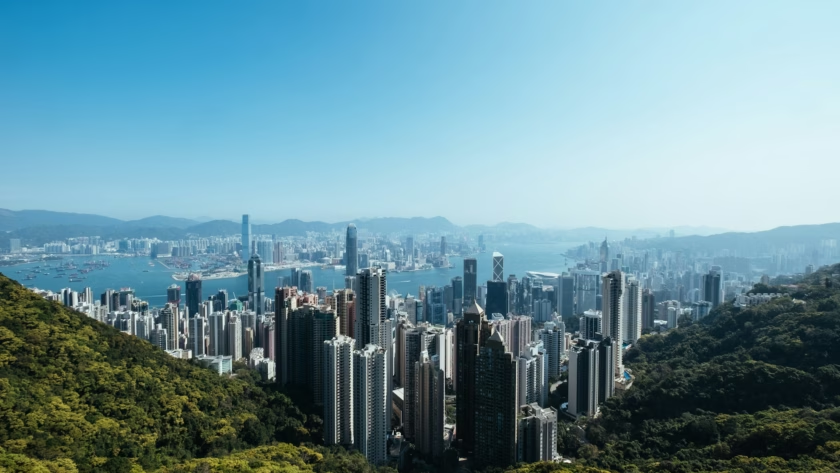
Planning a trip to Asia’s vibrant financial hub and wondering is Hong Kong expensive to visit? The concise answer is: Hong Kong is moderately to highly expensive by global standards, but offers surprising value compared to other world financial centers. In 2026, a typical tourist can expect to spend between HK$900-2,800 (US$115-360) per day depending on travel style, with budget travelers managing on HK$900 (US$115), mid-range travelers spending around HK$1,600-2,200 (US$205-280), and luxury travelers spending upwards of HK$3,500 (US$450) daily.
Hong Kong’s reputation as one of the most expensive places to live in the world primarily stems from its astronomical housing costs and luxury shopping. However, for tourists, Hong Kong offers remarkable value in certain categories, particularly public transportation, street food, and some attractions, making it more affordable than many expect. With strategic planning using the insider tips in this guide, you can experience Hong Kong’s unique blend of East-meets-West culture without breaking the bank.
Hong Kong Cost Overview: How Expensive Is Hong Kong in 2026?
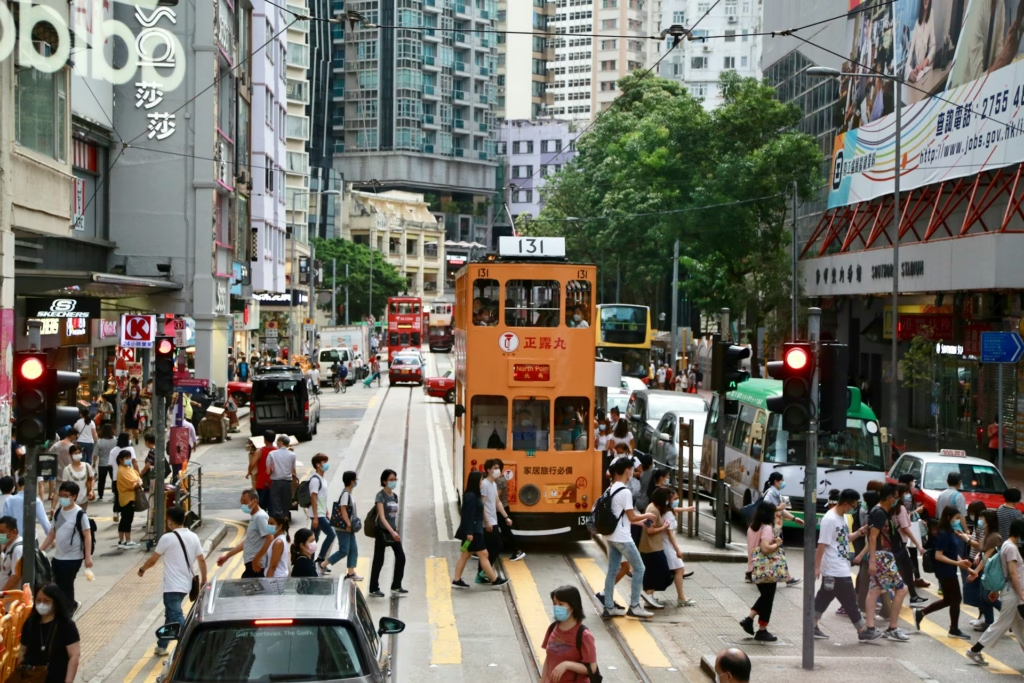
When asking “how expensive is Hong Kong to visit,” it’s important to understand that costs vary dramatically based on your travel style and choices. Hong Kong consistently ranks as the most expensive city for residents, but tourists can find surprising value in certain categories.
Let’s break down the typical costs you’ll encounter in Hong Kong in 2026:
Accommodation Costs in Hong Kong
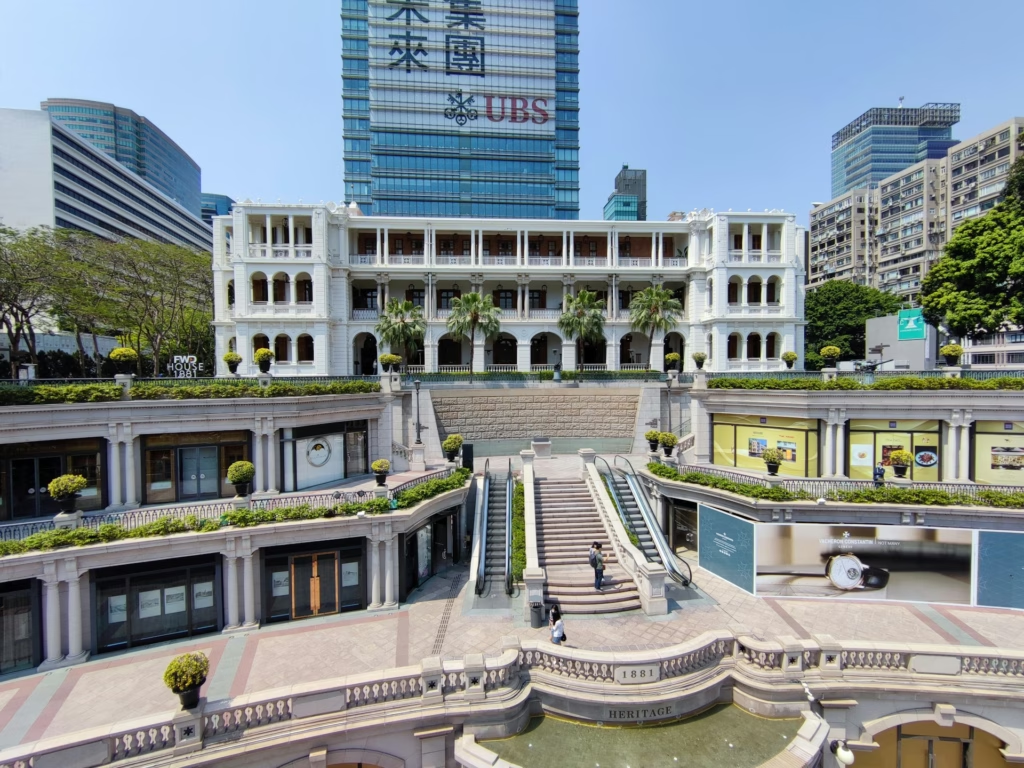
Is it expensive to live in Hong Kong or stay as a tourist? Accommodation is undoubtedly one of Hong Kong’s highest expenses:
| Accommodation Type | Price Range (per night) |
|---|---|
| Budget hostels | HK$180-350 (US$23-45) |
| Budget hotels | HK$450-900 (US$58-115) |
| Mid-range hotels | HK$900-1,800 (US$115-230) |
| Luxury hotels | HK$1,800-12,000+ (US$230-1,540+) |
| Serviced apartments | HK$1,200-3,000 (US$154-385) |
Hong Kong’s hotel prices average around HK$1,100 (US$140) per night in 2026. The most expensive areas are Central, Tsim Sha Tsui, and Causeway Bay, while better values can be found in Kowloon, Mong Kok, or North Point. Note that the 3% hotel accommodation tax (reintroduced in 2025) remains in effect for 2026, so factor this into your booking budget.
Why is Hong Kong so expensive for accommodation? The city’s limited land, high population density, and status as a global financial center drive property prices to astronomical levels. For tourists, this translates to smaller hotel rooms at higher prices compared to most Asian destinations.
Food and Drink Costs in Hong Kong
Is Hong Kong expensive for tourists seeking culinary experiences? Food costs in Hong Kong vary dramatically:
| Food & Drink | Price Range |
|---|---|
| Street food meal | HK$35-70 (US$4.50-9) |
| Fast food meal | HK$55-80 (US$7-10) |
| Local restaurant meal | HK$90-180 (US$11.50-23) per person |
| Mid-range restaurant meal | HK$250-500 (US$32-64) per person |
| High-end restaurant | HK$600-2,000+ (US$77-256+) per person |
| Local beer | HK$55-80 (US$7-10) |
| Cocktail | HK$100-180 (US$13-23) |
| Coffee | HK$35-60 (US$4.50-8) |
| Bottle of water | HK$10-18 (US$1.30-2.30) |
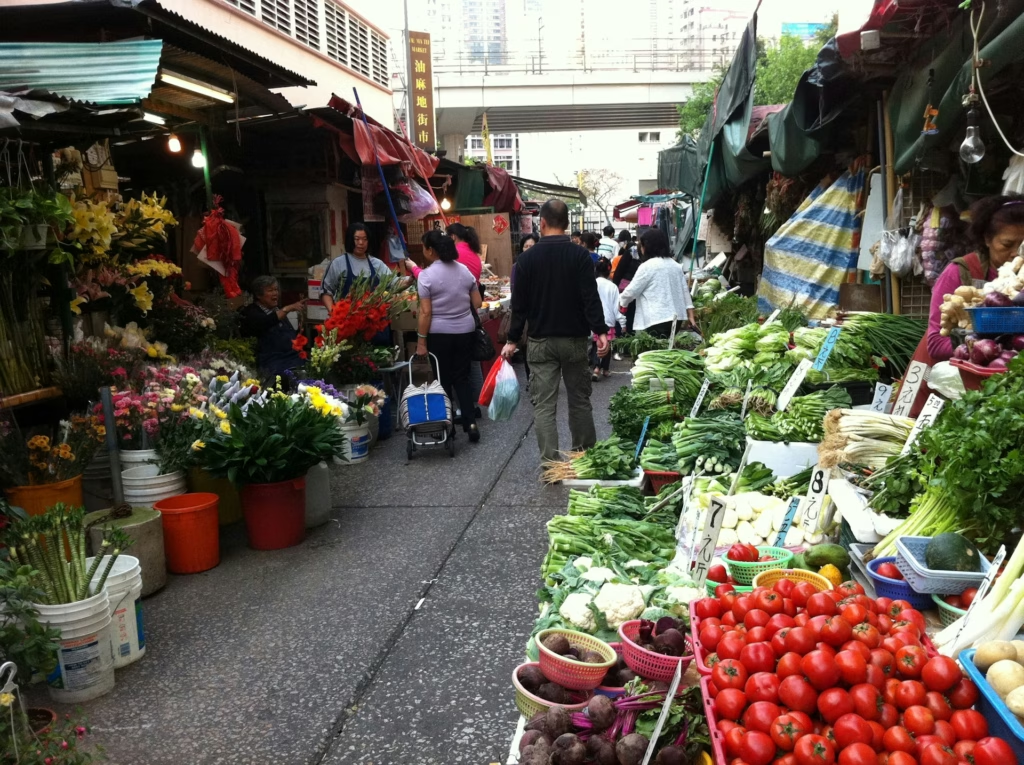
Food represents one of Hong Kong’s best values for tourists. The city’s famous street food and local eateries offer delicious, authentic experiences at reasonable prices. A meal at a dai pai dong (open-air food stall) or cha chaan teng (local diner) typically costs HK$60-120 (US$8-15), while dim sum can be enjoyed for HK$120-250 (US$15-32) per person.
However, western restaurants, hotel dining, and trendy establishments in Central or Lan Kwai Fong can be very expensive, with prices comparable to New York or London.
Public Transportation Costs in Hong Kong
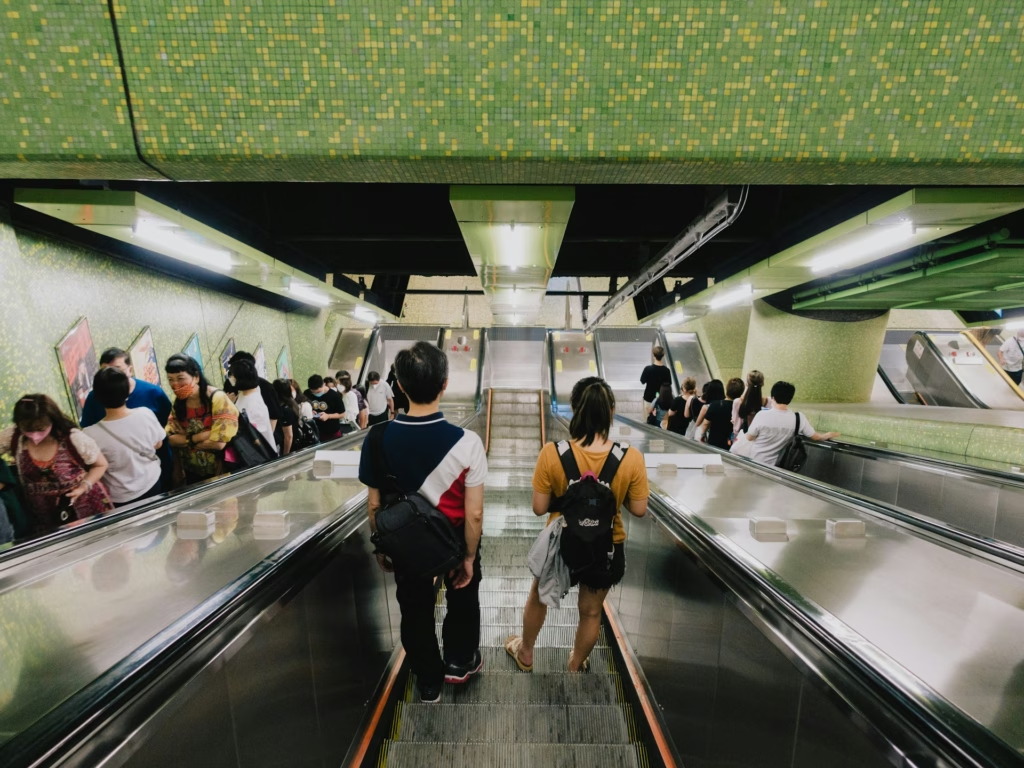
How expensive is Hong Kong for getting around? Public transportation is remarkably affordable and efficient:
| Transportation | Price Range |
|---|---|
| MTR (subway) single journey | HK$4.50-15 (US$0.60-1.90) |
| Bus fare | HK$5-50 (US$0.65-6.40) |
| Tram (Ding Ding) | HK$3 (US$0.40) flat fare |
| Star Ferry | HK$3.20-4.20 (US$0.41-0.54) |
| Taxi flag fall | HK$29 (US$3.70) |
| Taxi per km | HK$9 (US$1.15) |
| Airport Express train | HK$115 (US$15) to Central |
| Octopus Card deposit | HK$150 (US$19, refundable) |
Public transportation in Hong Kong is one of the best values globally. In 2026, MTR fares have remained relatively stable, providing clean and efficient service. The iconic Star Ferry crossing Victoria Harbour remains a steal at less than US$0.60, providing both transportation and spectacular views.
The Octopus Card is essential for visitors, offering convenience and slight discounts on most public transport. For tourists, transportation costs typically range from HK$40-120 (US$5-15) per day, depending on activity level.
Attraction and Entertainment Costs in Hong Kong
How expensive is Hong Kong to visit in terms of sightseeing? Attraction prices are moderate by global standards:
| Attractions & Activities | Price |
|---|---|
| Victoria Peak Tram (round trip) | HK$108 (US$14) |
| Sky100 Observation Deck | HK$198 (US$25) |
| Hong Kong Disneyland | HK$669-939 (US$86-120) |
| Ocean Park | HK$528 (US$68) |
| Big Bus Tour | HK$520 (US$67) |
| Symphony of Lights Cruise | HK$240 (US$31) |
| Wong Tai Sin Temple | Free (donations welcome) |
| Hong Kong Museum of History | HK$10 (US$1.30) |
| Hong Kong Museum of Art | HK$10 (US$1.30) |
| Man Mo Temple | Free (donations welcome) |
Hong Kong offers a mix of free and paid attractions. Many of the city’s temples, parks, markets, and hiking trails are free to visit. Major tourist attractions like the Peak Tram and theme parks have seen slight price increases for 2026. Note that Hong Kong Disneyland now uses a tiered pricing system (Tier 1 to Tier 4) based on demand, so check the calendar for the best rates.
The Hong Kong Tourism Board offers various discount passes for attractions, including the Hong Kong Pass and the Peak Tram Fast-Track Combo, which can provide savings for those planning to visit multiple paid sites.
Is Hong Kong Expensive Compared to Other Global Cities?
To put Hong Kong prices in perspective, let’s compare it with other major global destinations in 2026:
| City | Average Daily Cost (Mid-range) |
|---|---|
| Hong Kong | US$205-280 |
| Tokyo | US$210-290 |
| Singapore | US$220-300 |
| New York | US$320-450 |
| London | US$280-380 |
| Paris | US$240-330 |
| Sydney | US$210-300 |
| Bangkok | US$110-170 |
| Shanghai | US$130-200 |
| Seoul | US$160-240 |
As you can see, Hong Kong falls in the middle to upper range, less expensive than New York or London but more costly than Bangkok or Shanghai. Compared to other Asian financial hubs like Singapore and Tokyo, Hong Kong offers similar value.
Why Is Hong Kong So Expensive? Understanding the Costs
Several factors contribute to why is Hong Kong so expensive:
- Limited land: Hong Kong’s mountainous geography means only about 25% of its land is developed, creating extreme housing density and high property costs.
- Global financial center: As one of the world’s leading financial hubs, Hong Kong attracts wealthy professionals and corporations, driving up prices.
- Import dependency: Hong Kong imports over 90% of its food and goods, adding transportation costs.
- High-quality infrastructure: The city’s excellent public services, transportation, and facilities come with corresponding costs.
- Luxury market focus: Many businesses cater to wealthy locals and visitors, creating an abundance of high-end options.
Despite these factors, Hong Kong’s efficient public transportation, affordable local food options, and mix of free and paid attractions make it possible to visit without excessive spending.
Is Hong Kong Expensive for Budget Travelers? Money-Saving Tips
Is Hong Kong cheap? While not a budget destination, visitors can enjoy the city with these insider tips:
Accommodation Savings
- Stay in Kowloon areas like Mong Kok or Jordan instead of Hong Kong Island
- Consider guesthouses and hostels with private rooms
- Visit during the low season (May-September, excluding holidays)
- Look at serviced apartments for longer stays
- Check Chinese hotel booking sites like Ctrip for local deals
Food and Drink Savings
- Eat at dai pai dongs (street food stalls) and cha chaan tengs (local diners)
- Visit cooked food centers in wet markets for authentic, affordable meals
- Try dim sum at off-peak hours (weekday afternoons) for reduced prices
- Look for “tea set” specials at cafés (typically HK$60-90 for a meal and drink)
- Shop at local supermarkets like Wellcome or ParknShop for snacks and drinks
Transportation Savings
- Purchase an Octopus Card immediately upon arrival for public transport discounts
- Use the MTR (subway) as your primary transportation method
- Take the Star Ferry instead of the MTR to cross the harbor (cheaper and more scenic)
- Ride the historic “ding ding” trams on Hong Kong Island (just HK$3 flat fare)
- Walk when possible – many areas like Central, Tsim Sha Tsui, and Mong Kok are walkable
Attraction Savings
- Take advantage of Hong Kong’s many free attractions (temples, markets, parks, hiking trails)
- Visit museums on their free admission days (typically Wednesdays)
- Enjoy free public light shows like the Symphony of Lights
- Hike to the Peak instead of taking the Peak Tram (saves money and offers great views)
- Look for combo tickets when visiting multiple attractions
PRO TIP: Book luggage storage in Hong Kong with Radical Storage to enjoy attractions hands-free.
Is Hong Kong Cheap? Understanding Seasonal Price Variations
Is Hong Kong cheap at certain times of year? Hong Kong’s prices fluctuate seasonally:
| Season | Price Level | Notes |
|---|---|---|
| October-December | Highest | Pleasant weather, major events, and holidays drive up prices |
| January-February | High | Chinese New Year period with premium pricing |
| March-April | Moderate-High | Spring season with comfortable weather |
| May-September | Lowest | Hot, humid, and typhoon season offers the best deals |
For the best combination of reasonable prices and tolerable weather, visit during March-April or late September. The absolute cheapest time is July-August, but expect very hot, humid conditions and occasional typhoons.
Hong Kong Prices: Sample Daily Budgets
To help you plan, here are sample daily budgets for 2026:
Budget Traveler (HK$900/US$115 per day)
- Hostel dorm or budget guesthouse: HK$300
- Breakfast at local bakery: HK$40
- Lunch at food stall: HK$60
- Dinner at local eatery: HK$100
- Public transportation: HK$60
- Free attractions or one budget attraction: HK$100
- Miscellaneous: HK$240
Mid-Range Traveler (HK$1,600-2,200/US$205-280 per day)
- Mid-range hotel: HK$1,100
- Breakfast at hotel or café: HK$100
- Lunch at local restaurant: HK$150
- Dinner at mid-range restaurant: HK$300
- Public transportation and occasional taxi: HK$120
- One or two attractions: HK$250
- Miscellaneous: HK$300
Luxury Traveler (HK$3,500+/US$450+ per day)
- Luxury hotel: HK$2,200+
- Breakfast at hotel: Included
- Lunch at nice restaurant: HK$400
- Dinner at fine dining restaurant: HK$1,000+
- Taxi transportation: HK$400
- Premium attractions/experiences: HK$600+
- Shopping and miscellaneous: HK$1,200+
Is Hong Kong Expensive for Tourists? Understanding Value
Is Hong Kong expensive for tourists in terms of value? While Hong Kong has high costs in certain categories, it offers excellent value in others:
High Value in Hong Kong (Good Deals)
- Public transportation (among the world’s best and most affordable)
- Local food (authentic Cantonese cuisine at reasonable prices)
- Museums and cultural sites (very affordable entry fees)
- Street markets and shopping (bargains available with negotiation)
- Hiking and outdoor activities (world-class trails for free)
Lower Value in Hong Kong (Expensive)
- Accommodation (small rooms at high prices)
- Western restaurants and international cuisine
- Alcoholic beverages (especially in bars and clubs)
- Theme parks and major tourist attractions
- Guided tours and premium experiences
Understanding this value equation helps visitors allocate their budget effectively, splurging in areas that matter most while saving on others.
Most Expensive City: Hong Kong’s Global Ranking
Hong Kong frequently appears on lists of the most expensive places to live in the world, typically ranking in the top 5-10 globally. However, these rankings primarily reflect housing costs for residents rather than tourist expenses.
For visitors, Hong Kong offers better value than its “most expensive city” reputation suggests. While accommodation costs are high, the city’s efficient public transportation, affordable local food options, and mix of free and paid attractions make it possible to visit without excessive spending.
Is Hong Kong Expensive to Live In? Cost of Living Context
While this article focuses on tourist costs, it’s worth noting that Hong Kong has one of the world’s highest costs of living for residents. Monthly expenses for locals (excluding rent) average around HK$8,800 (US$1,130) for a single person and HK$30,000 (US$3,850) for a family of four. Rent for a one-bedroom apartment ranges from HK$12,000-20,000 (US$1,540-2,560) in urban areas.
These astronomical living costs, particularly housing, explain why Hong Kong consistently ranks among the world’s most expensive cities. However, tourists benefit from the city’s excellent public infrastructure without bearing the full burden of resident costs.
The Verdict: Is Hong Kong Worth the Cost?
In 2026, Hong Kong remains a destination of extremes. While it is undeniably one of the most expensive places to live in the world, it offers a unique “high-low” travel experience. You can spend thousands on a luxury suite and Michelin-starred dinner, or you can have a world-class day for under US$100 by riding the Star Ferry and eating at local diners.
Final Tip: Visit in late September or October for the best balance of weather and price. Hong Kong rewards those who explore its local neighborhoods, where the food is better, the prices are lower, and the culture is most authentic. Store your bags in Hong Kong with Radical Storage to navigate the city’s steep streets and crowded markets with ease!
