
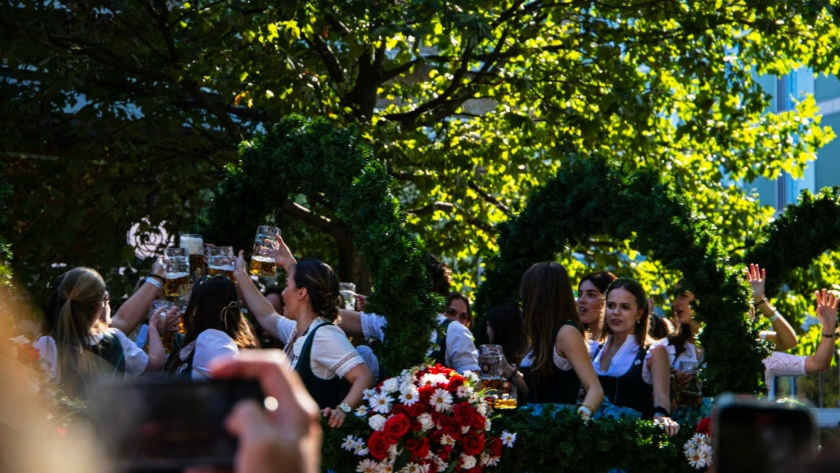
For many, Oktoberfest is synonymous with Munich, and for good reason. The Bavarian capital is the birthplace and spiritual home of the world-renowned folk festival, offering the most authentic and grandest celebration of German culture, beer, and camaraderie. If you’re planning to immerse yourself in the true spirit of Munich Oktoberfest in 2025, this guide will provide you with all the essential details, from dates and location to accommodation and what to expect from this iconic event.
When is Oktoberfest in Munich? Dates and Duration
Oktoberfest Munich 2025 is scheduled to take place from Saturday, September 20th, to Sunday, October 5th, 2025. This 16-day festival is a highlight of the Bavarian calendar. While the name ‘Oktoberfest’ suggests an October event, the festival traditionally begins in late September to take advantage of the generally better weather conditions. It always concludes on the first Sunday in October, or on October 3rd (German Unity Day), whichever is later, ensuring a minimum duration of 16 days.
The festival officially begins with the traditional ‘tapping of the first keg’ ceremony by the Mayor of Munich, a much-anticipated event that signals the start of beer pouring in all the tents. Throughout its duration, visitors can experience various parades, including the grand parade of breweries and landlords, and the traditional costume and riflemen’s parade, showcasing the rich cultural heritage of Bavaria.
Where is Oktoberfest Held in Munich? The Theresienwiese
The heart of Oktoberfest in Munich beats at the Theresienwiese fairgrounds, an expansive open space located just southwest of the city center. Affectionately known as the “Wiesn” by locals, this historic site has been the exclusive home of the festival since its inception in 1810. During Oktoberfest, the Theresienwiese transforms into a vibrant tent city, featuring massive beer tents, thrilling carnival rides, numerous food stalls, and various attractions.
The Theresienwiese is easily accessible from all parts of Munich thanks to the city’s efficient public transportation system. The U-Bahn (subway) stations Theresienwiese (U4, U5) and Goetheplatz (U3, U6) are located directly at the festival grounds, making it incredibly convenient for visitors. Additionally, the Hackerbrücke S-Bahn station is just a 10-minute walk away, providing another excellent option for reaching the festival.
Oktoberfest Munich Tickets and Reservations
One of the most appealing aspects of Oktoberfest in Munich is that entry to the festival grounds and the beer tents is generally free. You don’t need to purchase a ticket to wander around the Theresienwiese, soak in the atmosphere, or even enter the beer tents. However, this doesn’t guarantee you a seat, especially during peak times like evenings and weekends.
For a guaranteed spot inside one of the iconic beer tents, table reservations are highly recommended, particularly for groups. These reservations are made directly with the individual beer tents and often require the pre-purchase of food and drink vouchers. Securing a reservation can be challenging due to high demand, and they typically become available in the spring (around April or May). It’s advisable to plan well in advance and monitor the official Oktoberfest website and the websites of the individual tents for reservation details.
While there are no official “tickets” for general entry, some tour operators offer Oktoberfest packages that include accommodation, reserved tent seats, and other perks. These can be a convenient option, but they come at a premium. For those who don’t secure a reservation, it’s still possible to find a seat in the tents, especially on weekdays or during the day. Many tents have unreserved sections, but you’ll need to arrive early to claim a spot.
Where to Stay in Munich for Oktoberfest
Finding the right accommodation is crucial for a successful Oktoberfest experience in Munich. Given the millions of visitors who flock to the city, it’s essential to book your hotel or lodging well in advance, ideally several months before the festival. Prices can increase significantly during Oktoberfest, so early booking can also help you secure better rates.
When choosing where to stay, consider your priorities. If you want to be in the heart of the action, look for hotels near Oktoberfest Munich. There are numerous hotels within walking distance of the Theresienwiese, particularly in the Ludwigsvorstadt-Isarvorstadt and Schwanthalerhöhe districts. These offer the convenience of being able to walk to and from the festival, but they also tend to be more expensive.
Alternatively, staying in Munich’s city center (Altstadt) provides a charming atmosphere and easy access to other attractions, while still being well-connected to the festival grounds via public transport. For those on a tighter budget, consider looking for accommodation a bit further out but near a U-Bahn or S-Bahn station. This can offer more affordable options and a quieter retreat from the festival crowds.
Munich offers a wide range of accommodation types, from luxurious hotels and boutique guesthouses to budget-friendly hostels and private apartment rentals. For a more unique experience, some visitors opt for camping sites on the outskirts of the city, which often provide shuttle services to the festival.
What to Wear to Oktoberfest in Munich
To truly embrace the spirit of Oktoberfest in Munich, dressing in traditional Bavarian attire is highly encouraged. While not strictly enforced, you’ll find that the vast majority of attendees, both locals and tourists, don Dirndl for women and Lederhosen for men. This traditional clothing is not just a costume; it’s a celebration of Bavarian heritage and adds significantly to the festive atmosphere.
- Dirndl: For women, a Dirndl consists of a bodice, a blouse, a full skirt, and an apron. They come in a myriad of colors, patterns, and lengths. A key detail is the placement of the apron bow: tied on the left means single, on the right means taken, in the front center means virgin, and in the back center means widow or waitress.
- Lederhosen: For men, Lederhosen are traditional leather breeches, typically worn with a checkered shirt, Bavarian-style socks, and sturdy, comfortable shoes. They can be short or knee-length.
Beyond the traditional garments, comfortable shoes are an absolute must. You’ll be doing a lot of walking around the Theresienwiese, standing in beer tents, and perhaps even dancing on benches. Prioritize footwear that can withstand long hours and provide good support. Many visitors also accessorize with traditional hats, flower crowns, and small, practical bags. While you don’t have to dress up, you’ll find that participating in the attire enhances your overall experience and makes you feel more connected to the festival.
The Oktoberfest Experience: Beer, Food, and Festivities
The Oktoberfest experience in Munich is a sensory overload in the best possible way. At its core, it’s a celebration of Bavarian beer, brewed specifically for the festival by Munich’s six major breweries: Augustiner, Hacker-Pschorr, Hofbräu, Löwenbräu, Paulaner, and Spaten. These beers are typically a Märzen or Festbier style, known for their malty flavor and golden hue, and are served in iconic one-liter steins (Maß).
The sheer scale of beer consumption at Oktoberfest is staggering. Annually, millions of liters of beer are consumed during the festival, a testament to its popularity and the celebratory atmosphere. While exact figures vary year to year, it’s common for over 7 million liters to be drunk, highlighting the festival’s immense appeal.
Beyond the beer, a feast of traditional Bavarian cuisine awaits. You can indulge in classic dishes such as:
- Hendl: Half a roasted chicken, a staple of Oktoberfest, perfectly crispy on the outside and juicy within.
- Schweinshaxe: A massive, tender roasted ham hock with a crispy crackling, often served with potato dumplings.
- Brezn: Giant, soft pretzels, perfect for soaking up the beer.
- Weisswurst: Traditional white sausages, typically eaten before noon with sweet mustard and a pretzel.
- Käsespätzle: A comforting dish of cheese noodles, often compared to macaroni and cheese.
The atmosphere in the beer tents is legendary. Oompah bands play traditional Bavarian music, encouraging communal singing, swaying, and dancing on benches. The air is filled with laughter, the clinking of steins, and shouts of “Prost!” (Cheers!). Outside the tents, the Theresienwiese offers a vibrant carnival atmosphere with thrilling rides, games, and souvenir stalls. The grand parades, featuring elaborately decorated floats, traditional costumes, and marching bands, are also a highlight, showcasing the rich cultural heritage of Bavaria.
Radical Storage: Your Convenient Luggage Solution in Munich
Navigating the bustling streets of Munich and the crowded Theresienwiese during Oktoberfest can be challenging, especially when you’re burdened with luggage. Whether you’ve just arrived in the city and can’t check into your accommodation yet, have a late flight after check-out, or simply want to explore the festival unencumbered, Radical Storage offers a seamless and secure solution. With a vast network of convenient luggage storage locations in Munich, often situated in local businesses like shops, cafes, and hotels, you can easily find a safe spot to store your bags for a few hours or even several days.
This service is particularly invaluable given the strict bag policy at Oktoberfest, which limits the size of bags allowed onto the festival grounds. By utilizing Radical Storage, you can drop off your larger belongings at a nearby Angel (that’s how we call out partners) and enjoy the festivities with peace of mind, knowing your possessions are safe and sound. Many Angels are strategically located near major transport hubs like the main train station (Hauptbahnhof) or within easy reach of the Theresienwiese, making drop-off and pick-up incredibly convenient.
Ready to experience Oktoberfest Munich without the weight of your bags?
Oktoberfest Munich FAQs
Oktoberfest Munich 2025 is scheduled from Saturday, September 20th, to Sunday, October 5th, 2025.
Accommodation options include hotels, hostels, and apartments throughout Munich. It’s advisable to book well in advance, especially for places near the Theresienwiese or with good public transport links.
Traditional Bavarian attire, such as a Dirndl for women and Lederhosen for men, is highly recommended. Comfortable shoes are essential.
Oktoberfest in Munich typically lasts for 16 days, concluding on the first Sunday in October or on German Unity Day (October 3rd), whichever is later.
Oktoberfest takes place at the Theresienwiese fairgrounds, affectionately known as the “Wiesn,” in Munich, Germany.
Millions of liters of beer are consumed annually at Oktoberfest in Munich, often exceeding 7 million liters during the festival period.
The Theresienwiese fairgrounds are located just southwest of Munich city center and are easily accessible by public transportation.
Oktoberfest in Munich typically attracts around 6 to 7 million visitors annually, making it the world’s largest folk festival.
