

Travel light in New Orleans!
Find affordable luggage storage near you
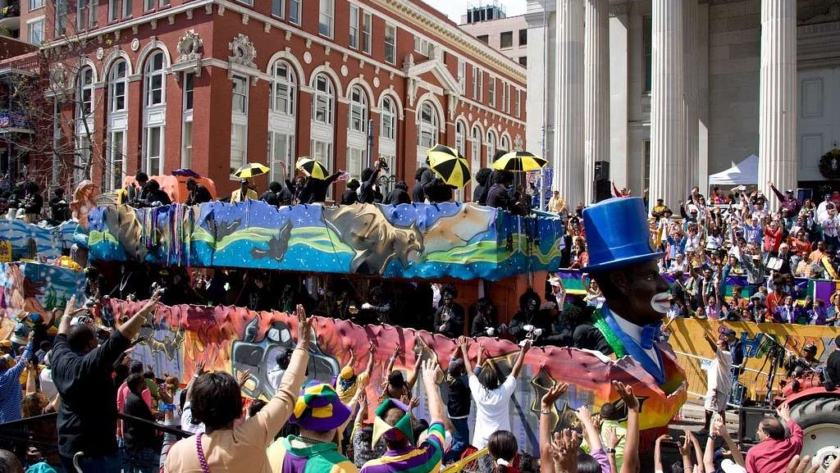
What is Mardi Gras? It is a legendary celebration that transforms New Orleans into the world’s ultimate street party, combining French Catholic tradition with American spectacle. Mardi Gras 2026 New Orleans promises spectacular krewe parades, millions of beads thrown from elaborate floats, king cake consumption reaching epic proportions, and an atmosphere you won’t find anywhere else on Earth. This guide covers everything from parade routes to insider strategies for maximizing your Fat Tuesday experience.
When is Mardi Gras 2026?
When is Mardi Gras in New Orleans 2026? Fat Tuesday falls on February 17, 2026. However, Carnival season officially starts January 6 (Twelfth Night) and runs through February 17. Mardi Gras 2026 date New Orleans marks the culmination of six weeks of escalating festivities, with the biggest parades concentrated in the final ten days.
The Carnival calendar builds momentum gradually. Early January sees intimate neighborhood parades and streetcar processions. Mid-February explodes with super-krewe spectacles featuring celebrity guests and technology-enhanced floats. Fat Tuesday itself brings the grand finale, Rex and Zulu parades dominating morning hours, followed by spontaneous street celebrations continuing until midnight when police ceremonially clear Bourbon Street.
Mardi Gras Colors: Purple, Green, and Gold
Mardi Gras colors were established by the Krewe of Rex in 1872. Purple represents justice, green signifies faith, and gold symbolizes power. These colors appear everywhere during Carnival, on beads, flags, building decorations, costumes, king cakes, and even colored illumination on historic buildings.
Understanding the color symbolism enhances appreciation for throw items. Golden doubloons commemorate specific parade years and themes. Purple beads often come in longer strands reserved for enthusiastic crowd members. Green specialty throws sometimes feature krewe logos or unique designs. Serious collectors organize their hauls by color significance and krewe origin.
Mardi Gras 2026 New Orleans Schedule: Key Dates
The Mardi Gras 2026 New Orleans schedule encompasses six weeks of celebrations. Here are the major milestones:
- January 6 – Twelfth Night, Carnival season begins with Krewe de Jeanne d’Arc and Phunny Phorty Phellows
- February 6-8 – Major parades begin weekend (Krewe of Oshun, Shangri-La)
- February 13-15 – Super-krewe weekend (Endymion, Bacchus, Muses)
- February 16 – Lundi Gras (Proteus and Orpheus parades)
- February 17 – Mardi Gras Day (Zulu 8:00 AM, Rex 10:30 AM)
Mardi Gras 2026 New Orleans Parade Schedule
The Mardi Gras 2026 New Orleans parade schedule features over 70 parades throughout Carnival season. The Mardi Gras parade schedule below highlights must-see processions:
Weekend 1: February 6-8
The Krewe of Barkus (February 8, 2:00 PM) – It’s a dog parade featuring costumed canines. Krewe of Oshun (February 8, 6:30 PM) – All-female African-inspired krewe. Krewe of Shangri-La (February 8, 7:00 PM) – Uptown parade with eclectic themes.
Super Krewe Weekend: February 13-15
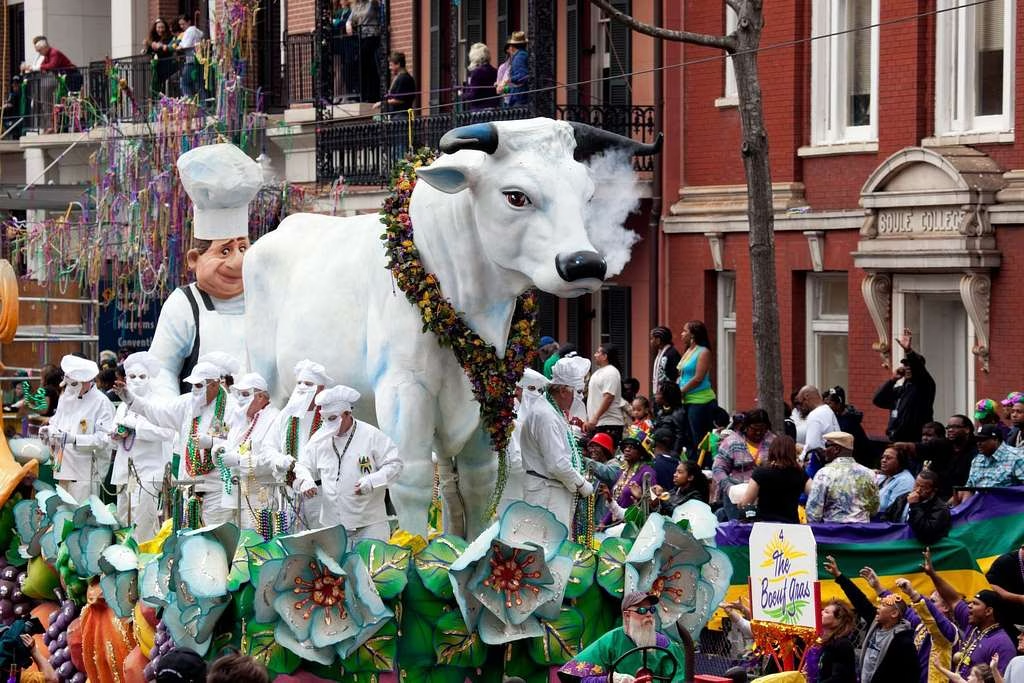
The Krewe of Muses (February 13, 6:30 PM) – Famous for throwing decorated high-heel shoes. Krewe of Endymion (February 14, 4:15 PM) – The longest parade with a 365-foot Pontchartrain Beach superfloat. Krewe of Bacchus (February 15, 5:15 PM) – Celebrity monarchs and massive animated floats.
Mardi Gras Day: February 17
Krewe of Zulu (8:00 AM) – Throws decorated coconuts (highly coveted). Krewe of Rex (10:30 AM) – The King of Carnival, the oldest continuous parading organization. Truck parades follow Rex until late afternoon.
New Orleans Mardi Gras Parade Routes and Best Spots
The New Orleans Mardi Gras parade routes primarily follow St. Charles Avenue through the Garden District to Canal Street downtown. Understanding parade geography helps identify the best spots for Mardi Gras in New Orleans.
Best Places to Enjoy Mardi Gras in New Orleans
- Napoleon Avenue & St. Charles – Local favorite with accessible parking, restrooms at nearby bars, less crowded than downtown
- Lee Circle – Parade turning point where floats slow down, excellent for catching throws
- Canal Street near Harrah’s – Grandstand seating available, premium throw volume as parades conclude
- Uptown near Audubon Park – Family-friendly atmosphere, parade starts here so floats carry maximum throws
- French Quarter balconies – Private viewing experiences (rentals required), observe street celebrations below
| Location Type | Advantages | Considerations |
|---|---|---|
| Neutral Ground | Close to floats, maximum throws | Very crowded, competitive |
| Sidewalk Front Row | Good throws, barrier protection | Arrive 2-3 hours early |
| Parade Corners | Floats slow down, extended throwing time | Limited space, popular spots |
| Ladder Seats | Kids get eye-level with riders, safe viewing | Bring own ladder, claim early |
Stalled Mardi Gras Float New Orleans Tradition
A stalled Mardi Gras float New Orleans creates an unexpected bounty for lucky spectators. When mechanical issues halt a float, riders continue throwing until the float resumes movement or their supplies deplete. This can mean 10-15 minutes of concentrated throws to the immediate crowd.
Experienced parade-goers recognize stall opportunities and position accordingly. Listen for tractor engine sounds changing pitch or notice when float movement becomes jerky, signs of impending mechanical difficulty. If you’re fortunate enough to be near a stalled float, stay calm, make eye contact with riders, and prepare for exceptional throw volume.
Why is Mardi Gras Celebrated in New Orleans?
Why is Mardi Gras celebrated in New Orleans? French Catholic settlers brought Carnival traditions to Louisiana in the early 1700s. The celebration marked the final feast before Lenten fasting, with “Mardi Gras” translating to “Fat Tuesday” in French. New Orleans formalized the tradition in 1857 when the Mistick Krewe of Comus organized the first official torch-lit parade.
The celebration evolved uniquely in New Orleans through the krewe system, private social clubs that organize parades and balls. This structure allowed Carnival to survive changing social dynamics, economic challenges, wars, and natural disasters. Today’s Mardi Gras represents American entrepreneurship applied to European tradition, creating a distinctly New Orleans cultural phenomenon.
Mardi Gras Food: Essential Carnival Cuisine
Mardi Gras food traditions center around rich, indulgent dishes consumed before Lenten sacrifice. King cake dominates Carnival season, a circular pastry decorated with purple, green, and gold sugar, filled with cream cheese, praline, or fruit fillings. Tradition dictates that whoever finds the hidden plastic baby must host the next king cake party or buy the next cake.
Other Mardi Gras specialties:
- Jambalaya – Rice dish with sausage, chicken, and Creole spices, served at outdoor parties
- Red beans and rice – Monday tradition extending through Lundi Gras
- Beignets – Fried dough covered in powdered sugar, Café Du Monde stays open 24/7 during Carnival
- Po-boys – Overstuffed sandwiches perfect for parade-watching fuel
- Hurricanes – Rum-based cocktail synonymous with French Quarter revelry
New Orleans Mardi Gras Street Takeover Culture
The New Orleans Mardi Gras street takeover phenomenon occurs when spontaneous celebrations occupy entire blocks. Unlike organized parades, these grassroots gatherings feature brass bands, second lines, and dancing crowds that flow organically through neighborhoods. Frenchmen Street, Marigny, and Bywater experience particularly intense takeovers as local musicians and dancers create impromptu performances.
Street takeovers represent Mardi Gras at its most authentic. No corporate sponsorship, predetermined routes, or ticketed access, just New Orleanians celebrating their city’s culture. Visitors witnessing these moments experience the raw creative energy that makes Carnival meaningful beyond tourist spectacle.
Planning Your Mardi Gras in New Orleans 2026 Visit
Accommodation
Book hotels 6-12 months ahead for Mardi Gras in New Orleans 2026. French Quarter hotels command premium prices but offer walking access to parades and festivities. Garden District locations provide quieter accommodations near major parade routes. Consider Airbnb rentals in Marigny or Bywater for authentic neighborhood experiences at moderate prices.
Transportation
Driving during Mardi Gras creates frustration. Street closures affect entire neighborhoods for hours before and after parades. Use the St. Charles streetcar (operates 24/7 during Carnival), walking, or rideshares. Many locals rent bicycles to navigate closed streets efficiently.
Safety and Etiquette
Respect parade barriers, crossing into the street during parades risks serious injury from floats. Bring small bills for street vendors and restroom access at bars. Stay hydrated between alcoholic drinks. Never grab beads from the ground during active parades (dangerous) or from children’s hands (terrible form).
Secure Your Bags During Carnival
Radical Storage offers convenient luggage storage locations across New Orleans, including the French Quarter, the Warehouse District, and areas near Louis Armstrong International Airport. The service operates at a flat €5 daily rate per bag, with no size limits or hidden fees, and includes €3,000 in security coverage for each item. Bags can be booked instantly through the mobile app or website.
During Mardi Gras, large crowds make carrying luggage uncomfortable and impractical. Storing your bags in advance allows you to move freely, avoid restrictions, and enjoy the Carnival atmosphere completely hands-free.
Frequently Asked Questions
Uptown parades are very family-oriented. Avoid the French Quarter after dark if you’re with children.
No, street viewing is free. Grandstand seats and balcony rentals are optional paid upgrades.
Comfortable shoes are essential. Costumes are encouraged but not required. February weather ranges from 50-70°F.
Yes, but they’re hand-painted and highly coveted. Position yourself early along Zulu’s route.
Extremely, shoulder-to-shoulder crowds on Fat Tuesday. Visit earlier in Carnival for manageable density.
Final Thoughts
New Orleans Mardi Gras 2026 offers an irreplaceable cultural immersion into America’s most distinctive celebration. From the engineering marvels of superfloats to spontaneous brass band second lines, from competitive bead-catching to contemplative king cake traditions, Carnival encompasses infinite experiences within its six-week season.
Success requires understanding Krewe culture, respecting local traditions, securing accommodation early, and embracing both organized spectacle and spontaneous celebration. Whether attending a single parade or the full Carnival season, Mardi Gras creates memories that justify the journey to New Orleans every February.