

Travel smart in Vancouver
Find affordable luggage storage near you
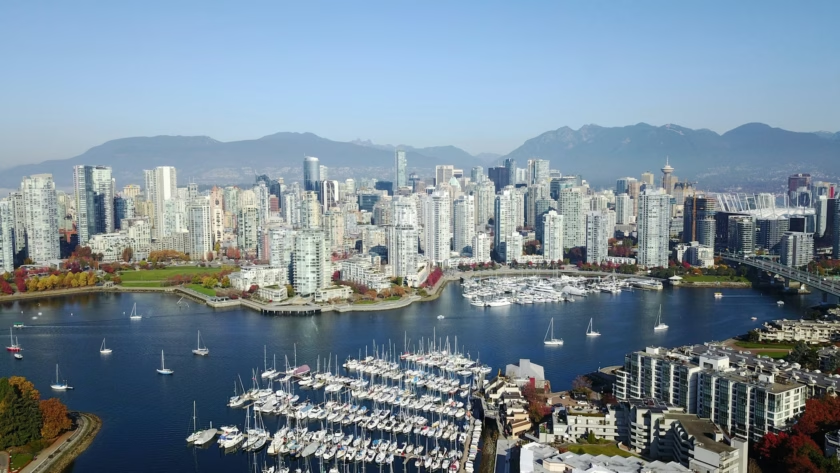
Is Vancouver expensive? Yes, Vancouver ranks as the 3rd most expensive city in North America, with average monthly living costs of $3,793.63 per person. This comprehensive guide breaks down Vancouver’s costs across all major categories, providing current 2025 data to help residents and visitors understand what makes this stunning coastal city so expensive and how to navigate its high prices.
Is Vancouver Expensive to Visit? Tourism Cost Analysis
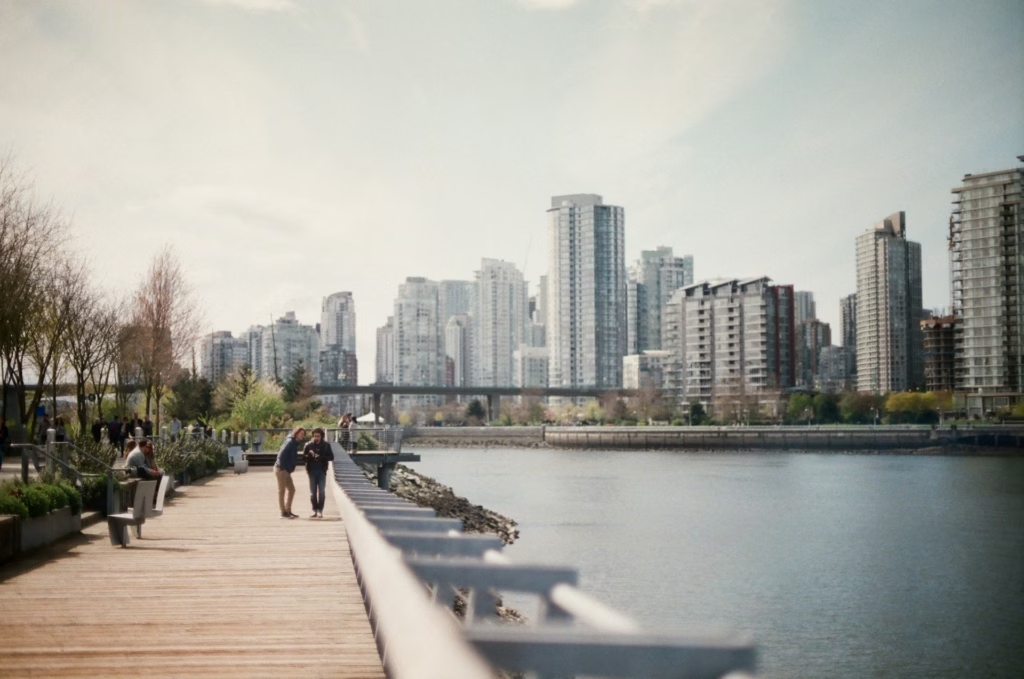
While Vancouver’s high cost of living affects residents year-round, visitors experience the city’s expenses differently.
Accommodation Options for Every Budget
Accommodation typically represents the largest expense for visitors to Vancouver:
| Accommodation Type | Low Season (Nov-Mar) | High Season (Jun-Aug) |
|---|---|---|
| Budget hotel/hostel | $80-120 | $150-220 |
| Mid-range hotel | $150-220 | $250-400 |
| Luxury hotel | $300-450 | $500-800+ |
| Airbnb (entire place) | $120-200 | $250-450 |
Location significantly impacts accommodation prices, with downtown and Coal Harbour commanding premium rates, especially for harbor views. Vancouver’s hotel tax adds 16% in additional taxes on accommodations.
If you’re exploring Vancouver and need to store your luggage while sightseeing, there are convenient luggage storage options in Vancouver available throughout the city center.
Dining, Entertainment, and Attraction Costs
Food and entertainment costs for visitors vary widely based on choices:
| Category | Cost per Person | Notes |
|---|---|---|
| Budget meals | $10-18 per meal | Fast food, food courts |
| Moderate dining | $20-35 per meal | Casual restaurants |
| High-end dining | $50-100+ per meal | Fine dining |
| Major attractions | $25-70 per person | Capilano Bridge, Aquarium, etc. |
| Cinema | $16-17 | Standard ticket |
Vancouver offers numerous free or low-cost attractions, particularly outdoor experiences:
- Stanley Park and the Seawall
- Public beaches (English Bay, Kitsilano, Spanish Banks)
- Lynn Canyon Park (free suspension bridge alternative)
- Hiking trails throughout the region
Transportation Expenses for Visitors
Getting around Vancouver as a visitor presents several options:
| Transportation Method | Single Use | Day Cost | Week Cost |
|---|---|---|---|
| Public transit day pass | $11 | $11 | $63 (7-day pass) |
| Taxi (average trip) | $15-25 | Varies | Varies |
| Uber/Lyft (average trip) | $12-22 | Varies | Varies |
| Car rental | – | $60-120 | $350-700 |
For most visitors, public transit provides the best value, especially with day passes. Car rentals are generally unnecessary and can be a liability due to expensive parking unless planning extensive trips outside the city.
According to BudgetYourTrip, the average daily cost for tourists in Vancouver is $156 USD ($225 CAD), with a one-week trip for two people costing approximately $2,190 USD ($3,150 CAD).
Vancouver Cost Comparison: How Expensive is Vancouver Globally?
To fully understand Vancouver’s expense level, it’s helpful to compare it with other major cities across Canada and globally.
Vancouver vs. Other Canadian Cities Cost Analysis
Vancouver consistently ranks among Canada’s most expensive cities:
| Cost Category | Vancouver | Toronto | Montreal | Calgary |
|---|---|---|---|---|
| 1-bedroom rent (city center) | $2,758 | $2,150 | $1,650 | $1,550 |
| Monthly transit pass | $107.30 | $156.00 | $94.00 | $112.00 |
| Restaurant meal (mid-range) | $25-35 | $25-35 | $20-30 | $22-32 |
| Average home price | $1.2M | $1.12M | $580K | $520K |
Key differences:
- Housing: Vancouver leads in both rental and purchase prices
- Childcare: Quebec’s subsidized system makes Montreal dramatically more affordable
- Transit: Toronto has higher transit costs despite similar system quality
- Climate factor: Vancouver’s mild climate reduces heating costs compared to other Canadian cities
Vancouver vs. International Cities Expense Comparison
On the global stage, Vancouver’s position shifts considerably:
| Cost Category | Vancouver | Seattle | San Francisco | London | Sydney |
|---|---|---|---|---|---|
| 1-bedroom rent (city center) | $2,758 CAD | $2,800 USD | $3,500 USD | £1,800 | $2,800 AUD |
| Monthly transit pass | $107 CAD | $117 USD | $98 USD | £150 | $220 AUD |
| Restaurant meal (mid-range) | $30 CAD | $35 USD | $40 USD | £25 | $35 AUD |
| Mercer Cost of Living Rank (2025) | 94 | 45 | 16 | 15 | 32 |
When accounting for exchange rates and higher US salaries, Vancouver becomes more expensive in terms of affordability (cost-to-income ratio) than many comparable cities. However, the healthcare factor significantly impacts overall cost comparisons, as Vancouver residents don’t face the high insurance premiums and out-of-pocket costs common in US cities.
Why Vancouver’s Cost of Living Ranks Among North America’s Highest
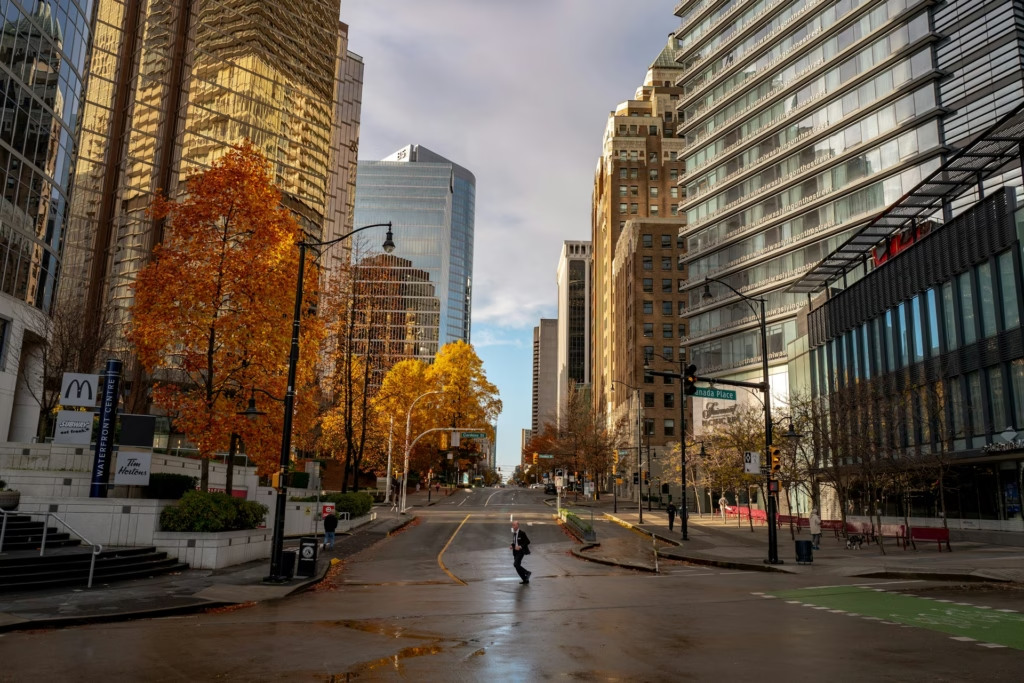
Vancouver’s reputation as one of North America’s most expensive cities stems from several interconnected factors that have driven costs upward over decades. Understanding these elements helps explain why living in or visiting this picturesque coastal city comes with a premium price tag.
Geographic Constraints Driving Housing Market Prices
Vancouver’s physical geography creates natural constraints on development that significantly impact housing costs:
- Mountain Boundaries: The North Shore mountains limit northward expansion
- Ocean Borders: Pacific Ocean to the west restricts development
- Agricultural Land Reserve: Protected farmland to the south and east limits sprawl
- International Border: US border to the south prevents southward expansion
These geographic constraints create a relatively small land area for development, driving up land values and contributing to the “luxury city” phenomenon where limited supply meets high demand.
Foreign Investment and Real Estate Market Dynamics
Foreign investment has played a significant role in Vancouver’s housing market:
- Capital Influx: Vancouver has been a preferred destination for international investors seeking stable real estate markets
- Luxury Market Effect: Foreign capital has disproportionately affected high-end properties, creating a “trickle-down” effect on mid-range housing
- Policy Response: The provincial government implemented a foreign buyers tax (20% as of 2025) and speculation tax to cool international investment
- Market Psychology: Despite these measures, the fundamental attractiveness of Vancouver real estate has maintained high demand
According to recent studies, foreign investment directly accounts for approximately 5-7% of transactions but influences market psychology and pricing expectations more broadly.
Population Growth and Housing Demand Imbalance
Vancouver’s population continues to grow steadily, adding pressure to housing and services:
| Population Factor | Statistics | Impact on Costs |
|---|---|---|
| Annual Growth Rate | 1.2-1.5% | Continuous upward pressure on housing demand |
| Immigration | 35,000+ new residents annually | Increased competition for housing and services |
| International Students | 50,000+ in Metro Vancouver | Significant impact on rental markets |
The combination of natural population growth, international immigration, and domestic migration creates persistent demand that outpaces housing supply, maintaining Vancouver’s position as one of North America’s most expensive cities.
Vancouver Housing Expenses: Rental and Purchase Price Analysis
Housing costs represent the largest expense for both residents and visitors in Vancouver. The city’s real estate market has gained international attention for its high prices, making housing affordability a central issue.
Rental Market Costs Across Vancouver Neighborhoods
Vancouver consistently ranks as Canada’s most expensive rental market, with prices that rival major global cities:
| Housing Type | Downtown Core (Monthly) | Greater Vancouver (Monthly) |
|---|---|---|
| Studio apartment | $2,100-2,400 | $1,800-2,100 |
| 1-bedroom apartment | $2,758 | $2,311 |
| 2-bedroom apartment | $3,200-3,800 | $2,600-3,200 |
| 3-bedroom apartment | $4,773 | $3,819 |
According to Numbeo’s March 2025 data, Vancouver remains the most expensive city to rent in Canada, with average one-bedroom apartment rents approximately 15-20% higher than Toronto, the second most expensive market.
Home Purchase Costs and Mortgage Considerations
For those looking to buy property, Vancouver’s real estate market presents significant financial barriers:
| Property Type | Average Price | Price per Square Foot |
|---|---|---|
| Apartment/Condo | $700,000-950,000 | $894-1,280 |
| Townhouse | $1.0-1.3 million | – |
| Detached house | $1.9-2.3 million | – |
The benchmark price for all residential properties in Metro Vancouver reached $1.2 million in early 2025, representing a 4.8% increase from the previous year despite higher interest rates. With mortgage rates averaging 5.84% for a 20-year fixed-rate mortgage, monthly payments on even modest properties can exceed $4,000.
Budget Housing Alternatives in Greater Vancouver
Despite the overall high costs, some more affordable options exist for those willing to compromise on location, size, or amenities:
- Suburban Communities: Areas like Surrey, Burnaby, and New Westminster offer relatively lower costs (15-25% savings)
- Shared Accommodations: Room rentals in shared houses remain the most affordable option ($1,000-1,400 downtown, $800-1,200 in suburbs)
- Co-operative Housing: Limited availability but offers below-market rates
- Purpose-Built Rentals: Newer developments with rental-only units, sometimes with income restrictions
The City of Vancouver has implemented various affordable housing initiatives, though demand far exceeds supply for these programs.
Daily Living Expenses in Vancouver: Beyond Housing Costs
While housing dominates discussions about Vancouver’s expenses, other cost of living factors also contribute significantly to the city’s overall affordability picture.
Grocery and Food Expenditure Breakdown
Food expenses in Vancouver vary widely depending on dining habits and shopping choices:
| Food Category | Average Cost | Comparison to Canadian Average |
|---|---|---|
| Monthly grocery bill (single person) | $912.80 | 12-15% higher |
| Restaurant meal (mid-range) | $25-35 per person | 15-20% higher |
| Fast food meal | $15 | 10-15% higher |
| Coffee shop latte | $5.69 | 15-20% higher |
Vancouver’s food costs are influenced by several factors:
- Transportation costs for imported food
- High commercial rents affecting restaurant prices
- Strong demand for local and organic options
- Tourism influence on the dining market
Budget-conscious residents can reduce food costs by shopping at more affordable grocery chains like No Frills or FreshCo, visiting farmers’ markets for seasonal produce, and taking advantage of ethnic grocery stores in neighborhoods like Sunset and Hastings-Sunrise.
Utility Bills and Basic Services Pricing
Basic utilities and services in Vancouver add another layer to monthly expenses:
| Utility/Service | Monthly Cost | Notes |
|---|---|---|
| Electricity, heating, cooling, water, garbage | $149.69 | Lower than many Canadian cities due to hydroelectric power |
| Internet (high-speed) | $78.23-80.21 | Limited provider competition keeps prices high |
| Mobile phone plan | $54.34 | Among the highest rates globally |
A single person typically spends $350-500 monthly on utilities and basic services, while families might spend $500-700. These costs have increased approximately 5-8% annually in recent years, outpacing inflation.
Transportation Costs: Public Transit vs. Car Ownership
Transportation expenses form a significant part of the cost of living in Vancouver:
| Transit Option | Single Fare | Monthly Pass |
|---|---|---|
| 1-Zone (city only) | $3.20-3.25 | $107.30-117.00 |
| 2-Zone (most of Metro Vancouver) | $4.65 | $142.50 |
| 3-Zone (entire region) | $6.35 | $189.45 |
For car owners, expenses are considerably higher:
| Car Expense Category | Annual Cost | Monthly Equivalent |
|---|---|---|
| Insurance (basic ICBC) | $1,800-3,000 | $150-250 |
| Fuel | $1,800-3,200 | $150-267 |
| Parking (monthly downtown) | $200-350 | $200-350 |
| Maintenance | $800-2,000 | $67-167 |
Vancouver’s car ownership costs are among the highest in Canada due to expensive insurance rates, high parking costs, and some of Canada’s highest gas prices ($7.14 per gallon in 2025).
Money-Saving Strategies for Vancouver Residents and Visitors
Despite Vancouver’s high costs, there are numerous strategies to make the city more affordable for both residents and visitors.
Local Tips to Reduce Living Costs in Vancouver
Long-term residents can implement several strategies to reduce their cost of living:
| Expense Category | Money-Saving Strategy | Potential Monthly Savings |
|---|---|---|
| Housing | Consider co-living arrangements or house-sharing | $500-1,000 |
| Housing | Look at suburbs with good transit connections | $300-700 |
| Transportation | Use public transit instead of car ownership | $400-800 |
| Food | Shop at discount grocers (No Frills, Superstore) | $100-200 |
| Food | Visit farmers’ markets near closing for discounts | $50-100 |
| Entertainment | Use Vancouver Public Library for books, movies, events | $50-100 |
Additional resident strategies:
- Timing matters: Rent increases typically occur in September; looking for housing in winter months can yield better rates
- Community gardens: Join waitlists for plot access to grow your own produce
- Bulk buying groups: Join or form neighborhood groups for wholesale purchases
Budget-Friendly Vancouver Travel Hacks
Visitors can significantly reduce their Vancouver vacation costs with strategic planning:
| Expense Category | Money-Saving Strategy | Potential Savings |
|---|---|---|
| Accommodation | Visit during shoulder season (Apr-May, Sep-Oct) | 20-40% |
| Accommodation | Consider hostels or Airbnb private rooms | 40-60% |
| Food | Utilize food courts and public markets | 30-50% |
| Attractions | Focus on Vancouver’s numerous free activities | 50-100% |
| Transportation | Get a Compass Card and use day passes | 30-50% |
Vancouver offers many free or low-cost attractions that rival paid options:
- Stanley Park and the Seawall
- Lynn Canyon Park (free suspension bridge alternative)
- Granville Island Public Market (browsing is free)
- Public art installations throughout downtown
- Free summer events and festivals
Winter offers particularly good value for visitors willing to embrace the rainy season, with hotel rates often 30-50% lower than summer peaks. Many restaurants offer winter prix fixe menus and promotions during this slower season.
Conclusion
Is Vancouver expensive? The evidence clearly shows that Vancouver ranks among North America’s most expensive cities, particularly for housing costs. With average monthly living expenses of $3,793.63 per person and one-bedroom apartments averaging $2,758 in central areas, Vancouver’s costs exceed most Canadian and many global cities.
The city’s expense level stems from a perfect storm of factors: geographic constraints limiting development, strong population growth, foreign investment in real estate, and high demand for a city consistently ranked among the world’s most livable. These forces have created a significant affordability challenge, especially for housing.
For residents, Vancouver requires substantially higher incomes than most Canadian cities to maintain a comfortable lifestyle. For visitors, Vancouver presents a moderately expensive to expensive destination, with costs comparable to major US cities like Boston or Chicago.
However, Vancouver’s expense must be weighed against its consistently high quality-of-life rankings. The combination of natural beauty, mild climate, cultural diversity, safety, and healthcare creates value that many residents and visitors find worth the premium costs. Strategic approaches to major expense categories can also significantly reduce costs without sacrificing quality of life or visitor experiences.
Whether Vancouver is “too expensive” ultimately depends on individual circumstances, priorities, and the value one places on the city’s unique offerings. For many, the spectacular mountain and ocean views, extensive outdoor recreation opportunities, and high quality of life justify the premium costs that come with living in or visiting one of North America’s most beautiful cities.
Data sources: Numbeo, Tourism Vancouver, TransLink, and BudgetYourTrip as of March 2025.
