

Travel smart in Aruba
Find affordable luggage storage near you
Aruba, often called the “One Happy Island,” is a Caribbean paradise renowned for its pristine white-sand beaches, crystal-clear turquoise waters, and consistently sunny weather. It’s a popular destination for honeymooners, families, and anyone seeking a relaxing tropical getaway. However, as with any sought-after destination, a common question arises for prospective travelers: is Aruba expensive? The perception of its cost can vary widely, influenced by factors such as the time of year, your travel style, and the activities you choose. In this comprehensive guide, we will meticulously analyze how expensive is Aruba and provide a clear, detailed overview of the costs involved in both traveling to and living on this enchanting island.
Why is Aruba So Expensive? Unpacking the Economic Realities
The notion that Aruba can be an expensive destination is rooted in several economic and logistical factors unique to island nations:
- Island Economy and Imports: As a small island nation, Aruba has limited natural resources and agricultural capacity. This means it relies heavily on imports for almost everything, from food and consumer goods to building materials and fuel. The cost of shipping, import duties, and local distribution significantly drives up prices for everyday items and services.
- Tourism-Driven Economy: Tourism is the backbone of Aruba’s economy. While this brings prosperity, the high demand from international visitors, particularly from North America, allows businesses to set higher prices for accommodation, dining, and activities. This is a direct answer to why is Aruba so expensive.
- High Standard of Living: Aruba boasts a relatively high standard of living compared to many other Caribbean islands. This translates to higher wages for the local workforce, which in turn contributes to higher operational costs for businesses, ultimately reflected in consumer prices.
- Limited Competition: Due to its small size and established market, there can be less competition among certain businesses (e.g., hotels, tour operators) compared to larger markets. This can allow for less competitive pricing.
- Infrastructure and Utilities: Maintaining modern infrastructure, including desalination plants for fresh water and reliable electricity grids, on an island can be costly. These costs are often passed on to residents and tourists through utility bills and service charges.
These factors collectively explain why is Aruba so expensive and impact both visitors and residents.
Is Aruba Expensive to Visit? A Traveler’s Budget Breakdown
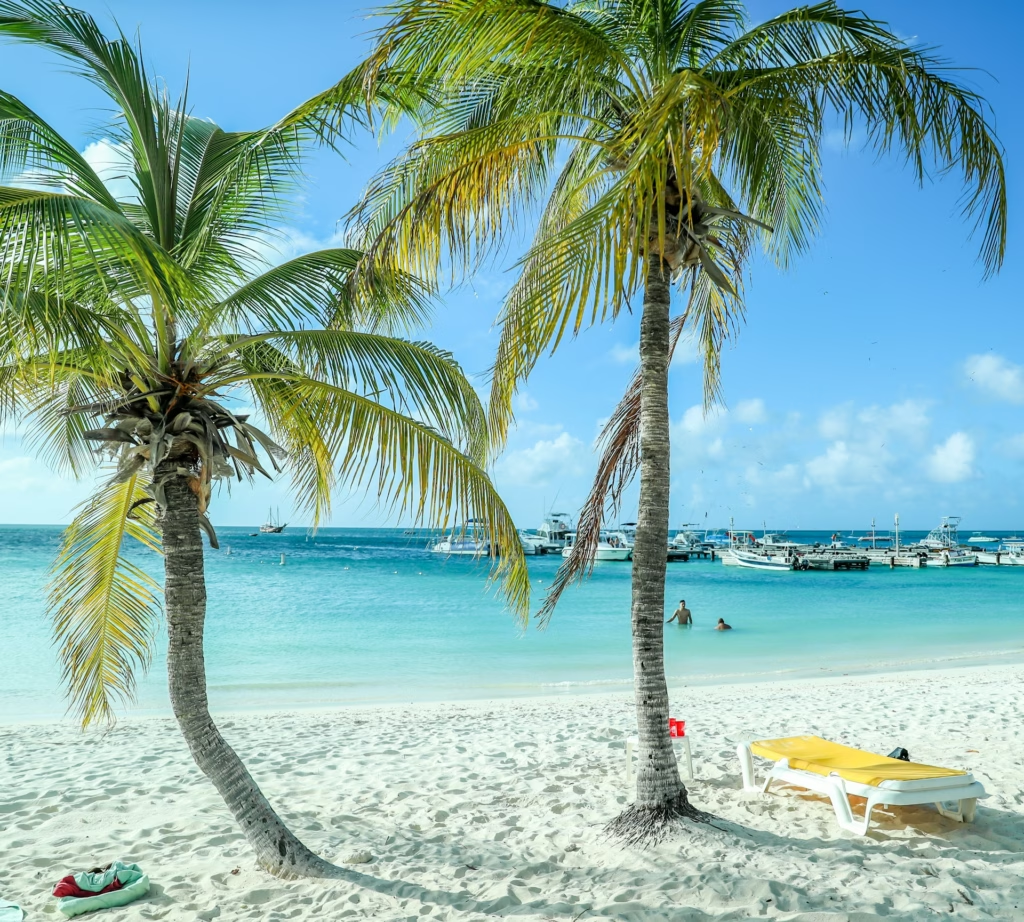
For tourists, the question of “is Aruba expensive to visit?” is crucial for effective trip planning. While it can be, especially if you opt for luxury, there are numerous strategies to manage costs and still enjoy an incredible and memorable vacation. Let’s break down the typical expenses you can expect:
Travel Costs: Is it Expensive to Fly to Aruba? And for a Week?
When evaluating “is it expensive to go to Aruba for a week?” and “is it expensive to fly to Aruba?”, airfare is often the first and most significant expense. Flight prices to Aruba (AUA) vary widely based on your departure city, the time of year, and how far in advance you book. Peak season (mid-December to April) sees the highest prices, while the shoulder seasons (May-June, September-November) often offer better deals. Booking 3-6 months ahead is generally recommended. Direct flights from major North American cities can range from $400-$800 USD roundtrip, but can easily exceed $1000+ during peak times or from less competitive routes.
Accommodation Costs: Where to Stay and What to Pay
Accommodation is a major component of your budget in Aruba. The island offers a wide range of options, from all-inclusive resorts to boutique hotels and vacation rentals. Prices are highest during the peak season and lowest during the off-season (late summer/early fall).
- Budget-Friendly (Hostels/Guesthouses): While not as abundant as in other destinations, some guesthouses or smaller apartments can be found for $70-$120 USD per night.
- Mid-Range Hotels/Vacation Rentals: A standard hotel room or a decent Airbnb/VRBO rental can range from $150-$300 USD per night. This is where most travelers will find themselves.
- All-Inclusive Resorts: These can range from $300-$600+ USD per person per night, covering meals, drinks, and some activities. While seemingly expensive upfront, they can offer good value if you plan to utilize all the amenities.
- Luxury Resorts: High-end resorts on Palm Beach can easily exceed $500-$1000+ USD per night, offering premium services and amenities.
Is Food Expensive in Aruba? Dining and Grocery Costs
A common concern is “is food expensive in Aruba?” The answer is generally yes, especially if you plan to dine out frequently at tourist-oriented restaurants. However, there are ways to manage your food budget:
- Restaurant Dining: A casual meal at a mid-range restaurant can cost $25-$40 USD per person, excluding drinks. Fine dining experiences can easily push this to $70-$100+ per person. Seafood, while fresh, can be particularly pricey.
- Local Eateries (Snacks/Food Trucks): Look for local snack shops or food trucks for more affordable and authentic options. You can find delicious local dishes like pastechi (fried pastry with various fillings) or fresh fish for $5-$15 USD per meal.
- Supermarkets: Buying groceries and preparing some of your meals, especially if your accommodation has kitchen facilities, is the most economical option. Supermarkets like Super Food Plaza or Ling & Sons offer a wide selection, but prices for imported goods (which is most of what’s available) will be higher than in the US or Europe. A week’s worth of groceries for two people could range from $100-$200, depending on your choices.
- Happy Hour Deals: Many bars and restaurants offer happy hour specials on drinks and appetizers, which can help reduce costs.
Activities and Excursions
Aruba offers a plethora of activities, from water sports to exploring natural wonders. Costs vary widely:
- Beach Access: Most beaches are free to access.
- Snorkeling/Diving Tours: Half-day snorkeling tours can cost $40-$70 USD. Diving excursions are more expensive, starting from $80-$100+ per dive.
- Water Sports Rentals: Jet ski rentals, paddleboarding, and kayaking can range from $30-$60 per hour.
- National Park Entrance: Arikok National Park has an entrance fee of around $11 USD per person.
- Other Tours: ATV tours, catamaran cruises, and submarine tours can range from $70-$150+ per person.
Is it Expensive to Live in Aruba? A Resident’s Financial Outlook
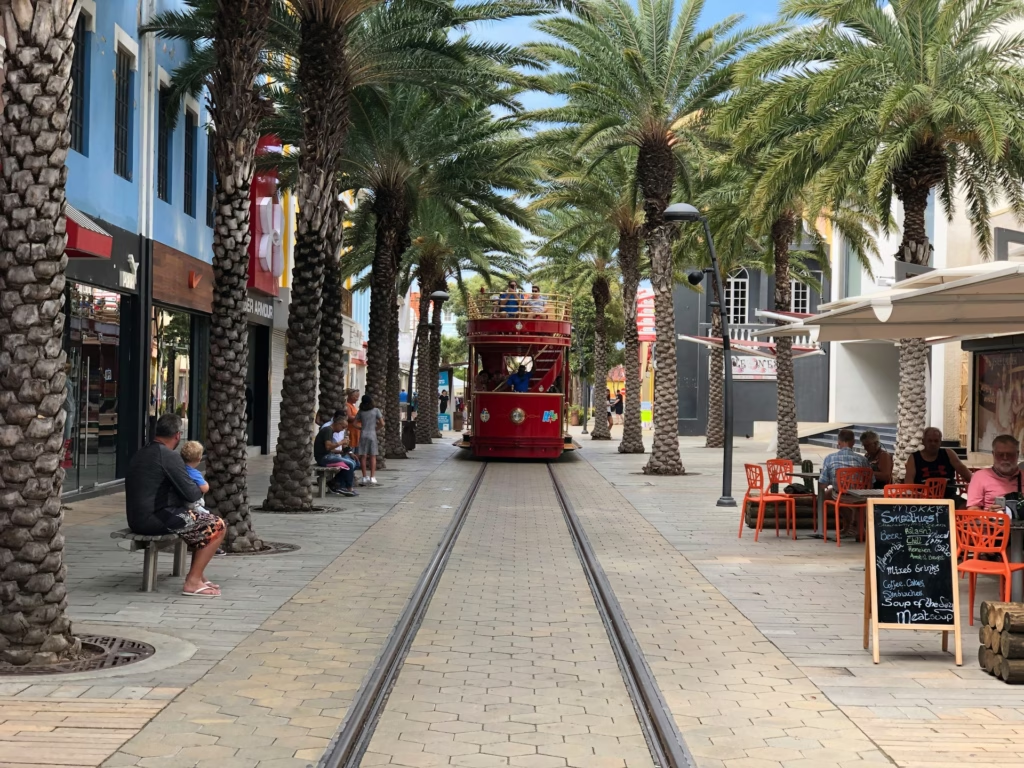
For those contemplating relocation or a long-term stay, the question “is it expensive to live in Aruba?” is crucial. The cost of living in Aruba is generally higher than in many parts of North America or Europe, primarily due to the reliance on imports and the island’s small economy. The main expenses for residents include housing, utilities, food, transportation, and healthcare.
Housing Costs
Rent is typically the largest monthly expense. A one-bedroom apartment can range from $800-$1,500 USD per month, depending on location (e.g., near the coast vs. inland) and amenities. Larger homes or those in desirable neighborhoods can easily exceed $2,000-$3,000+ per month. Purchasing property is also expensive, with prices comparable to or higher than many US coastal areas.
Utilities and Services
Utilities can be surprisingly high due to the cost of electricity (often generated from imported fuel) and desalinated water. Electricity bills can range from $150-$300+ USD per month, especially with air conditioning use. Water is typically $30-$60. Internet services are reliable and cost around $50-$80 per month. Mobile phone plans are affordable, starting from $20-$40.
Food and Groceries for Residents
As mentioned, food prices are elevated due to imports. A monthly grocery bill for a single person cooking at home could be $300-$500, while a couple might spend $600-$1000, depending on dietary habits and reliance on imported items. Eating out frequently will significantly increase this budget.
Transportation for Residents
Public transportation is limited, primarily consisting of buses along main routes. Most residents rely on cars. Owning a car involves high import taxes, making vehicles expensive to purchase. Fuel prices are also high, comparable to or higher than in Europe. Maintenance and insurance costs are additional factors.
Healthcare
Aruba has a good healthcare system, but it can be expensive for non-residents without proper insurance. Residents contribute to a national health insurance scheme. Private health insurance is recommended for expatriates.
Aruba vs. Jamaica: Is Aruba More Expensive Than Jamaica?
When comparing Caribbean destinations, “is Aruba more expensive than Jamaica?” is a common query. Generally, Aruba tends to be more expensive than Jamaica. This is due to several factors:
- Import Reliance: Aruba’s almost complete reliance on imports drives up costs across the board more significantly than in Jamaica, which has a larger agricultural sector and more diverse local production.
- Tourism Model: Aruba caters more to a higher-end tourist market, with a greater concentration of luxury resorts and upscale dining, which influences overall pricing. Jamaica offers a wider range of budget-friendly options.
- Currency: Aruba uses the Aruban Florin (AWG), which is pegged to the US Dollar, providing stability but also reflecting the higher cost structure. Jamaica’s currency (JMD) fluctuations can sometimes make it more affordable for tourists with stronger foreign currencies.
- Flight Costs: Flight costs can vary, but direct flights to Aruba might sometimes be pricier due to less competition on certain routes compared to Jamaica.
While both offer beautiful Caribbean experiences, a budget-conscious traveler might find Jamaica more affordable overall, especially outside of all-inclusive resorts.
What is the Most Expensive Month to Go to Aruba?

Understanding seasonality is key to managing costs. “What is the most expensive month to go to Aruba?” The peak tourist season in Aruba runs from mid-December through April. Within this period, December and January are typically the most expensive months. This is due to:
- Holiday Travel: Christmas, New Year’s, and other winter holidays drive up demand significantly.
- Winter Escapes: Many travelers from colder climates seek warm destinations during these months.
- Spring Break: March and April can also see price surges due to spring break travelers.
Conversely, the cheapest months to visit Aruba are typically during the low season, which includes late summer and early fall (September and October). While there’s a slight risk of tropical storms (though Aruba is outside the main hurricane belt), prices for flights and accommodation are significantly lower.
Average Cost Table (USD) for Travelers: A Detailed Daily Breakdown
Here’s a more detailed estimate of average daily costs for a traveler in Aruba, providing broader ranges to account for varied choices and locations:
| Category | Budget (Frugal Traveler) | Mid-Range Budget | High-End (Luxury) |
|---|---|---|---|
| Accommodation | $70-$120 | $150-$300 | $350-$800+ |
| Food | $30-$50 | $60-$100 | $120-$250+ |
| Activities/Excursions | $20-$50 | $60-$120 | $150-$300+ |
| Local Transport | $10-$20 | $20-$40 | $50-$100+ |
| Daily Total | $130-$240 | $290-$560 | $670-$1450+ |
Note: These are estimated ranges and can vary significantly based on specific locations (e.g., Palm Beach vs. Oranjestad), seasonality, and personal preferences. All-inclusive resorts can alter these daily totals significantly.
Conclusion: Is Aruba Expensive? Value for a Premium Experience
In conclusion, “is Aruba expensive?” The answer is generally yes, it is considered one of the pricier Caribbean destinations. This is largely due to its reliance on imports, its strong tourism-driven economy, and its high standard of living. However, the cost often reflects the premium experience it offers: consistently perfect weather, pristine beaches, a safe and welcoming environment, and high-quality services. While a trip to Aruba might require a larger budget than some other destinations, with careful planning and smart choices, such as opting for self-catering, utilizing local eateries, and traveling during the shoulder season, it is entirely possible to enjoy an unforgettable vacation without overspending.
Aruba truly offers a return on investment for every dollar spent, providing a depth of relaxation and beauty that few other places can match. It is a destination that deserves to be explored, and with the right strategies, it is accessible to a wide range of budgets. For more detailed information on planning your trip to Aruba, including official travel advisories and local insights, you can visit the official website of the Aruba Tourism Authority.
