

Travel light in Salt Lake City!
Find affordable luggage storage near you
Salt Lake City’s premier entertainment venue takes an uncompromising stance on what crosses its threshold. The Delta Center bag policy operates on a simple philosophy: less is more, and actually, almost nothing is best. This isn’t about measuring your tote against dimensional limits; it’s about leaving bags behind entirely unless you fall into very specific exception categories. Jazz fans and concertgoers accustomed to typical arena policies face a learning curve here.
The Reality of Bag Policy Delta Center
The bag policy Delta Center starts with a blanket prohibition: no bags allowed inside. Period. This sweeping rule catches visitors off guard who’ve attended events at venues permitting backpacks, purses, and standard totes. Delta Center abandoned that approach entirely.
Two narrow exceptions exist. Small clutches measuring absolutely no larger than 4″ x 6″ x 2″ gain entry, think something roughly the size of a thick paperback book. That’s width by height by depth, and security staff measure suspicious items physically, not through approximation.
Medical bags and diaper bags create the second exception, permitted up to 14″ x 14″ x 6″ when accompanying legitimate medical needs or children. These bags must enter through Door 5 exclusively and undergo thorough X-ray screening plus visual inspection.
Everything else, backpacks, purses, shoulder bags, totes, camera bags, laptop carriers, stays outside the building or back in your hotel room.
Bag Policy at Delta Center: What This Means Practically
The bag policy at Delta Center forces strategic decisions before leaving accommodations. Your everyday purse likely exceeds 4″ x 6″ x 2″ clutch limits, meaning you’re choosing between leaving it behind or bringing only what fits in pockets.
Women’s clothing typically lacks sufficient pocket space for phones, wallets, keys, and essentials, creating genuine logistical challenges. Men’s jeans accommodate more but still face limitations carrying everything without bags.
The 4″ x 6″ x 2″ clutch dimension equates to roughly 48 cubic inches of storage, comparable to a thick sandwich bag. That’s phone, slim wallet, keys, maybe lip balm. Forget bringing chargers, full cosmetic pouches, or multiple items beyond bare necessities.
Delta Center Bag Policy Breakdown
| Item Type | Dimensions | Allowed? | Entry Point |
|---|---|---|---|
| Standard clutch | 4″ x 6″ x 2″ or smaller | ✓ Yes | All doors |
| Purses/handbags | Any size | ✗ No | None |
| Backpacks | Any size | ✗ No | None |
| Diaper bags | Up to 14″ x 14″ x 6″ | ✓ Yes (with child) | Door 5 only |
| Medical bags | Up to 14″ x 14″ x 6″ | ✓ Yes (with documentation) | Door 5 only |
| Totes/beach bags | Any size | ✗ No | None |
Does Delta Center Have a Clear Bag Policy?
Does Delta Center have a clear bag policy? The question itself misunderstands the venue’s approach. Clear bags offer zero advantage because regular bags aren’t permitted regardless of transparency. Whether your purse uses see-through vinyl or opaque leather becomes irrelevant when both face rejection at security checkpoints.
This differs fundamentally from NFL stadiums mandating specific clear bag dimensions. Delta Center simply removed bags from the equation almost entirely, making material composition meaningless.
Delta Center Concert Bag Policy Variations
The Delta Center concert bag policy occasionally introduces artist-specific requirements beyond standard arena rules. Major tours sometimes impose complete no-bag restrictions where even 4″ x 6″ x 2″ clutches face prohibition, limiting entry to phones, keys, and wallets carried in pockets exclusively.
These concert-specific policies appear on individual event pages when purchasing tickets. A show’s management team, not Delta Center staff, determines enhanced security measures, creating unpredictability for regular venue attendees who assume consistency across events.
High-profile performers like Taylor Swift or Beyoncé typically implement strictest protocols, sometimes adding extended security screening that doubles normal entry times. Plan accordingly and check specific event information before departing for the venue.
Delta Center Clear Bag Policy: A Non-Issue
The Delta Center clear bag policy doesn’t exist as a distinct set of rules because regular bags aren’t allowed. Clear materials provide no benefit, fast-track entry, or special treatment compared to opaque bags; both categories face the same universal prohibition.
Visitors arriving with clear backpacks or transparent totes still get turned away at security, regardless of contents visibility. The policy eliminates bags, not just concerns about concealed items.
Delta Center Utah: Location and Access Details

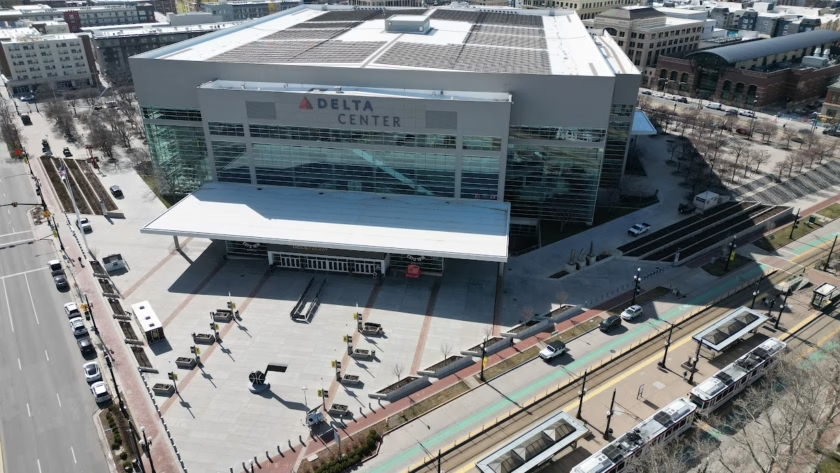
Delta Center Utah sits at 301 West South Temple in downtown Salt Lake City, positioned within easy walking distance of numerous hotels, restaurants, and TRAX light rail stations. The building opened in 1991 as the original Delta Center before cycling through various corporate naming rights (EnergySolutions Arena, Vivint Arena) and returning to Delta Center in 2023.
The venue serves as home to the Utah Jazz (NBA) and Utah Mammoth (NLL), hosting over 100 events annually ranging from basketball and lacrosse to concerts, family shows, and special events. Its 18,306-seat capacity for basketball games and adjustable configurations for concerts make it Utah’s premier indoor entertainment destination.
Getting There:
- TRAX Light Rail: Arena Station on Green/Blue lines
- Salt Lake City International Airport: 5 miles (10-15 minute drive)
- Downtown hotels: 0.2-0.8 miles (walkable)
Six parking lots operate within one mile: Park Place, Salt Palace Parking, Gateway Mall, Triad Center, City Creek Mall, and Hyatt House. Most lots open two hours before events with rates typically ranging $5-20 depending on distance and event demand.
Delta Center Upcoming Events: What’s on the Calendar
Delta Center upcoming events span diverse entertainment categories. The venue’s schedule includes all Utah Jazz home games during the NBA season (October through April), Utah Mammoth NLL games, plus rotating concerts featuring national touring acts across all genres.
Recent and upcoming shows have included artists like Olivia Rodrigo, Sam Smith, Cigarettes After Sex, Kelsea Ballerini, and Fuerza Regida, plus family entertainment like Monster Jam. The arena hosts approximately 45 Jazz home games, 10+ Mammoth games, and 40+ concerts and special events annually.
Check DeltaCenter.com, UtahJazz.com, or UtahMammoth.com for current schedules, as event calendars update regularly with new announcements and tour additions.
Utah Jazz Stadium Specifics: What Fans Need to Know
The Utah Jazz stadium operates as a completely cashless venue. Credit cards, debit cards, and mobile payment apps (Apple Pay, Google Pay) work at all concession stands, merchandise locations, and beverage stations. Cash doesn’t work anywhere inside; plan accordingly.
Doors open 90 minutes before most events for general admission, sometimes extending to two hours for high-demand games or concerts. Arrive early to navigate security screening and secure optimal concession lines before crowds peak.
The venue features 30+ food vendors spanning national chains (Chick-fil-A) and local favorites like Cubby’s (tri-tip sandwiches, the Dragonslayer burger), El Chubasco (burritos and tacos), R&R Barbecue, and Farr Better Ice Cream. Multiple Hop Shop locations serve beer and alcoholic beverages, though alcohol sales cease at the end of the third quarter during Jazz games or 60 minutes before event conclusion for concerts.
What You Can’t Bring Beyond Bags
Beyond bag restrictions, Delta Center prohibits numerous items regardless of how you carry them:
Prohibited Items:
- Outside food and beverages (sealed water bottles sometimes permitted for select events)
- Professional cameras with detachable lenses
- Video recording equipment
- Selfie sticks and GoPro mounting poles
- Weapons and ammunition
- Illegal substances
- Laser pointers
- Air horns and artificial noisemakers
- Signs larger than 11″ x 17″ (handheld only, event-dependent)
Exception: Water and milk for babies in diaper bags up to 14″ x 14″ x 6″ accompanying children.
Medical and Parenting Exceptions
Medical bags carrying prescription medications, EpiPens, insulin supplies, inhalers, and necessary medical devices override size restrictions up to 14″ x 14″ x 6″. These bags must enter through Door 5 only, undergo X-ray screening, and face thorough visual inspection.
Diaper bags accompanying guests with infants or young children receive identical treatment, permitted up to 14″ x 14″ x 6″ through Door 5 with mandatory X-ray and inspection. The child must be present; you can’t claim diaper bag status without an actual infant or toddler.
Both exception categories require patience during entry as Door 5 typically experiences longer wait times processing these special-case bags compared to other entrances handling clutch-only or pocketless guests.
Strategic Planning for Delta Center Events
Successfully navigating a no-bag venue requires advance preparation most arena visitors never consider.
For Women: Clothing with functional pockets becomes essential. Jackets with interior pockets, pants with deeper side pockets, or dresses with hidden compartments help carry essentials without clutches. Some attendees wear small crossbody phone cases around necks, keeping devices accessible while technically meeting “no bag” standards.
For Everyone: Minimize what you bring. Phone, slim wallet or card holder, keys, single lipstick or chapstick, that’s the realistic maximum for clutch storage. Leave backup chargers, full cosmetic pouches, medications beyond immediate needs, and non-essential items secured elsewhere.
Pre-Event Planning: Eat before arriving to minimize reliance on carrying snacks or beverages. Use hotel safes for valuables rather than carrying them. Coordinate with companions to distribute essential items across multiple small clutches if multiple attendees each bring permitted bags.
Where to Store Rejected Bags
Delta Center offers zero onsite storage. No lockers, no coat check, no bag storage facilities exist anywhere in the building. Bags rejected at security leave you with three options:
- Return to your vehicle in nearby parking
- Walk back to your hotel if staying downtown
- Use commercial luggage storage services near the venue
The third option prevents missing significant event portions when discovering bag problems at entry. Planning storage in advance beats sprinting back to hotels blocks away while missing opening acts or tipoffs.
Store Your Bags with Radical Storage
Downtown Salt Lake City exploration before or after Delta Center events becomes frustrating when carrying bags that don’t meet venue requirements. Visiting Temple Square, dining on Main Street, or exploring City Creek Center with backpacks and purses creates inconvenience; restaurants and shops won’t store personal bags.
Radical Storage operates secure locations throughout Salt Lake City, including spots near Delta Center and downtown hotels. Drop bags at verified partner businesses for flat daily rates with comprehensive insurance coverage. Book online instantly, receive immediate confirmation, and collect belongings when ready to depart the city or return to hotels, no membership fees or hidden charges.
Frequently Asked Questions
No, backpacks of any size are prohibited; the 4x6x2 limit applies only to clutches.
Clutches lack shoulder straps and handles, designed to be carried by hand; purses have straps, but honestly, if it exceeds 4x6x2, category doesn’t matter.
Yes, security staff physically measure suspicious items with measuring tools at entrance checkpoints.
Yes, if you’re attending with a child, you can bring both a 4x6x2 clutch and a 14x14x6 diaper bag.
Medical bags up to 14x14x6 are permitted through Door 5 with X-ray screening.
Conclusion
The Delta Center bag policy eliminates almost all bags through a straightforward no-bags-allowed rule with minimal exceptions. Small 4″ x 6″ x 2″ clutches provide your only general-admission option, while medical and diaper bags up to 14″ x 14″ x 6″ create narrow exception categories requiring Door 5 entry and thorough screening.
This policy demands advance planning, coordinating what you’re carrying, utilizing clothing with functional pockets, and considering commercial luggage storage for items that won’t clear security. Check event-specific requirements for concerts that may impose even stricter rules, and arrive early to accommodate longer screening times.