
Madrid’s 650-meter altitude makes the Mutua Madrid Open 2026 unlike any other clay court tournament on the ATP and WTA calendars. The thin air accelerates ball speed 15-20% compared to sea level, creating faster play than Rome or Monte Carlo despite an identical red clay surface. Running April 20-May 3, 2026, at La Caja Mágica, the Madrid Open 2026 brings combined ATP Masters 1000 and WTA 1000 tournaments to Spain’s capital for 14 consecutive days. This 24th edition positions itself as the final major clay preparation before Roland Garros, where aggressive baseliners thrive in conditions favoring power over patience.
Madrid Open 2026 Dates and Tournament Schedule
When is the Madrid Open 2026? The Madrid Open 2026 dates run Sunday, April 20, through Saturday, May 3, 2026, two full weeks of clay court tennis at Caja Mágica. The extended format allows both ATP and WTA draws to operate simultaneously with qualifying rounds, main draws, and finals all compressed into 14 action-packed days.
| Phase | Dates 2026 |
| Qualifying Rounds | April 20-23 (Sunday-Wednesday) |
| Main Draw Opens | April 24 (Thursday) |
| Quarterfinals Week | April 28-30 (Monday-Wednesday) |
| Semifinals | May 1-2 (Thursday ATP/Friday WTA) |
| Finals Weekend | May 2-3 (Friday WTA Final / Saturday ATP Final) |
Daily sessions operate in three blocks: morning matches begin 11:00 AM on outside courts, afternoon sessions start 1:00 PM featuring higher-seeded players, and coveted night sessions begin 6:30 PM under Manolo Santana Stadium lights with the day’s marquee matchups.
Madrid Tennis Open 2026 Tournament Format
The Mutua Madrid tennis open 2026 operates as a combined event with 56-player ATP and WTA singles draws plus 24-pair doubles competitions. Unlike Grand Slams’ best-of-five format, all matches play best-of-three sets with advantage scoring. The ATP Masters 1000 status guarantees top-ranked men, while the WTA 1000 classification ensures an elite women’s field.
Points distribution mirrors other Masters events: 1000 points for singles champions, 600 for runners-up, 360 for semifinalists. This ranking impact makes Madrid critical for seeding positions heading into the French Open two weeks later. Past champions include Novak Djokovic (4 titles), Rafael Nadal (5), Roger Federer (3), Petra Kvitova (3), and Aryna Sabalenka (2 consecutive 2023-24).
Madrid Open 2026 Tickets: Categories and Pricing
Madrid Open 2026 tickets range from €24 qualifying rounds on outside courts to €181 championship finals at Estadio Manolo Santana. Tickets become available through mutuamadridopen.com typically 6-8 weeks before the tournament starts, with early bird discounts for advance purchases.
Ticket Categories
General Admission (Outside Courts): €24-45. Access to Courts 1-5 watching qualifying and early main draw matches. No reserved seating, first-come basis.
Manolo Santana Stadium (Category 3): €65-110. Upper deck reserved seats for centre court. Best value for main draw action.
Manolo Santana Stadium (Category 2): €95-140. Mid-level seating with superior sightlines, closer to court level.
Manolo Santana Stadium (Category 1): €130-181. Courtside and premium lower bowl. Finals weekend commands highest prices.
Platinum Seats: €200-350+. First two rows B-level east side with VIP Platinum Lounge access including catered food, premium beverages, air conditioning. Limited 380 daily capacity across 19 sessions.
Sky Seats: €220-400+. Stadium rooftop suites with panoramic views, exclusive lounge, premium dining. Ultimate luxury experience.
Season Passes
Week passes (qualifying through quarterfinals) and weekend passes (semifinals/finals) offer value for multiple-day attendance. Full tournament passes granting all 14 days access sell quickly, typically within hours of release.
La Caja Mágica: The Magic Box
French architect Dominique Perrault designed La Caja Mágica (The Magic Box) specifically for tennis, opening 2009 when Mutua Madrid moved from hard courts indoors to outdoor clay. The venue’s three retractable-roof stadiums ensure play continues regardless of weather:
Estadio Manolo Santana (Centre Court): 12,500 capacity. Named for Spain’s first Wimbledon champion. Retractable roof closes in 15 minutes.
Stadium 2: 3,500 capacity. Secondary show court featuring top-16 seeds and high-profile doubles.
Stadium 3: 2,500 capacity. Third largest venue hosting competitive matches from early rounds onward.
Courts 4-5: 1,000-1,500 capacity. Intimate settings for watching emerging stars and qualifiers.
The complex sits within Manzanares Park along Madrid’s southeastern periphery. Modern facilities include player lounges, broadcast studios, VIP hospitality areas, merchandise shops, and diverse dining from tapas bars to fine dining.
Madrid Mutua Open 2026: The Altitude Advantage
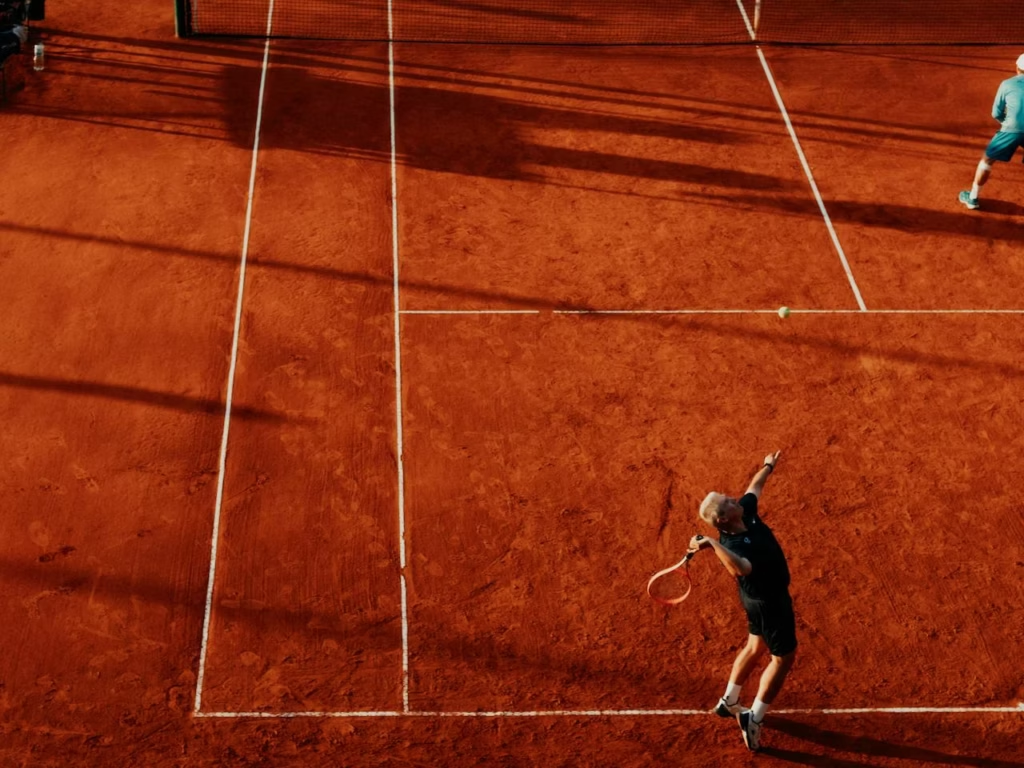
Why does Madrid Mutua Open 2026 play so differently than Rome the following week? Altitude. At 650 meters above sea level, Madrid’s thinner atmosphere reduces air resistance, allowing serves to travel faster and shots to carry deeper with identical swing speed.
This phenomenon favors:
- Big servers whose aces become harder to return
- Aggressive baseliners hitting through opponents rather than grinding
- Players adapting from hard courts more easily than pure clay specialists
Traditional clay court players often struggle in Madrid before excelling in Rome and Paris at lower elevations. Carlos Alcaraz’s 2024 Madrid title demonstrated a youth advantage; younger players adapt faster to the unique conditions demanding quick adjustments.
Getting to Caja Mágica
Metro: Line 3 (yellow) to San Fermín-Orcasur station. Exit and follow 10-minute walk through park to venue. Trains every 5-7 minutes during tournament hours.
Bus: EMT lines 24, 79, 123, and 145 serve Caja Mágica with tournament shuttle buses from city center (Plaza de España, Atocha) during finals weekend.
Car: Limited parking (€15-20/day). Better parking at nearby metro stations with park-and-ride.
Taxi/Uber: 15-20 minutes from city center depending on traffic. €18-25 fare. Designated drop-off zones minimize congestion.
Spectator Experience and Venue Policies
La Caja Mágica enforces standard professional tennis regulations:
- Small bags permitted (40×30×20cm maximum)
- No backpacks or large luggage allowed through security
- Prohibited items: outside food/drinks, umbrellas, noisemakers, professional cameras (20cm+ lenses)
- Permitted: phones, small cameras, empty water bottles (refill stations available)
Early-week sessions (qualifying, first rounds) offer relaxed atmosphere with general admission allowing movement between matches. Finals weekend operates assigned seating only with stricter entry protocols.
Secure Storage Options Near the Venue
Smart travelers skip the luggage dilemma entirely by choosing a convenient storage service like Radical Storage, which operates throughout Madrid’s metro network, placing secure bag storage within walking distance of Line 3 stations.
Drop your suitcase at locations near Gran Vía, Puerta del Sol, or Atocha before catching the direct metro to San Fermín-Orcasur. Enjoy afternoon and evening sessions unencumbered by bags that security would turn away anyway. Retrieve luggage after matches before heading to airports or onward destinations. At €5 per day with €10,000 coverage, it beats dragging bags through metro crowds or missing sessions while checking into hotels.
Beyond Tennis: Madrid Between Matches
Tournament sessions leave ample time exploring Madrid:
Prado Museum: 10-minute metro from Gran Vía. Velázquez, Goya masterworks. €15 admission.
Retiro Park: 125-hectare green space perfect for pre-match strolls. Crystal Palace, lake rowing.
Mercado de San Miguel: Historic covered market near Plaza Mayor. Tapas, wine, local specialties.
Royal Palace: Official residence (when flag absent). Lavish state rooms, armory. €12 entry.
Gran Vía: Madrid’s main shopping boulevard. International brands, theaters, restaurants.
FAQs
Madrid’s 650-meter altitude accelerates ball speed 15-20% compared to sea-level clay courts. This creates faster conditions favoring aggressive players over pure clay specialists who excel in Rome and Paris.
Tickets are released 6-8 weeks before the tournament starts. Finals weekend sells out within days. Early rounds and qualifying offer easy availability. Book accommodation simultaneously, Madrid hotels fill during the tournament.
Yes. Tournament grounds pass grants access to practice courts during designated hours (typically 9:00 AM-11:00 AM). See top players up close in relaxed setting.
Yes. Manolo Santana Stadium’s retractable roof closes in 15 minutes. Stadiums 2 and 3 also have roofs. Play continues uninterrupted on these courts during rain. Outside courts suspend play.
Conclusion
The Mutua Madrid Open 2026 delivers unique clay court tennis where altitude physics meets elite athleticism. Two weeks of combined ATP and WTA action showcase the world’s best players adapting to conditions unlike anywhere else on tour. Whether experiencing the intimacy of qualifying rounds on outside courts or the electric atmosphere of championship Saturday under Manolo Santana Stadium lights, Madrid offers tennis experiences matching its reputation as a Masters 1000 jewel.
Success requires planning around ticket categories matching desired experience levels, understanding metro logistics to Caja Mágica, and building Madrid exploration time around session schedules. The altitude factor creates unpredictable results, defending champions often fall early while emerging stars break through. This volatility makes every match compelling as players navigate the thin air, carrying their serves faster and their groundstrokes deeper into April and May Spanish sunshine.