
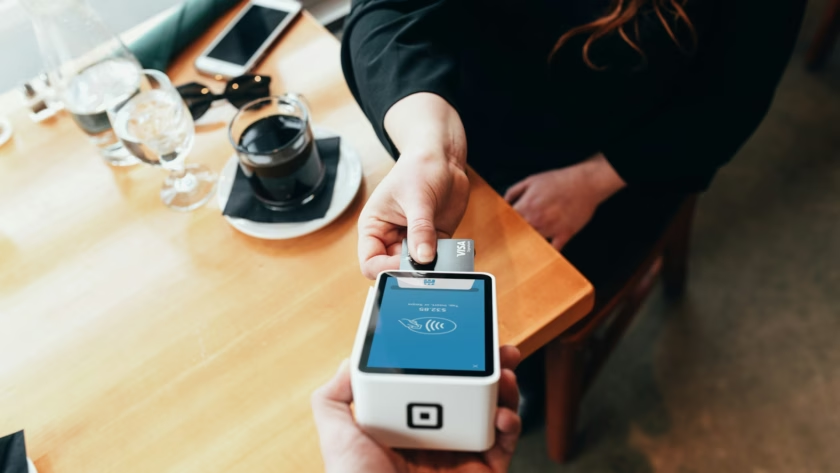
Tipping in the US is an essential cultural practice where 15-20% gratuities are expected for most services, as American service workers often rely on tips for a significant portion of their income. Unlike many countries where service charges are included in prices, the US tipping system is deeply ingrained in the economic structure of the service industry, with restaurant servers typically earning a base wage well below the standard minimum wage. This comprehensive guide covers everything you need to know about tipping in America in 2025, from restaurants and hotels to taxis and regional variations.
- Understanding Tipping Culture in the US
- Quick Reference Table: US Tipping Rates
- Tipping in US Restaurants: The Complete Guide
- Tipping at Bars and for Drinks in America
- Tipping in US Hotels: A Comprehensive Guide
- Tipping Taxi Drivers and Rideshares in the US
- Tipping Tour Guides and Excursion Staff
- Regional Variations: Tipping Across America
- Digital Tipping: Apps, Cards, and Technology
- Tipping for Delivery and Take-Out Services
- Tipping for Personal Services in the US
- Tipping Etiquette for International Visitors
- Tipping in the US vs Other Countries
- Practical Tips for Navigating US Tipping Culture
Understanding Tipping Culture in the US
The tipping culture in the US is fundamentally different from most other countries, functioning as an integral part of the service economy rather than a discretionary bonus. This system has deep historical roots and significant economic implications for millions of American workers.
At the core of American tipping culture is the federal labor law that allows employers to pay “tipped employees” a minimum wage as low as $2.13 per hour (compared to the standard federal minimum wage of $7.25), with the expectation that tips will make up the difference. If tips don’t reach the standard minimum wage, employers are legally required to make up the shortfall, but enforcement is often inconsistent.
This wage structure essentially transfers the responsibility of paying service workers from employers to customers, making tipping less of a choice and more of an obligation within American society. When Americans tip, they aren’t just showing appreciation—they’re directly contributing to workers’ basic income.
Regional variations exist across the country:
- Major cities (New York, San Francisco, Chicago): Higher cost of living often correlates with higher tipping expectations, sometimes 20-25%
- Southern states: Strong tipping culture with emphasis on hospitality
- West Coast: Generally follows standard tipping practices with some local variations
- Rural areas: May have slightly lower tipping expectations but still follows the basic American tipping model
For visitors to the United States, understanding this context helps explain why tipping is taken so seriously and why service staff may react negatively to inadequate tips—it directly impacts their livelihood.
Quick Reference Table: US Tipping Rates
| Service | Typical Tip | Notes |
|---|---|---|
| Restaurants | 15-20% | Calculate on pre-tax amount; 20%+ in major cities |
| Bars | $1-2 per drink or 15-20% of tab | $2-3 for complex cocktails |
| Hotel Porters | $2-5 per bag | More in luxury hotels |
| Housekeeping | $3-5 per day | Leave daily rather than at end of stay |
| Concierge | $5-20 | Based on complexity of request |
| Taxis/Rideshares | 15-20% | Minimum $2-3 even for short rides |
| Tour Guides | $5-20 per person per day | 15-20% for private guides |
| Food Delivery | 15-20% | Minimum $3-5 regardless of order size |
| Hair/Beauty | 15-20% | 20-25% for complex services |
| Spa Services | 15-20% | Check if service charge is already included |
*Note: Tipping practices may vary between major cities and rural areas, with higher expectations in New York, San Francisco, and other high-cost locations.
Tipping in US Restaurants: The Complete Guide

Restaurant tipping forms the cornerstone of American gratuity customs, with clear expectations and social norms. Here’s what you need to know about tipping in US restaurants:
Standard Tipping Percentages
- Casual dining: 15-20% of the pre-tax bill is standard
- Fine dining: 20-25% is expected, reflecting higher service levels
- Buffets: 10% for limited service (primarily drink refills and plate clearing)
- Counter service/fast casual: 10-15% or $1-2 per order
The standard for restaurant tipping has gradually increased over the decades. While 15% was once considered adequate, 20% has become the new norm in most urban areas and tourist destinations.
How to Calculate Your Tip
Americans typically calculate tips based on the pre-tax amount of the bill, though many simply tip on the total for convenience. Most credit card payment systems now offer preset tip options (often 18%, 20%, and 25%), making calculation easier.
For quick mental math:
- 10% = move the decimal point one place left
- 20% = double the 10% amount
- 15% = add half of the 10% amount to the 10%
Large Groups and Automatic Gratuities
For parties of 6-8 or more, many restaurants automatically add a “gratuity” or “service charge” of 18-20% to the bill. This policy is usually noted on the menu. Even with automatic gratuities, additional tipping for exceptional service is appreciated but not expected.
Special Situations
- Poor service: While tipping is considered obligatory, truly poor service might merit 10-15% rather than no tip at all
- Alcohol: Expensive bottles of wine are sometimes tipped at a lower percentage, but cocktails and beer follow standard tipping guidelines
- Takeout: 5-10% or a few dollars is appropriate for complex orders; simple pickups may not require tips
- Delivery: 15-20% of the total bill, with a minimum of $3-5 regardless of order size
Understanding these nuances helps visitors navigate the American restaurant experience with confidence while ensuring service staff receive fair compensation for their work.
Tipping at Bars and for Drinks in America
Bar tipping in the United States follows its own set of customs, distinct from restaurant dining but equally important in American tipping culture.
Standard Bar Tipping Practices
- Individual drinks: $1-2 per simple drink (beer, wine, basic mixed drink)
- Cocktails: $2-3 per craft cocktail or complex drink
- Tab-based tipping: 15-20% of the total tab for multiple rounds
- Bar food: Follow restaurant guidelines (15-20%) when ordering food at the bar
Bartenders, like restaurant servers, often earn below minimum wage and rely on tips for their livelihood. In busy establishments, generous tipping can also ensure better service throughout your visit.
Establishing Rapport with Bartenders
Regular patrons often develop relationships with bartenders through consistent, generous tipping. This practice can lead to stronger pours, occasional complimentary drinks, and more attentive service. Starting with a slightly higher tip on your first drink ($2 instead of $1) can set a positive tone for the evening.
Regional and Venue Variations
- Upscale cocktail bars: Higher tips expected ($3-5 per craft cocktail)
- Dive bars: Standard $1 per drink usually suffices
- Hotel bars: Often follow fine dining tipping percentages (20%+)
When in doubt about appropriate tipping at American bars, observe locals or ask discreetly. Most bartenders are happy to explain local customs to visitors who show genuine interest in following proper etiquette.
Tipping in US Hotels: A Comprehensive Guide
Hotel tipping in the United States involves multiple staff members with different expectations. Understanding these nuances ensures appropriate recognition for various services.
Front-of-House Staff
- Doormen: $1-2 for hailing a taxi; $1-2 per bag for assistance with luggage
- Bellhops/Porters: $2-5 per bag, depending on size and hotel caliber
- Valet parking: $2-5 when retrieving your car (not typically when dropping it off)
- Concierge: $5-20 depending on the complexity of requests (restaurant reservations, show tickets, special arrangements)
Housekeeping Staff
Housekeeping staff are often the most overlooked yet hardest-working hotel employees. Tipping housekeeping is essential:
- Standard tip: $3-5 per day
- Luxury hotels: $5-10 per day
- Extended stays: Consider tipping daily rather than at the end, as different staff may clean your room on different days
- Special requests: Add $2-3 for specific requests beyond normal cleaning
Leave housekeeping tips clearly marked (a note saying “For Housekeeping, Thank You” works well) on the pillow or nightstand each morning, not at the end of your stay.
Room Service and Other Hotel Services
- Room service: 15-20% if a gratuity isn’t already included (check the bill)
- Spa services: 15-20% for massages, treatments, and salon services
- Hotel restaurant: Follow standard restaurant tipping guidelines (15-20%)
- Shuttle drivers: $1-2 per person or $5 per family
Many hotels now add service charges to bills for certain amenities. Always check your bill to avoid double-tipping, but remember that these charges don’t always reach the specific staff who served you.
Tipping Taxi Drivers and Rideshares in the US
Transportation tipping follows consistent patterns across the United States, with some variations for different services and regions.
Traditional Taxi Services
- Standard tip: 15-20% of the fare
- Airport runs: $2 extra for help with luggage is customary
- Minimum tip: $2-3 even for very short rides
- Difficult conditions: Consider 20-25% during bad weather, heavy traffic, or late-night service
Most taxi payment systems now include tipping options when paying by card, making the process more convenient than in the past.
Rideshare Services (Uber, Lyft)
When rideshare services first launched, they promoted a “no tipping necessary” culture. However, this has changed significantly, and tipping expectations now mirror traditional taxi services:
- Standard tip: 15-20% through the app
- Cash tips: Appreciated but not expected
- Rating system: Drivers often rate passengers partly based on tipping habits
Both Uber and Lyft prompt for tips after your ride completes and allow you to add tips up to 30 days later, though immediate tipping is appreciated by drivers.
Airport Shuttles and Limos
- Private car services: 15-20% if gratuity isn’t already included in the rate
- Limousines: 15-20%, but check if gratuity is already included in the contract
When in doubt about whether gratuity is included in premium transportation services, it’s appropriate to ask when booking: “Does that rate include gratuity for the driver?”
Tipping Tour Guides and Excursion Staff
Tour guides in the United States expect tips as a significant part of their compensation, with amounts varying based on tour type, duration, and quality.
Standard Tour Tipping Guidelines
- Half-day group tours: $5-10 per person
- Full-day group tours: $10-20 per person
- Private guides: 15-20% of the tour cost
- Multi-day tours: $10-20 per person per day, usually given at the end of the tour
For specialized tours requiring particular expertise (historical knowledge, wilderness skills, etc.), tipping at the higher end of these ranges acknowledges the guide’s specialized knowledge.
Tour Drivers and Support Staff
- Bus drivers on tours: $3-5 per person per day
- Support staff: $5-10 per day for additional crew members
- Combination driver/guides: Tip at the guide rate, as they’re performing both roles
On tours with multiple staff members, tips are sometimes collected collectively and distributed among the team. If you’re particularly impressed with one team member, you can always provide an additional individual tip with a specific acknowledgment.
“Free” Tours
Many cities offer “free” walking tours that operate on a tip-only basis. For these services:
- Standard tip: $10-20 per person is expected
- Large groups: Consider $15-25 per person
- Poor quality: $5-10 per person is the minimum expectation, even for disappointing tours
These guides rely entirely on tips for their income, making gratuities more obligation than option for these services.
Regional Variations: Tipping Across America
While tipping customs are fairly consistent nationwide, regional variations reflect local economies, cultures, and cost of living differences.
Major Metropolitan Areas
- New York City: Often sets the high bar for American tipping, with 20% minimum in restaurants and higher expectations across all services
- Chicago: Strong tipping culture with standard 18-20% restaurant expectations
Southern States
The American South combines traditional hospitality with strong tipping expectations:
- Restaurant tipping: Standard 15-20%, with particular emphasis on friendly service
- Valet and door service: Slightly higher expectations than national average
- Tour guides: Strong tipping culture, especially for historical and cultural tours
Midwest and Rural Areas
- Restaurant tipping: Generally follows the 15-20% standard, occasionally trending toward the lower end in very rural areas
- Service expectations: Often emphasizes friendly, personalized service
- Small towns: May have slightly lower tipping percentages but still follows basic American tipping model
Seasonal Variations
Tourist destinations often see seasonal shifts in tipping expectations:
- Peak season: Higher tip expectations when service staff are extremely busy
- Off-season: Standard tipping percentages apply, with appreciation for supporting year-round residents
Understanding these regional nuances helps visitors adapt their tipping practices appropriately while traveling across different American regions.
Digital Tipping: Apps, Cards, and Technology
The digital revolution has transformed American tipping practices, introducing new payment methods and changing how gratuities are calculated and distributed.
Digital Payment Terminals
Modern payment terminals typically present preset tipping options (often 15%, 18%, 20%, and 25% or “Custom”), making the process more streamlined but sometimes creating pressure to select higher percentages. These systems usually calculate percentages based on the post-tax total, which is slightly higher than the traditional pre-tax calculation method.
Tipping Apps and Services
Dedicated tipping apps and features have proliferated:
- Food delivery platforms: Integrated tipping during ordering or after delivery
- Payment apps: Services like Venmo, Cash App, and PayPal facilitate digital tipping for services that don’t accept cards
- QR code tips: Increasingly common for street performers, bathroom attendants, and other cash-traditionally tipped services
Tip Pooling and Distribution
Digital systems have also changed how tips are distributed:
- Restaurant systems: Many now automatically distribute tips among servers, bartenders, bussers, and kitchen staff
- Service charges vs. tips: Some establishments have replaced traditional tipping with service charges that may be distributed differently
- Transparency concerns: Questions about whether digital tips reach workers have led to increased scrutiny and regulation
For visitors, the key takeaway is that digital tipping is now the norm rather than the exception in the United States, with cash becoming increasingly unnecessary for most tipping situations.
Tipping for Delivery and Take-Out Services
The delivery sector has expanded dramatically in recent years, bringing with it evolved tipping expectations for various services.
Food Delivery
- Standard tip: 15-20% of the total bill, with a $3-5 minimum regardless of order size
- Third-party apps (DoorDash, Uber Eats, Grubhub): 15-20% through the app
- Difficult conditions: Add 5% for deliveries during bad weather, major events, or very late hours
- Grocery delivery: 10-20% of the total bill, with higher percentages for heavy items or many flights of stairs
Many delivery drivers rely almost entirely on tips for their income after accounting for expenses like gas and vehicle maintenance.
Take-Out Orders
Tipping expectations for take-out have evolved, particularly since the COVID-19 pandemic:
- Standard take-out: 5-10% or $2-5 flat amount
- Complex orders: 10-15% for large or complicated orders requiring special preparation
- Counter service: $1-2 in tip jars is appreciated but not strictly expected
Restaurant workers preparing take-out orders are often paid like servers (below minimum wage) but don’t have the same opportunity to earn tips from table service, making take-out tipping increasingly important.
Package and Furniture Delivery
- Standard packages: Not typically tipped unless exceptional service is provided
- Furniture/appliances: $5-10 per person for basic delivery; $20+ per person for difficult installations or special handling
- Regular delivery personnel: Holiday tips of $20-50 for regular mail carriers, package deliverers, and other frequent service providers
When delivery involves significant physical labor or special care, tipping acknowledges this additional effort and encourages quality service.
Tipping for Personal Services in the US
Personal service providers in the United States typically expect tips as a significant portion of their compensation.
Hair and Beauty Services
- Haircuts and styling: 15-20% of the service cost
- Coloring, extensions, and special treatments: 15-25%
- Assistants (shampooers, etc.): $3-10 depending on service level
- Nail technicians: 15-20%
- Waxing and other beauty treatments: 15-20%
Many salon professionals rent their stations and pay substantial fees to the salon owner, making tips essential to their income.
Spa Services
- Massage therapists: 15-20%
- Facialists: 15-20%
- Body treatments: 15-20%
- Multiple services: Tip each provider individually unless a single charge covers all services
Spa facilities sometimes add service charges that may or may not be distributed to staff. Always check whether gratuity is already included.
Fitness and Personal Training
- Personal trainers: Not typically tipped per session if you have a regular relationship
- Fitness class instructors: Not typically tipped, though holiday gifts are common for regular instructors
- Golf caddies: 15-20% of the caddy fee or $20-50 depending on service level
For ongoing professional relationships, holiday bonuses (equivalent to 1-2 sessions) often replace per-service tipping.
Tipping Etiquette for International Visitors
For international visitors, navigating American tipping customs can be one of the most challenging aspects of travel in the United States.
Common Misconceptions
- “Service must be exceptional”: In the US, standard service merits standard tips (15-20%)
- “Tipping is just extra money”: For many service workers, tips constitute the majority of their income
- “Americans are just being generous”: The system is structured around tipping as compensation, not generosity
Understanding these fundamental differences helps international visitors avoid uncomfortable situations or unintentionally offending service staff.
Practical Advice for First-Time Visitors
- Budget for tips: Add 15-20% to your anticipated costs for meals, transportation, and services
- Carry small bills: Keep $1 and $5 bills handy for quick tipping situations
- Ask when uncertain: Most Americans are happy to explain tipping customs when asked politely
- Use technology: Smartphone calculators or tipping apps can help with calculations
- Observe locals: When in doubt, watch what American customers do in similar situations
Cultural Navigation
- Direct questions about tipping: Generally acceptable to ask hotel concierges or tour guides about local tipping customs
- Handling mistakes: If you realize you’ve undertipped, it’s appropriate to return and correct the error
- Language barriers: Saying “thank you” while handing over a tip communicates your intention clearly
Remember that service workers in America will interpret tipping behavior through an American cultural lens, not based on the customs of a visitor’s home country.
Tipping in the US vs Other Countries
American tipping practices differ significantly from those in other countries, creating potential confusion for international travelers in both directions.
US vs. Europe
- US: Tipping is essentially mandatory at 15-20% for many services
- Europe: Service charges often included; tipping is modest (0-10%) and truly optional
- US: Service staff rely on tips for basic income
- Europe: Service staff receive full wages and benefits regardless of tips
US vs. Asia
- US: Tipping expected across almost all service industries
- Japan/China/South Korea: Tipping often considered unnecessary or sometimes even offensive
- US: Tip percentages clearly defined and consistent
- Southeast Asia: Tipping practices vary widely by country and service
US vs. Latin America
- US: Standardized tipping percentages (15-20%)
- Latin America: Variable practices, often with lower percentages (5-15%)
- US: Tips expected regardless of establishment type
- Latin America: Tipping often limited to tourist areas in many countries
For Americans traveling abroad, researching local tipping customs prevents both overtipping (which can create unsustainable expectations) and undertipping (which can appear disrespectful). Similarly, international visitors to the US should understand American tipping as a different system rather than simply a more generous version of their home country’s practices.
Practical Tips for Navigating US Tipping Culture
Successfully navigating American tipping culture requires both understanding the customs and having practical strategies for different situations.
Budgeting for Tips
When planning a trip to the United States, build tipping into your budget:
- Restaurants: Add 20% to anticipated meal costs
- Hotels: Budget $5-10 per day for housekeeping, plus $2-5 per bag for porters
- Tours and activities: Add 15-20% to tour costs
Many travelers find it helpful to set aside a specific “tipping budget” in cash, particularly for hotel staff and other situations where card payment isn’t practical.
Quick Calculation Methods
For restaurant bills and other percentage-based tipping:
- 20% tip: Move the decimal point one place left, then double that amount
- 15% tip: Calculate 10% (move decimal point left), then add half of that amount
- For bills with tax: Either calculate based on pre-tax amount or simply round down slightly when tipping on the total
Handling Awkward Situations
- Insufficient cash: It’s acceptable to ask if you can add the tip to a card or if there’s an ATM nearby
- Poor service: Reduce the tip (to 10-15%) rather than eliminating it entirely; consider speaking to a manager instead of withholding tips
- Unexpected tipping situations: When surprised by a tipping opportunity without cash, it’s fine to say, “I’ll be sure to tip next time”
- Group situations: Clarify whether everyone is handling their own tips or if one person is covering gratuities for the group
Digital Tools and Resources
Several smartphone apps can help with tipping calculations and understanding local customs:
- Calculator apps: Most phone calculators can handle basic percentage calculations
- Dedicated tipping apps: Several free apps provide tipping guidelines and calculators
- Travel guides: Major travel apps often include sections on local tipping expectations
With preparation and understanding, navigating American tipping culture becomes a manageable aspect of US travel rather than a source of anxiety or confusion.
Final Recommendations
Tipping in the United States is more than a cultural custom—it’s an economic system that directly impacts millions of service workers’ livelihoods. The standard practice involves tipping 15-20% in restaurants, bars, and for most personal services, with specific dollar amounts for hotel staff, porters, and other service providers.
Understanding American tipping customs enhances your travel experience by allowing you to navigate service interactions confidently while ensuring workers receive fair compensation. While the system may seem complex to international visitors, the basic principles remain consistent across most of the country: service staff rely on tips as a significant portion of their income, and standard tipping percentages apply to most situations.
Bonus Travel Tip
For travelers exploring multiple American cities, managing luggage while navigating restaurants, hotels, and transportation can be challenging. Radical Storage offers convenient luggage storage solutions throughout major US cities, allowing you to explore urban centers and attractions hands-free. This practical service complements your understanding of local tipping customs by simplifying your travel experience and letting you focus on authentic cultural connections rather than logistical concerns.
